
Learning how to identify risky contract terms is no longer just a skill for seasoned legal veterans; it is a critical operational capability that modern businesses must scale using artificial intelligence. In an era where organizations execute thousands of agreements annually, relying on manual, line-by-line human review is a fragile strategy prone to fatigue-induced errors, overlooked details, and costly legal exposure. Today, forward-thinking legal operations teams are leveraging advanced natural language processing (NLP) and machine learning to automate the detection of unfavorable language. If you are a general counsel, contract manager, or business leader looking to protect your organization from hidden liabilities, you are in the right place.
This comprehensive guide demystifies the application of AI in legal review. We will explore the core mechanics of contract risk detection, detail the most common contract red flags that AI models are trained to spot, and provide a strategic blueprint for using risk assessment software to flag sensitive clauses before they are signed. By the end of this article, you will have a clear, actionable framework for deploying AI risk analysis legal tools to safeguard your business, accelerate deal velocity, and ensure strict compliance with your corporate playbook.
1. The High Cost of Manual Review: Why You Must Identify Risky Contract Terms
Historically, contract review was a grueling, manual process. Junior associates or paralegals would spend hours reading dense legal jargon, highlighting key provisions, and cross-referencing them against a company’s legacy playbook. While thorough, this approach is inherently flawed. Human reviewers suffer from “tunnel vision,” especially when reviewing high volumes of similar documents. A missed indemnification clause, an overlooked auto-renewal date, or a non-standard limitation of liability can cost a company millions in unforeseen liabilities or lost revenue.
The integration of AI to identify risky contract terms represents a quantum leap in legal risk management. Unlike basic keyword search tools (like Ctrl+F) that only find exact string matches, modern AI understands the semantic meaning, context, and relationships within legal text. It can instantly detect deviations from standard templates, even when the counterparty uses different phrasing to convey the same dangerous concept. According to recent industry research, legal departments utilizing advanced AI-driven review tools report a 60-80% reduction in review time and a dramatic decrease in contractual risk exposure. This shift allows legal professionals to focus on high-value strategic negotiations rather than mundane administrative hunting.
2. Core Mechanics: How AI Contract Risk Detection Works
To leverage this technology effectively, it is essential to understand the underlying mechanics of contract risk detection. The process is a sophisticated, multi-stage pipeline that transforms unstructured legal text into structured, actionable risk intelligence.
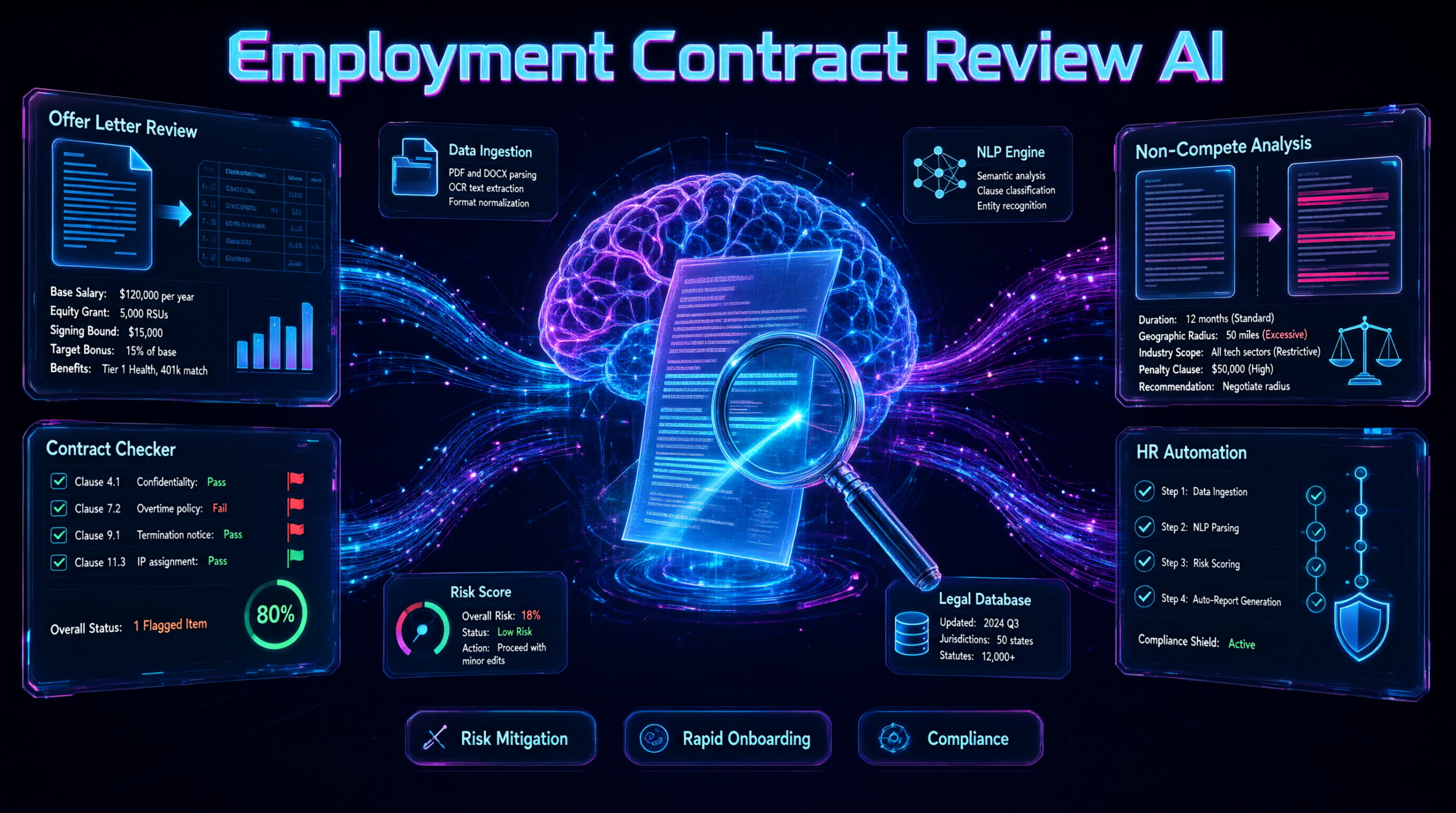
1. Document Ingestion and Preprocessing: The AI first ingests the contract, regardless of its format (PDF, Word, scanned image, or email). Preprocessing algorithms clean the document, correct skewed pages, and enhance text clarity to ensure optimal readability for the subsequent stages.
2. Optical Character Recognition (OCR) and Layout Analysis: Advanced OCR converts visual text into machine-readable characters. Simultaneously, layout analysis algorithms map the document’s structure, identifying headings, tables, signatures, and distinct clauses. This spatial awareness is crucial for understanding the document’s hierarchy.
3. Natural Language Processing (NLP) and Named Entity Recognition (NER): This is where the “intelligence” kicks in. NLP models scan the extracted text to identify and classify specific legal entities (e.g., party names, governing law jurisdictions, monetary values, dates). The AI classifies the overall document type (e.g., “NDA,” “Master Services Agreement,” “SaaS License”) based on its content and structure.
4. Semantic Understanding and Playbook Alignment: Modern systems go a step further by understanding relationships between clauses. It doesn’t just find the word “liability”; it understands that “$1,000,000” is the “Liability Cap” in this specific agreement. It then compares these extracted terms against the company’s pre-defined legal playbook, instantly highlighting any deviations or non-standard language for human review. This is the core engine that allows AI to identify risky contract terms with superhuman consistency.
3. Common Contract Red Flags: What AI Risk Analysis Legal Tools Look For
An effective AI risk analysis legal system is trained to recognize specific patterns of unfavorable language. While every organization’s risk tolerance is different, there are universal contract red flags that AI models are specifically configured to detect.
Uncapped or Asymmetric Liability: One of the most dangerous clauses is an uncapped limitation of liability. AI tools are trained to flag sensitive clauses where the counterparty’s liability is capped at a low amount (or zero), while your organization’s liability remains unlimited or disproportionately high.
Broad Indemnification Obligations: Indemnification clauses shift the financial burden of third-party claims. AI can detect overly broad language that forces your company to indemnify the counterparty for their own negligence or willful misconduct, which is a major red flag in contract risk detection.
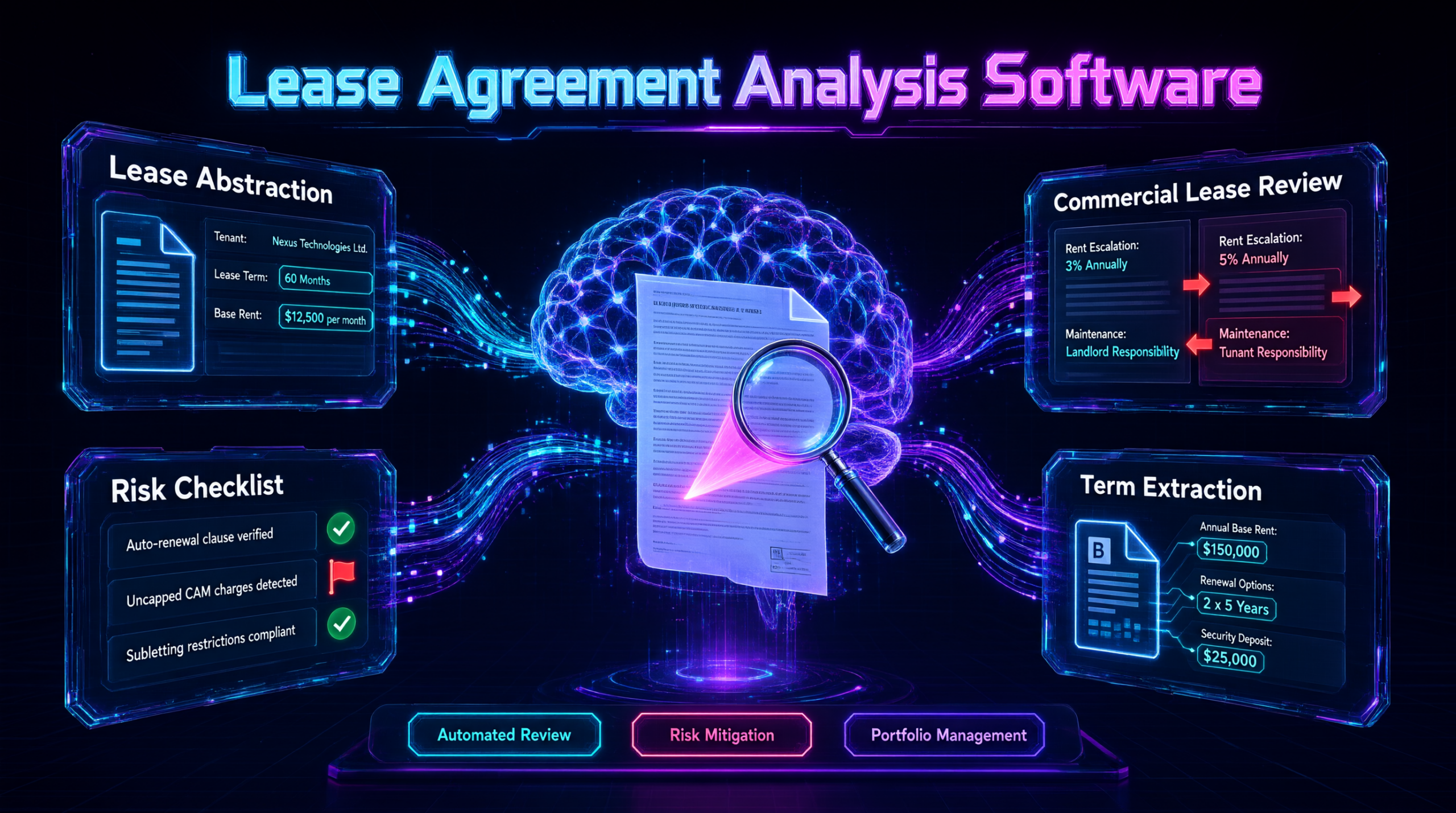
Auto-Renewal and Termination Traps: Many contracts contain sneaky auto-renewal clauses with short notice periods for termination (e.g., “must provide written notice 90 days prior to renewal”). AI excels at extracting these specific dates and terms, alerting the business before an unwanted financial commitment is locked in.
Unfavorable Intellectual Property (IP) Assignments: For technology and creative companies, IP is paramount. AI can identify risky contract terms that inadvertently assign ownership of background IP or newly developed work product to the client or vendor, rather than retaining it for your organization.
Non-Standard Governing Law and Dispute Resolution AI can instantly flag if a contract specifies a governing law or arbitration venue that is unfavorable or unfamiliar to your legal team, prompting a negotiation to revert to your standard jurisdiction.
4. Step-by-Step: How to Flag Sensitive Clauses Using AI
Implementing AI to flag sensitive clauses requires a structured approach to ensure the technology aligns with your specific business rules.
Step 1: Define Your Legal Playbook. Before the AI can detect risk, it must know what “safe” looks like. Work with your legal team to codify your fallback positions, preferred clauses, and absolute deal-breakers into a digital playbook. This serves as the ground truth for the AI.
Step 2: Ingest and Configure the AI. Upload your historical contracts and your digital playbook into your chosen platform. Configure the AI to prioritize the specific clauses that matter most to your business (e.g., prioritizing data privacy clauses for a healthcare company, or IP clauses for a software firm).
Step 3: Run the AI Risk Analysis. When a new third-party paper arrives, run it through the system. The AI will perform contract risk detection, comparing the incoming document against your playbook. It will generate a risk score and highlight specific deviations.
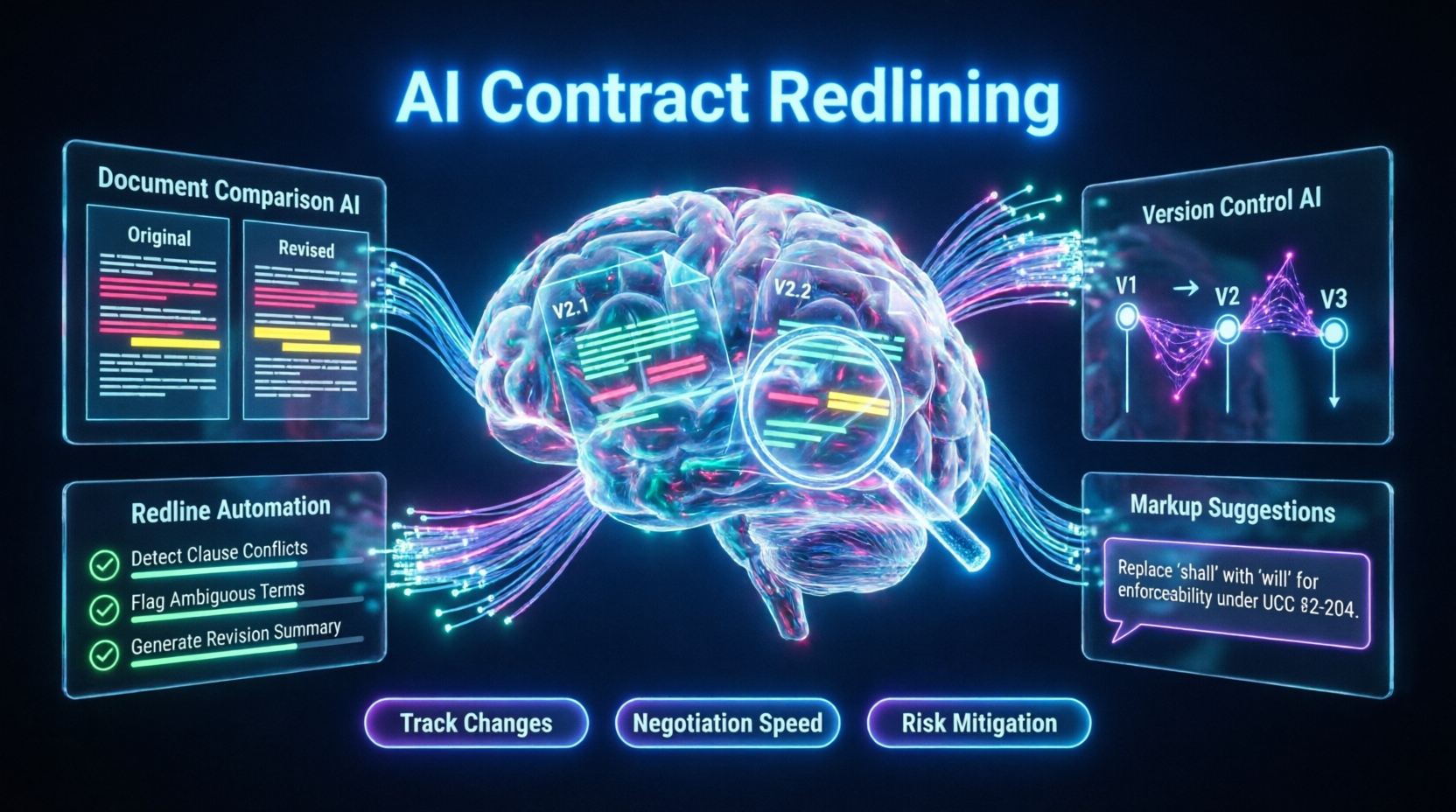
Step 4: Human-in-the-Loop (HITL) Review: The AI does not replace the lawyer; it empowers them. The system presents a streamlined dashboard showing exactly where the contract red flags are and why they were flagged and often suggests pre-approved fallback language. The lawyer reviews these specific highlights, makes the final judgment call, and feeds that decision back into the system to improve future accuracy.
5. Choosing the Right Risk Assessment Software for Your Organization
With a crowded market of legal tech vendors, selecting the right risk assessment software requires careful evaluation of your specific organizational needs.
Accuracy and Playbook Customization Do not rely solely on vendor claims of “99% accuracy.” Request a proof-of-concept (POC) using your own, real-world contracts, including the messy, heavily redlined, or non-standard ones. A robust platform should allow you to easily customize its AI models to align with your company’s unique legal playbook and risk tolerance.
Integration Capabilities: The best risk assessment software is useless if it creates a new data silo. Ensure the platform offers robust, pre-built connectors or flexible APIs to integrate seamlessly with your existing tech stack, such as Salesforce, Microsoft Teams, DocuSign, or your enterprise Contract Lifecycle Management (CLM) system.
Security and Compliance: When handling sensitive legal agreements, security is paramount. Ensure the vendor complies with relevant regulations (GDPR, SOC 2, ISO 27001). The platform should offer end-to-end encryption, strict role-based access control (RBAC), and clear data retention policies that guarantee your proprietary contract data is not used to train public, shared AI models.
User Experience and Explainability: Look for a platform with an intuitive, user-friendly validation interface. Crucially, the AI should be “explainable,” meaning it doesn’t just flag a clause but provides the reasoning or highlights the specific text that triggered the alert, building trust with your legal team.
6. Comprehensive Query Coverage
What is the main difference between manual review and AI contract risk detection? Manual review relies on humans reading line-by-line, which is slow and prone to fatigue. Contract risk detection powered by AI uses NLP to instantly understand context, extract key data points, and compare clauses against a legal playbook, turning a days-long process into a matter of minutes while catching subtle deviations.
How does AI help flag sensitive clauses that humans might miss? AI helps flag sensitive clauses by scanning every single word against hundreds of predefined risk parameters simultaneously. Unlike humans who might suffer from tunnel vision, the AI consistently checks for asymmetric liability, broad indemnification, or hidden auto-renewals, regardless of how the counterparty phrases them.
What should I look for in risk assessment software? When evaluating risk assessment software, prioritize high accuracy on your specific document types, seamless API integration with your existing CLM or CRM systems, robust security certifications (like SOC 2), and an intuitive human-in-the-loop validation interface.
Can AI risk analysis legal tools handle non-standard or heavily negotiated contracts? Yes. Advanced AI risk analysis legal tools are designed to handle deviations. Instead of failing on non-standard language, they are specifically trained to recognize when a clause diverges from your approved playbook, highlighting the exact variance for human negotiation.
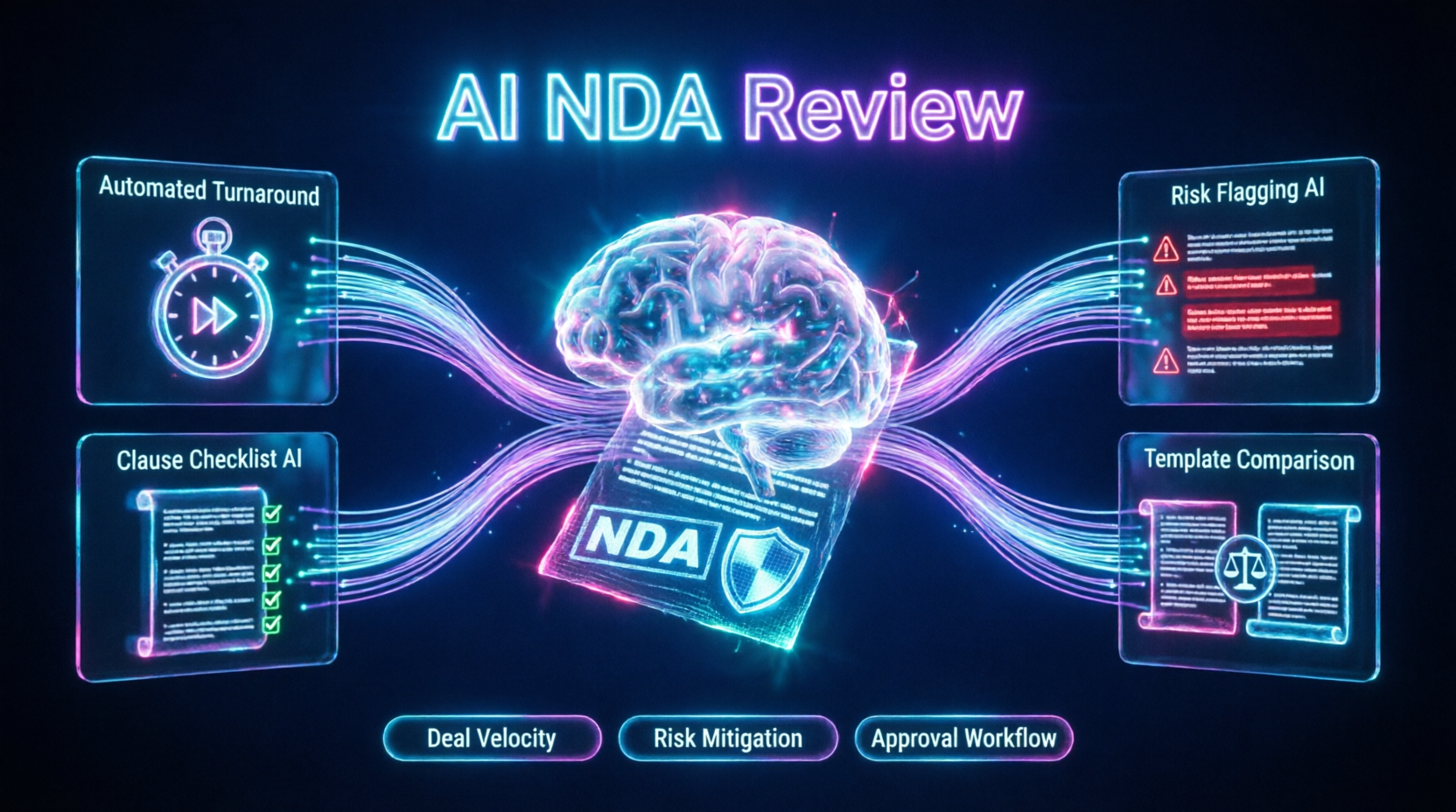
How do I get started to identify risky contract terms in my company? To identify risky contract terms effectively, start by digitizing your legal playbook. Then, run a pilot program with a high-volume, standardized document type (like NDAs) using a reputable AI platform. Measure the time savings and accuracy improvements before scaling to more complex agreements.
Conclusion
Learning how to identify risky contract terms with AI is no longer a futuristic IT initiative; it is a present-day imperative for legal departments seeking to operate with the speed, accuracy, and agility that modern business demands. By moving beyond the limitations of manual review and embracing intelligent extraction, risk flagging, and workflow automation, legal teams can protect their organizations from hidden liabilities while reclaiming hundreds of hours every week.
Whether you are deploying contract risk detection to accelerate sales cycles, leveraging advanced AI risk analysis legal tools to protect the organization from unfavorable terms, or evaluating comprehensive risk assessment software for enterprise-wide adoption, success requires a strategic, phased approach. Prioritize security, demand proof-of-concept results on your own data, and choose a solution that seamlessly integrates with your existing ecosystem.