The AI document analysis platform landscape has fundamentally transformed how enterprises manage, extract, and leverage critical business data in 2026. As organizations grapple with exponentially growing volumes of unstructured data, implementing a robust AI document analysis platform is no longer a luxury—it is a strategic necessity. However, navigating the vast ecosystem of automated document processing software can be overwhelming for IT leaders and operations managers. Whether you are streamlining legal workflows, optimizing financial audits, or enhancing customer onboarding, understanding which document intelligence platform delivers real value is essential for staying competitive.
This comprehensive guide reveals the 7 critical aspects of the best AI document analysis tool 2026 has to offer, providing detailed reviews, implementation strategies, and real-world use cases. By the end of this article, you will have a clear roadmap to selecting and deploying the right AI-powered PDF analysis solutions that will accelerate your business operations and drive measurable ROI.
1. Understanding the Core AI Document Analysis Platform Capabilities
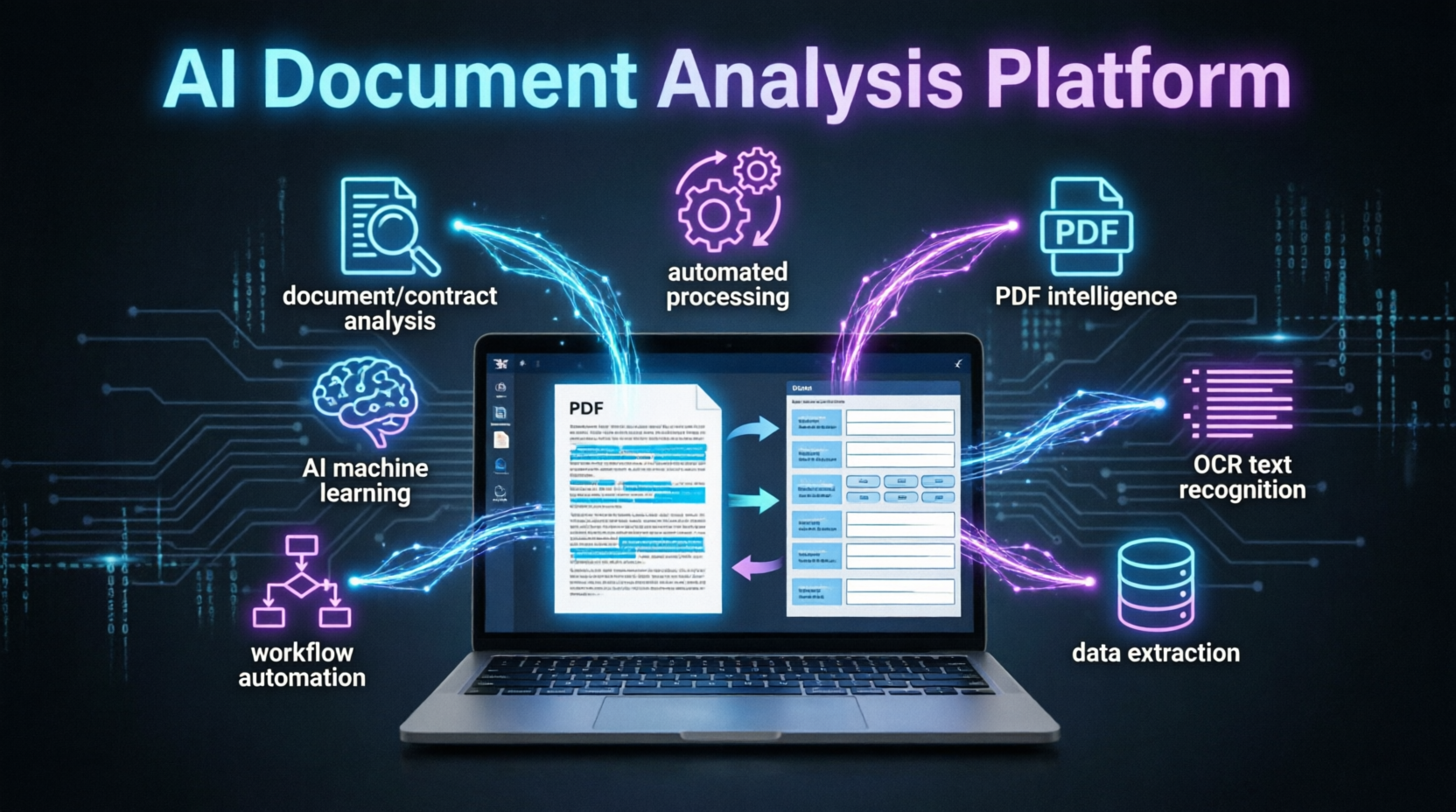
To fully grasp the impact of an AI document analysis platform, we must first understand the fundamental shifts in enterprise data management. According to Gartner’s Document AI Research, intelligent document processing is the primary driver of operational efficiency in the current economic cycle. The core capabilities of an AI document analysis platform lie in its ability to combine optical character recognition (OCR), natural language processing (NLP), and machine learning to extract structured data from unstructured documents.
When organizations ignore the power of a modern AI document analysis platform, they risk severe data silos and manual processing bottlenecks. Conversely, those who embrace these technologies find that automated document processing software acts as a force multiplier for their entire data ecosystem. It is not about replacing human analysts; it is about augmenting human intelligence with machine-speed extraction. For a deeper understanding of how to instruct AI systems to work with extracted data, explore our comprehensive guide on How to Write AI Prompts.
2. Best AI Document Analysis Tool 2026 for Enterprise Workflows
When evaluating the best AI document analysis tool 2026 has introduced, enterprise leaders must prioritize scalability, security, and integration capabilities. A top-tier AI document analysis platform must seamlessly integrate with existing ERP, CRM, and document management systems like Salesforce, SAP, and Microsoft 365.
Key Enterprise Features:
- Multi-language support for global operations
- Role-based access control and audit trails
- API-first architecture for custom integrations
- On-premise deployment options for strict compliance
- Continuous learning models that improve over time
According to industry benchmarks, enterprises deploying the best AI document analysis tool 2026 reports a 60% reduction in manual data entry errors. By implementing a robust document intelligence platform, companies can process thousands of documents daily without adding headcount. To see how to integrate these extracted insights into your broader strategy, review our detailed breakdown of AI Solutions for Business.
3. Automated Document Processing Software for High-Volume Operations
For industries like banking, insurance, and healthcare, high-volume automated document processing software is mission-critical. These sectors handle millions of forms, claims, and applications annually. A specialized AI document analysis platform designed for high-volume operations utilizes advanced computer vision to handle degraded scans, handwritten text, and complex table structures.
High-Volume Use Cases:
- Insurance claims processing and fraud detection
- Bank loan application verification
- Healthcare patient intake form digitization
- Supply chain bill of lading analysis
When selecting automated document processing software for high-volume tasks, accuracy and throughput are paramount. The right AI document analysis platform can process a 50-page document in seconds, extracting key-value pairs with over 98% accuracy. For technical teams building these high-throughput pipelines, our guide on AI Coding Prompts is an essential resource.
4. AI for Contracts and Reports: Legal and Financial Precision
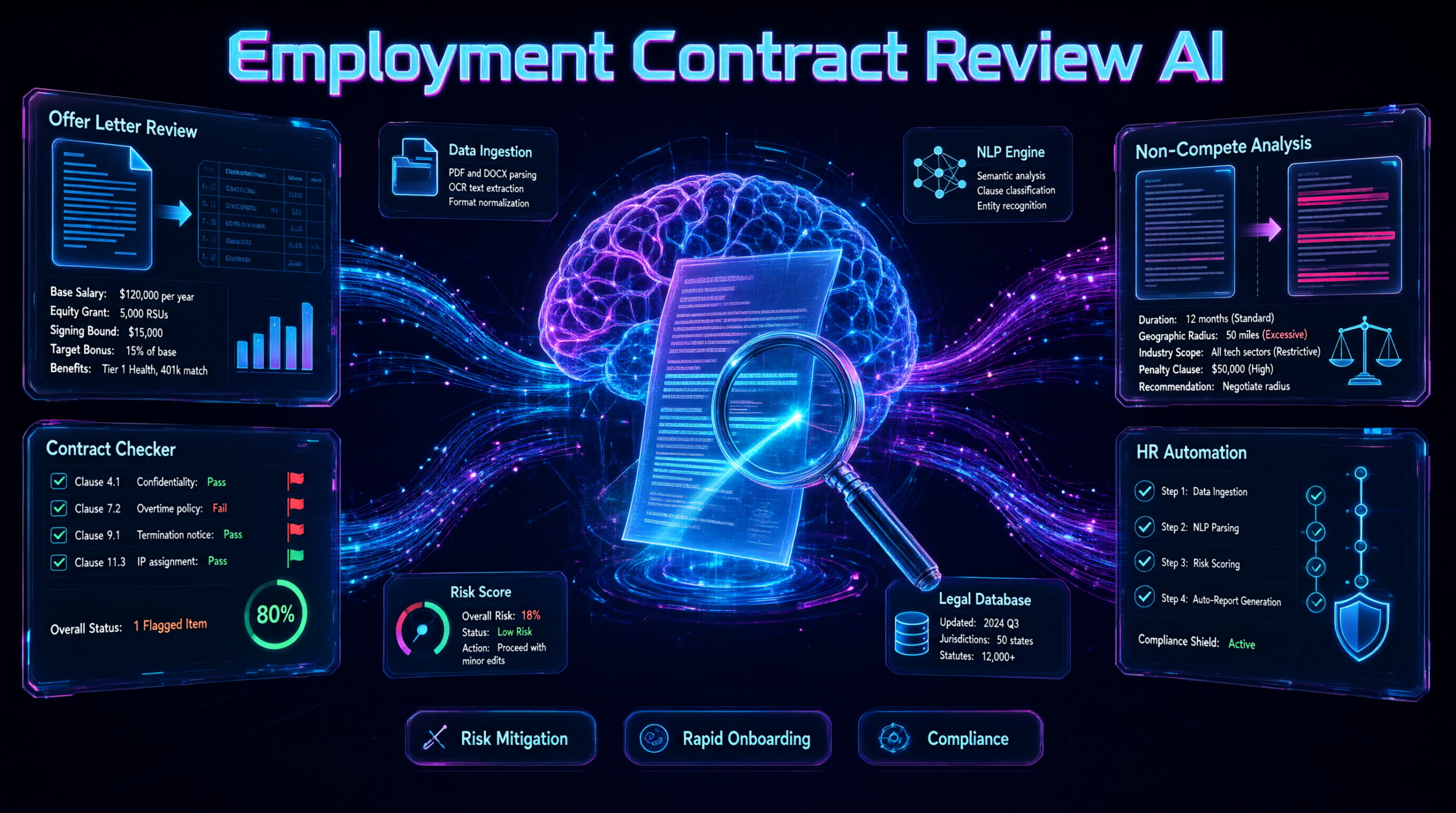
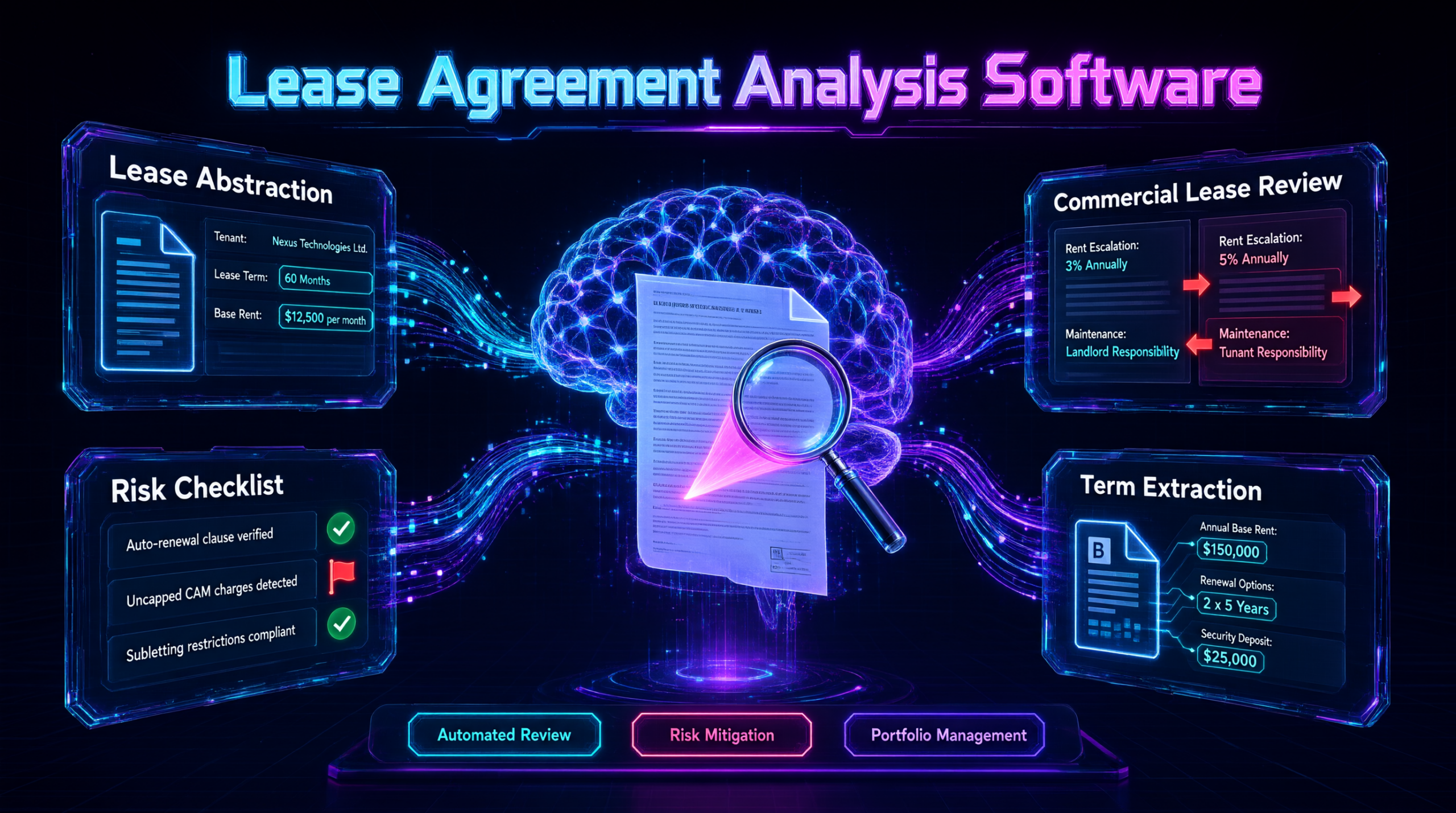
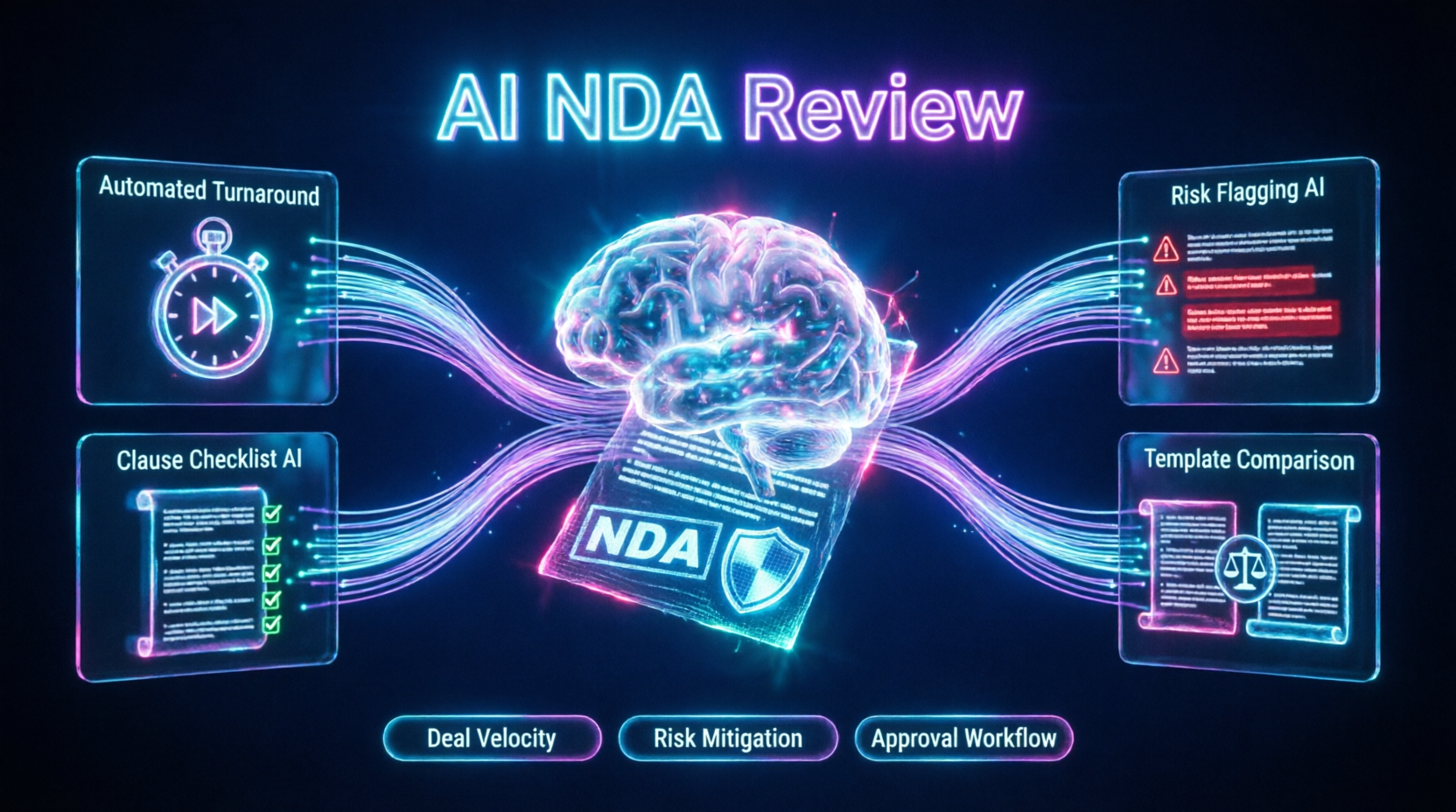
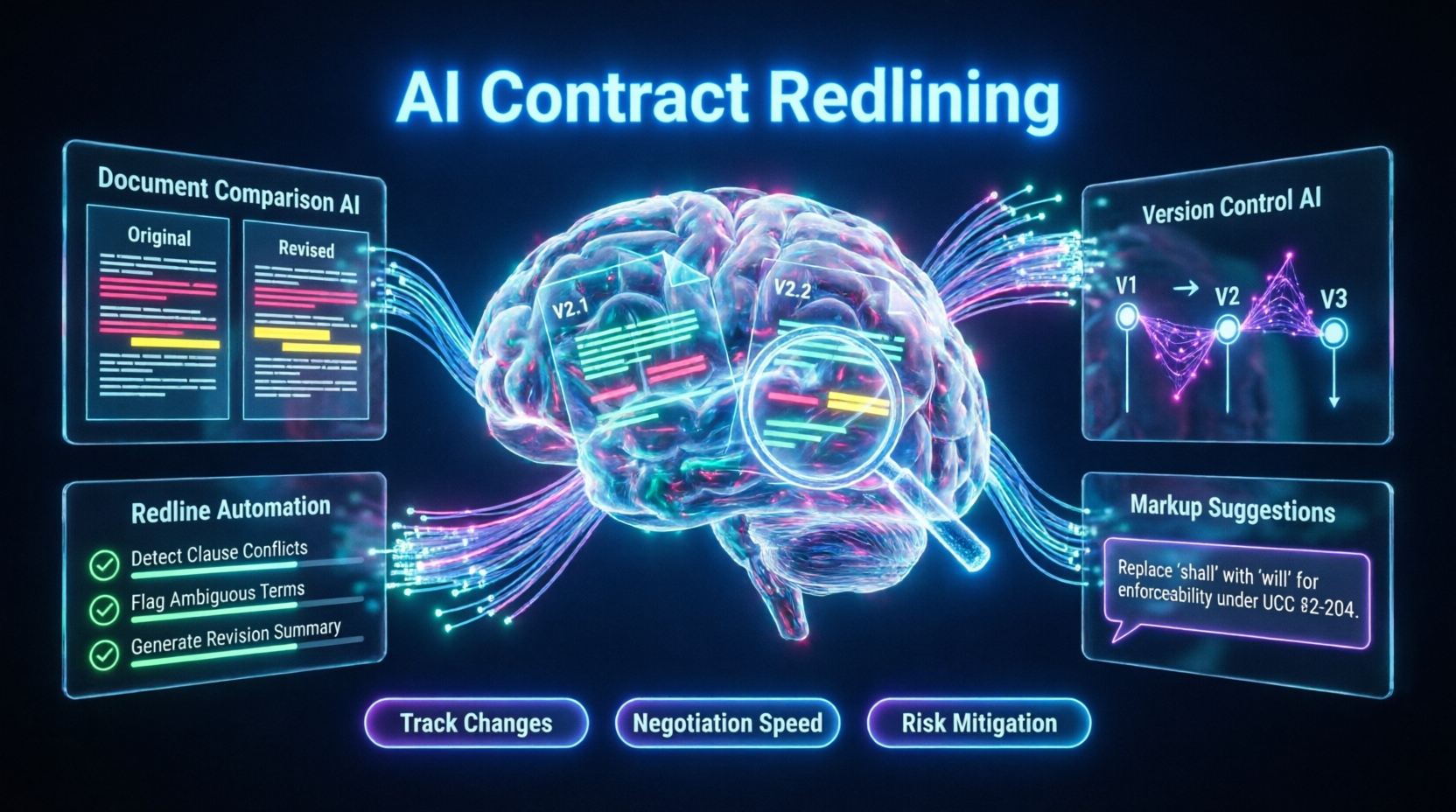
One of the most lucrative applications of an AI document analysis platform is in the legal and financial sectors. AI for contracts and reports requires a deep understanding of context, clauses, and regulatory compliance. Unlike basic OCR, a specialized document intelligence platform can identify non-standard clauses, flag risks, and summarize lengthy legal agreements in seconds.
Legal and Financial Applications:
- Lease abstraction and management
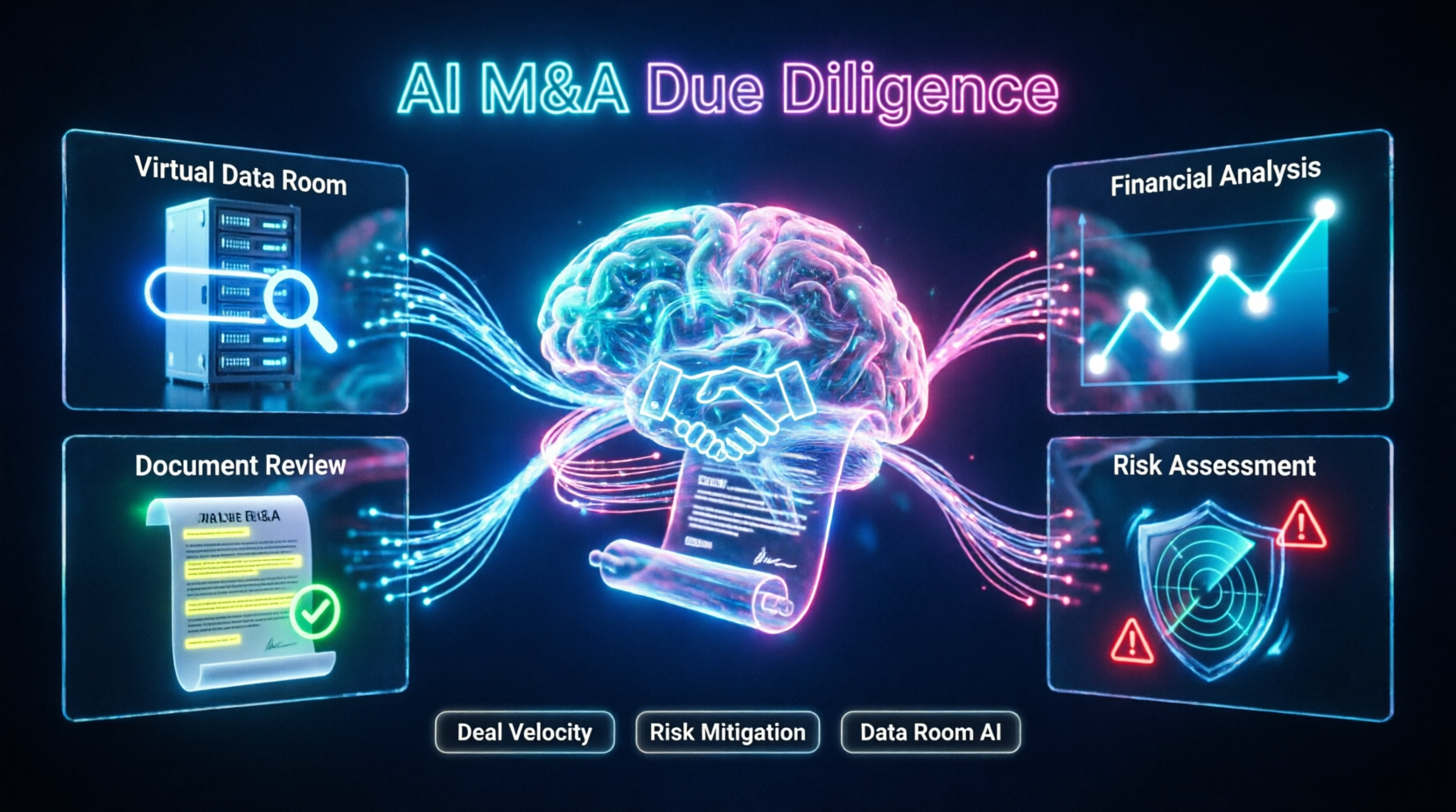
- Mergers and acquisitions due diligence
- Financial statement analysis and auditing
- Regulatory compliance monitoring
According to legal tech industry reports, firms utilizing AI for contracts and reports reduce contract review time by 75%. By deploying an AI document analysis platform tailored for legal workflows, law firms and corporate legal departments can focus on high-value strategic advice rather than manual document review. To discover the best platforms for these specialized tasks, check out our guide on the Best AI Prompt Libraries 2026.
5. Document Intelligence Platform vs Traditional OCR
A common question for IT leaders is the difference between a modern document intelligence platform and traditional OCR. Traditional OCR simply converts images of text into machine-encoded text. It cannot understand the context, layout, or meaning of the document. In contrast, an AI document analysis platform uses deep learning to understand the semantic structure of a page.
Key Differences:
- Contextual understanding vs. character recognition
- Table and form structure extraction vs. flat text
- Handwriting recognition vs. printed text only
- Entity extraction (names, dates, amounts) vs. raw text
When upgrading from legacy systems to a modern AI document analysis platform, organizations typically see a 40% increase in data extraction accuracy. This shift from simple digitization to true automated document processing software enables downstream automation that was previously impossible.
6. AI-Powered PDF Analysis for Complex Layouts
Not all documents are created equal. AI-powered PDF analysis is specifically designed to handle complex, multi-column layouts, embedded images, and nested tables that traditionally break standard extraction tools. A robust AI document analysis platform utilizes layout-aware machine learning models to reconstruct the logical reading order of a document, regardless of its visual complexity.
Complex Layout Challenges Solved:
- Multi-column academic journals and research papers
- Invoices with varying vendor layouts
- Technical manuals with embedded diagrams
- Government forms with nested checkboxes
By leveraging advanced AI-powered PDF analysis, businesses can automate the ingestion of highly structured yet visually diverse documents. This capability is a hallmark of the best AI document analysis tool 2026 solutions, ensuring that no critical data is left trapped in poorly formatted files.
7. How to Choose the Right AI Document Analysis Platform
Selecting the right AI document analysis platform requires a strategic evaluation of your specific business needs, technical infrastructure, and compliance requirements. The best AI document analysis tool 2026 for a small legal firm will differ vastly from the ideal solution for a global logistics company.
Evaluation Criteria:
- Accuracy rates for your specific document types
- Integration capabilities with your existing tech stack
- Data security and privacy compliance (SOC 2, HIPAA, GDPR)
- Total cost of ownership and pricing model
- Quality of customer support and implementation services
To ensure your team is maximizing the value of your chosen document intelligence platform, explore our comprehensive guide on AI Tools Importance and discover how to build a culture of AI-augmented operations.
Comprehensive Query Coverage
What is the best AI document analysis tool 2026 for small businesses? For small businesses, the best AI document analysis tool 2026 options include cloud-based platforms with pay-as-you-go pricing and pre-built integrations with tools like QuickBooks and Zapier. These solutions offer enterprise-grade AI-powered PDF analysis without the need for dedicated IT resources or massive upfront investments.
How secure is automated document processing software for sensitive data? Top-tier automated document processing software employs enterprise-grade security, including end-to-end encryption, data residency options, and zero-retention policies. When selecting an AI document analysis platform for sensitive data like financial records or healthcare files, always verify their SOC 2 and HIPAA compliance certifications.
Can AI for contracts and reports understand multiple languages? Yes, modern AI for contracts and reports utilizes multilingual large language models that can process, translate, and extract data from documents in dozens of languages simultaneously. A global document intelligence platform is essential for multinational corporations managing cross-border agreements.
What is the difference between OCR and an AI document analysis platform? Traditional OCR only converts images to text, while an AI document analysis platform understands the context, layout, and meaning of the document. It extracts structured data, identifies entities, and can even summarize content, making it a true document intelligence platform rather than just a digitization tool.
How do I measure the ROI of implementing AI-powered PDF analysis? You can measure the ROI of AI-powered PDF analysis by tracking metrics such as hours saved on manual data entry, reduction in processing errors, faster turnaround times for customer requests, and the percentage of documents processed without human intervention.
Where can I find more resources on document intelligence platforms? Beyond this guide, explore the AI Directory for curated lists of enterprise AI tools, and check out our guides on Best Free AI Tools for Productivity and AI Tools Importance for maximizing your technology stack.
Conclusion
The AI document analysis platform revolution in 2026 is defined by unprecedented accuracy, contextual understanding, and seamless enterprise integration. By understanding the core capabilities of an AI document analysis platform, leveraging the best AI document analysis tool 2026 has to offer, deploying automated document processing software for high-volume operations, utilizing AI for contracts and reports, comparing a document intelligence platform to traditional OCR, and mastering AI-powered PDF analysis, organizations can unlock unprecedented levels of operational efficiency.