
Navigating the labyrinth of modern regulatory frameworks requires a paradigm shift in how organizations manage risk. For modern enterprises, deploying AI for compliance teams is no longer a futuristic luxury; it is an operational imperative. In an era where regulatory updates occur daily, and the volume of internal policies, contracts, and communications grows exponentially, relying on manual, line-by-line document review is no longer a viable strategy for maintaining organizational integrity. Today, forward-thinking Chief Compliance Officers (CCOs) and risk managers are leveraging advanced natural language processing (NLP), machine learning, and intelligent automation to ensure adherence, mitigate risk, and reduce operational costs. If you are a compliance professional looking to understand exactly how to integrate these technologies into your governance framework, you are in the right place.
This comprehensive guide demystifies the application of artificial intelligence in corporate governance. We will explore the core mechanics of compliance document review, detail the transformative impact of regulatory document analysis, and provide a strategic blueprint for selecting the right compliance automation software. By the end of this article, you will have a clear, actionable framework for implementing a policy review AI tool, mastering AI risk and compliance workflows, and building a resilient, future-proof compliance program.
1. The Regulatory Tsunami: Why AI for Compliance Teams Matters in 2026
Historically, compliance was a reactive, labor-intensive function. Teams of analysts would manually scour thousands of pages of vendor contracts, employee communications, and internal policies to ensure alignment with frameworks like GDPR, CCPA, HIPAA, or SOX. This manual approach was not only excruciatingly slow and expensive but also highly susceptible to human error. Fatigue-induced oversights could lead to missed regulatory updates, unchecked policy violations, and ultimately, massive financial penalties and reputational damage.
The integration of AI for compliance teams represents a quantum leap from reactive box-checking to proactive risk management. Unlike legacy keyword-search tools that only find exact string matches, modern AI understands the semantic meaning, context, and relationships within complex regulatory text. It can instantly map internal policies against external regulatory changes, flag non-compliant language in third-party contracts, and monitor communications for potential misconduct. According to recent research by Gartner, organizations that deploy advanced AI in their compliance functions report a 40-50% reduction in manual review time and a significant decrease in regulatory fines, allowing compliance professionals to focus on strategic advisory roles rather than mundane data sifting.
2. Core Mechanics: How Compliance Document Review Actually Works
To leverage these systems effectively, compliance leaders must understand the underlying technology of modern compliance document review. The process is a sophisticated, multi-stage pipeline designed specifically for the nuances of legal and regulatory language.
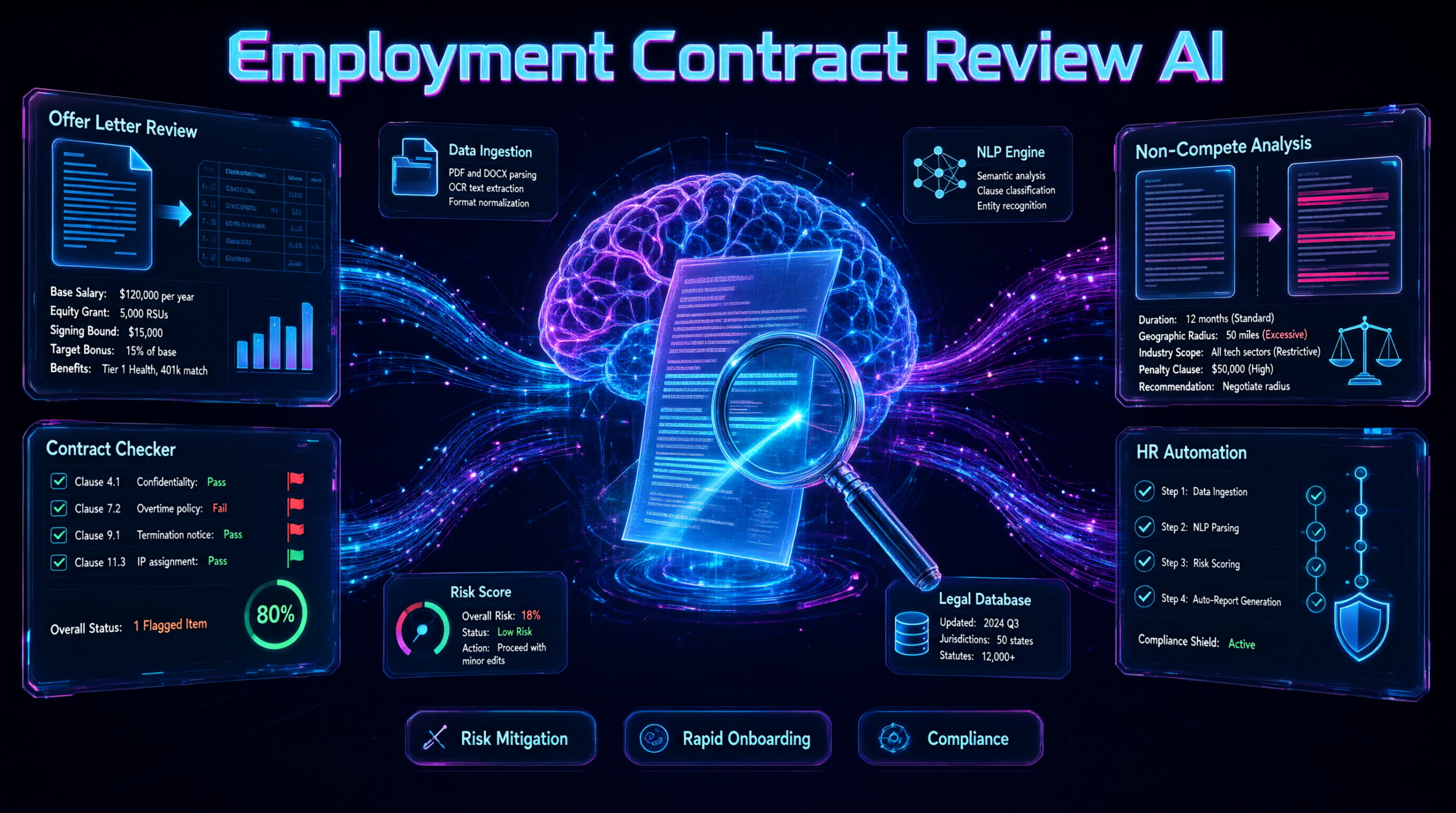
Intelligent Ingestion and Optical Character Recognition (OCR): The AI first ingests documents in any format—PDFs, scanned images, emails, or Word documents. Advanced OCR technology converts visual text into machine-readable data while preserving the original formatting, which is crucial for maintaining the audit trail and context required in regulatory investigations.
Natural Language Processing (NLP) and Named Entity Recognition (NER): NLP is the engine that allows machines to “read” like human compliance officers. AI for compliance teams uses NLP to parse complex regulatory jargon, identifying and classifying specific entities such as jurisdiction names, regulatory bodies, monetary thresholds, and critical compliance dates. NER algorithms map these entities, creating a structured, searchable database out of unstructured text.
Semantic Mapping and Gap Analysis: Modern systems go a step further by understanding relationships between concepts. A policy review AI tool doesn’t just look for the word “data”; it understands that “personally identifiable information (PII)” and “customer data” refer to the same concept under GDPR. It then compares your internal policies against the latest external regulatory texts, instantly highlighting gaps, contradictions, or outdated clauses that require human attention.
3. Key Applications: Regulatory Document Analysis and Policy Review AI Tools
The practical applications of artificial intelligence in governance are vast, transforming how organizations handle everything from daily operations to crisis management.
Continuous Regulatory Document Analysis: Regulations are not static. A robust regulatory document analysis system continuously monitors global regulatory feeds, legislative updates, and industry guidelines. When a new regulation is published, the AI automatically analyzes its text, compares it against the company’s existing compliance posture, and generates a “gap analysis” report detailing exactly which internal policies or operational procedures need to be updated to remain compliant.
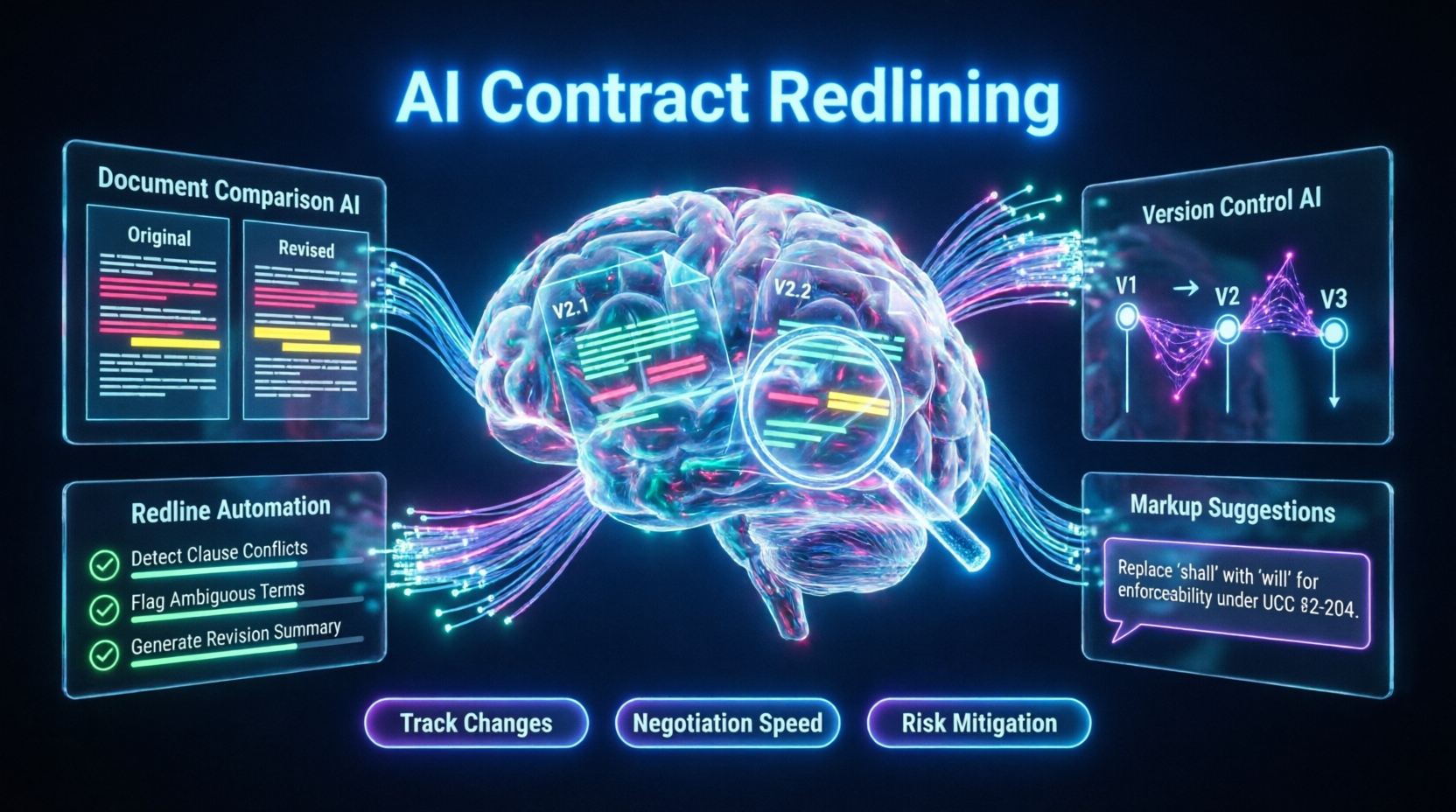
Automated Policy Review and Attestation: Keeping employee handbooks and corporate policies up to date is a massive undertaking. A policy review AI tool can instantly analyze hundreds of pages of internal documentation to ensure consistency and alignment with current laws. Furthermore, it can automate the employee attestation process, tracking who has read and acknowledged specific policies, and flagging departments with low compliance rates for targeted training.
Proactive AI Risk and Compliance Monitoring: Beyond static documents, AI risk and compliance tools can monitor dynamic data streams. By integrating with communication platforms (like Slack, Teams, or email), AI can perform real-time sentiment analysis and keyword detection to identify potential red flags, such as insider trading hints, harassment, or bribery attempts, allowing compliance teams to intervene before a minor issue becomes a major regulatory breach.
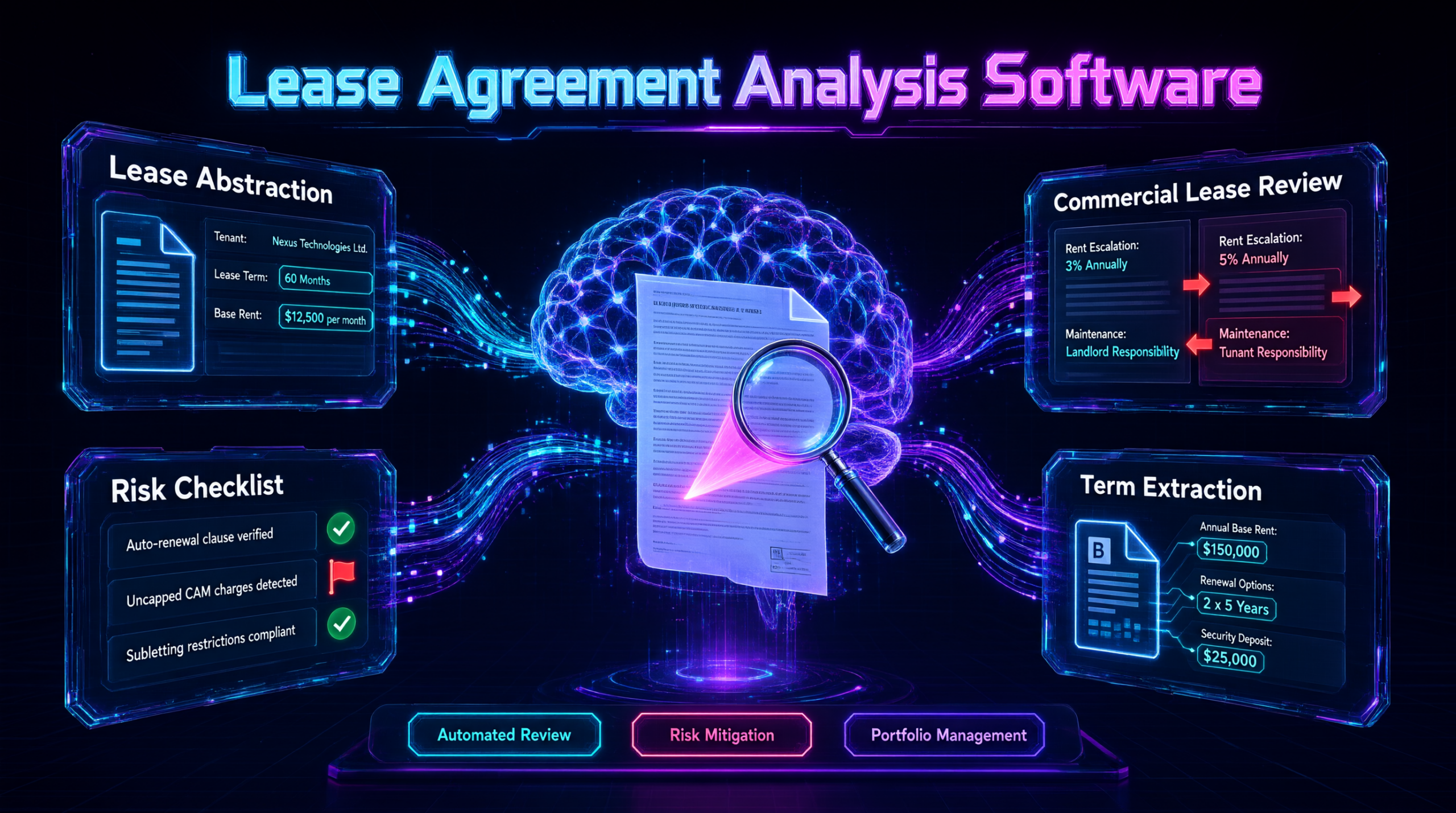
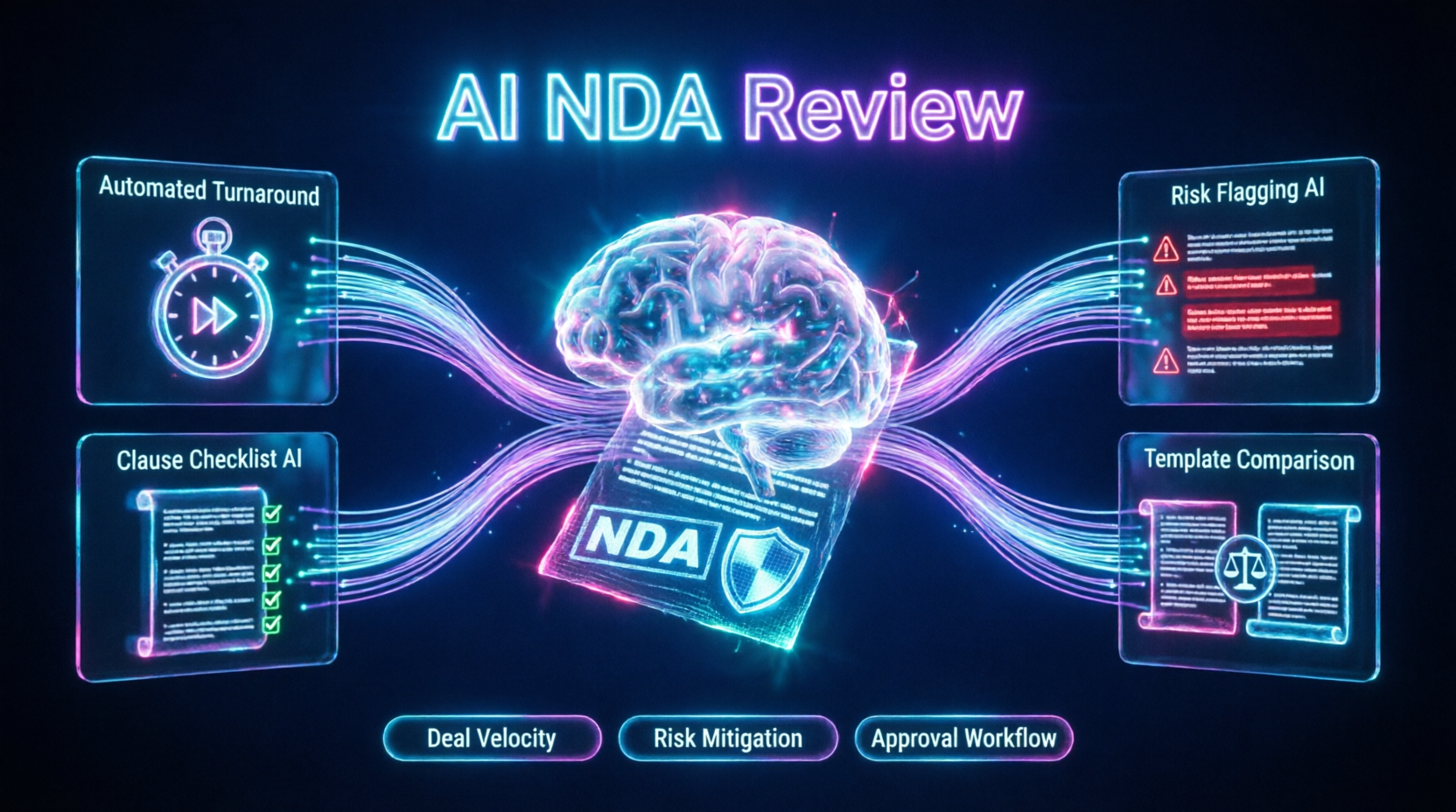
Third-Party and Vendor Risk Management: Ensuring your vendors comply with your standards is a critical, yet often overlooked, compliance requirement. AI can rapidly review hundreds of vendor contracts and security questionnaires, extracting key clauses related to data privacy, indemnification, and service level agreements (SLAs), and scoring each vendor based on their inherent risk profile.
4. Choosing the Right Compliance Automation Software for Your Enterprise
With a crowded market of legal and regulatory tech vendors, selecting the right compliance automation software requires careful evaluation of your specific organizational needs, risk tolerance, and technical infrastructure.
Explainability and Auditability: In compliance, “the AI said so” is not an acceptable answer for a regulator. The software must be “explainable.” It should not only flag a potential compliance issue but also provide clear citations, highlight the exact text in question, and explain the reasoning behind the flag. A robust audit trail of all AI decisions and human overrides is non-negotiable.
Enterprise-Grade Security and Data Isolation: Compliance teams handle the most sensitive data in the organization. Ensure the vendor complies with stringent standards (SOC 2 Type II, ISO 27001, GDPR). Crucially, verify that the provider offers a strict contractual guarantee that your proprietary data, policies, and flagged risks will not be used to train public, shared AI models. Data siloing and end-to-end encryption are mandatory.
Seamless Ecosystem Integration: The best compliance automation software does not exist in a vacuum. It must integrate seamlessly via APIs with your existing Governance, Risk, and Compliance (GRC) platforms, Contract Lifecycle Management (CLM) systems, and communication tools (like Microsoft 365 or Slack). Clunky, disjointed systems lead to low user adoption and dangerous data silos.
Customizability to Your Risk Appetite: Every organization has a different risk tolerance. The software should allow your compliance team to easily customize the rules engine, adjust sensitivity thresholds, and upload your specific corporate playbooks and regulatory frameworks without requiring extensive coding or vendor support.
5. Best Practices for Implementing AI Risk and Compliance Workflows
Adopting AI for compliance teams requires a strategic change management process to ensure adoption, maintain ethical standards, and maximize ROI.
Step 1: Start with a High-Volume, Rule-Based Pilot. Do not attempt to automate your most complex, novel regulatory interpretations on day one. Start with high-volume, well-defined tasks. Ideal pilot programs include automated vendor contract screening, GDPR data subject access request (DSAR) processing, or routine policy gap analysis. These use cases offer clear, measurable time savings.
Step 2: Establish a Human-in-the-Loop (HITL) Framework. AI is a powerful co-pilot, not an autopilot. Design workflows where the AI performs the initial heavy lifting (ingestion, extraction, flagging), but a qualified compliance officer always makes the final judgment call. This HITL approach ensures ethical compliance, maintains quality control, and builds trust in the technology among your team and external auditors.
Step 3: Invest in Cross-Functional Training. Compliance is no longer just the compliance department’s job. Train your legal, HR, and procurement teams on how to interact with the new compliance automation software. Ensure they understand how to interpret AI flags, when to escalate issues, and how to provide feedback to improve the model’s accuracy over time.
Step 4: Measure, Iterate, and Scale. Track key performance indicators (KPIs) during your pilot phase: time saved per document review, false positive/negative rates, and user adoption metrics. Use this data to refine the AI’s configuration, adjust your risk thresholds, and build a compelling business case for scaling the technology to more complex areas, such as real-time trade surveillance or anti-money laundering (AML) monitoring.
6. Comprehensive Query Coverage
What is the primary benefit of AI for compliance teams? The primary benefit of AI for compliance teams is the dramatic reduction in time spent on manual, repetitive document review, coupled with a significant increase in accuracy. This allows organizations to proactively identify regulatory gaps and mitigate risks before they result in fines or reputational damage.
How does regulatory document analysis handle frequent legal updates? Advanced regulatory document analysis tools continuously ingest and monitor external regulatory feeds. When a change occurs, the AI automatically maps the new regulation against your internal policies, generating a real-time gap analysis that tells you exactly which documents need to be updated to remain compliant.
Can a policy review AI tool replace human compliance officers? No. Policy review AI tools do not replace human judgment; they augment it. It handles the tedious, large-scale data processing and initial flagging, freeing up human compliance officers to focus on complex regulatory interpretation, strategic advisory, and stakeholder communication.
What should organizations look for in compliance automation software? When evaluating compliance automation software, prioritize explainability (clear audit trails of AI decisions), enterprise-grade security (data isolation and no training on your data), seamless integration with existing GRC/CLM systems, and high customizability to match your specific risk appetite.
Is AI risk and compliance monitoring secure for sensitive employee communications? Yes, when implemented correctly. Reputable AI risk and compliance platforms are designed with strict privacy controls, including role-based access, data anonymization, and end-to-end encryption. They comply with global privacy laws (like GDPR and CCPA) and ensure that monitoring is conducted ethically and transparently.
Conclusion
Embracing AI for compliance teams is no longer an optional technological upgrade; it is a fundamental requirement for any organization striving to maintain integrity, agility, and resilience in a hyper-regulated world. By moving beyond the limitations of manual review and leveraging the power of intelligent compliance document review, enterprises can transform mountains of unstructured data into actionable, strategic risk intelligence.
Whether you are deploying regulatory document analysis to stay ahead of legislative changes, utilizing a policy review AI tool to ensure internal consistency, or implementing comprehensive compliance automation software to monitor third-party risk, success requires a thoughtful, phased approach. Prioritize data security, start with high-impact pilot programs, and always maintain a human-in-the-loop to ensure ethical and accurate outcomes.
As artificial intelligence continues to evolve, its ability to understand complex regulatory reasoning and predict compliance failures will only deepen. By proactively adopting these tools today, you position your compliance function not as a bottleneck, but as a strategic, value-driving partner at the absolute forefront of the modern enterprise.