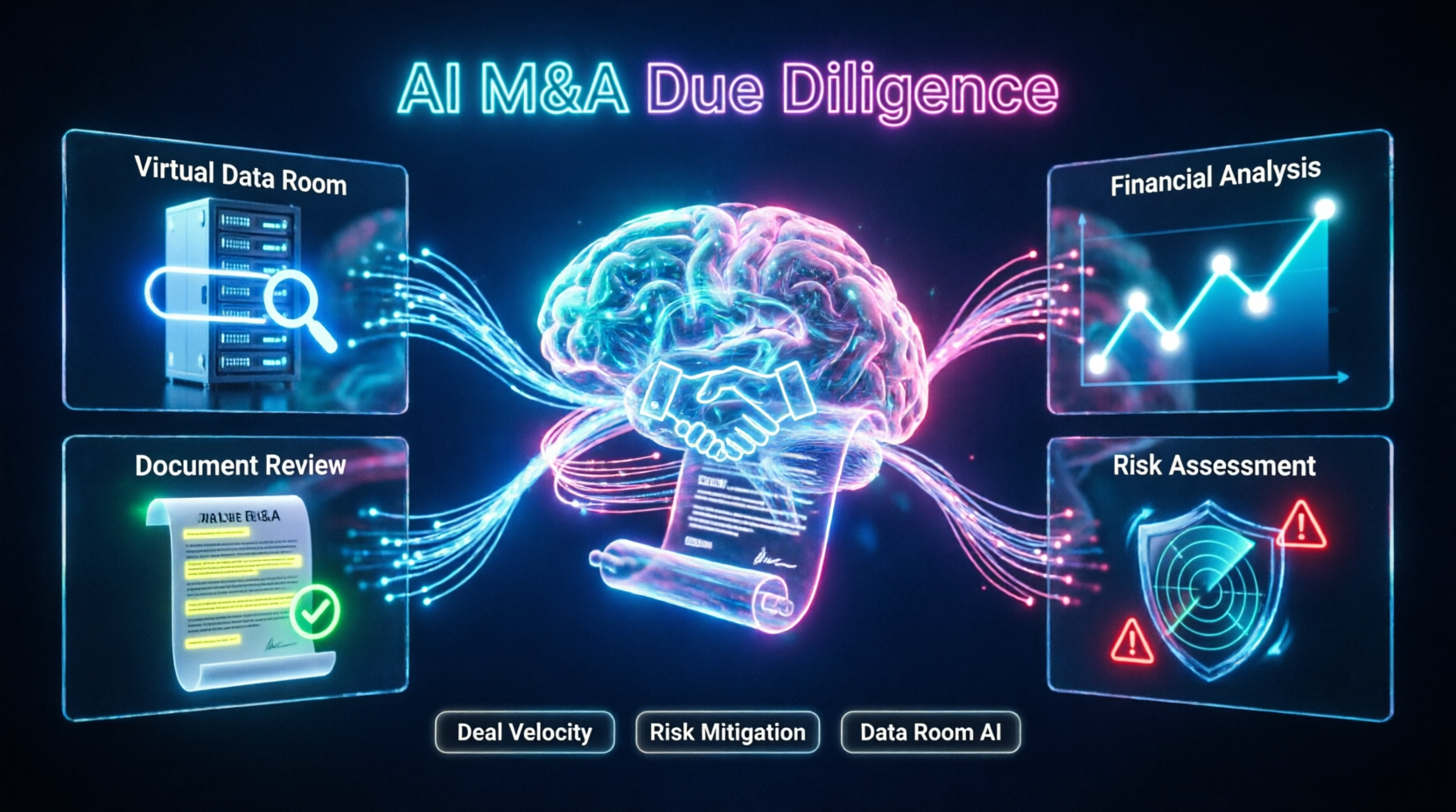
The AI contract review software landscape has fundamentally transformed how legal departments, law firms, and enterprise procurement teams manage their most critical agreements in 2026. As global business velocity increases and contract volumes explode, relying on manual review is no longer just inefficient—it is a massive operational risk. However, navigating the complex ecosystem of AI contract review software can be daunting for general counsels and managing partners. Whether you are trying to mitigate risk in thousands of vendor agreements or accelerate M&A due diligence, understanding which automated contract analysis AI delivers real value is essential for staying competitive.
This comprehensive guide reveals 7 powerful ways the best AI contract review software is revolutionizing legal operations, providing detailed analysis of AI legal risk detection, implementation strategies, and real-world use cases. By the end of this article, you will have a clear roadmap to selecting and deploying the right contract intelligence platform that will accelerate your legal workflows and deliver measurable ROI.
1. Understanding AI Contract Review Software in 2026
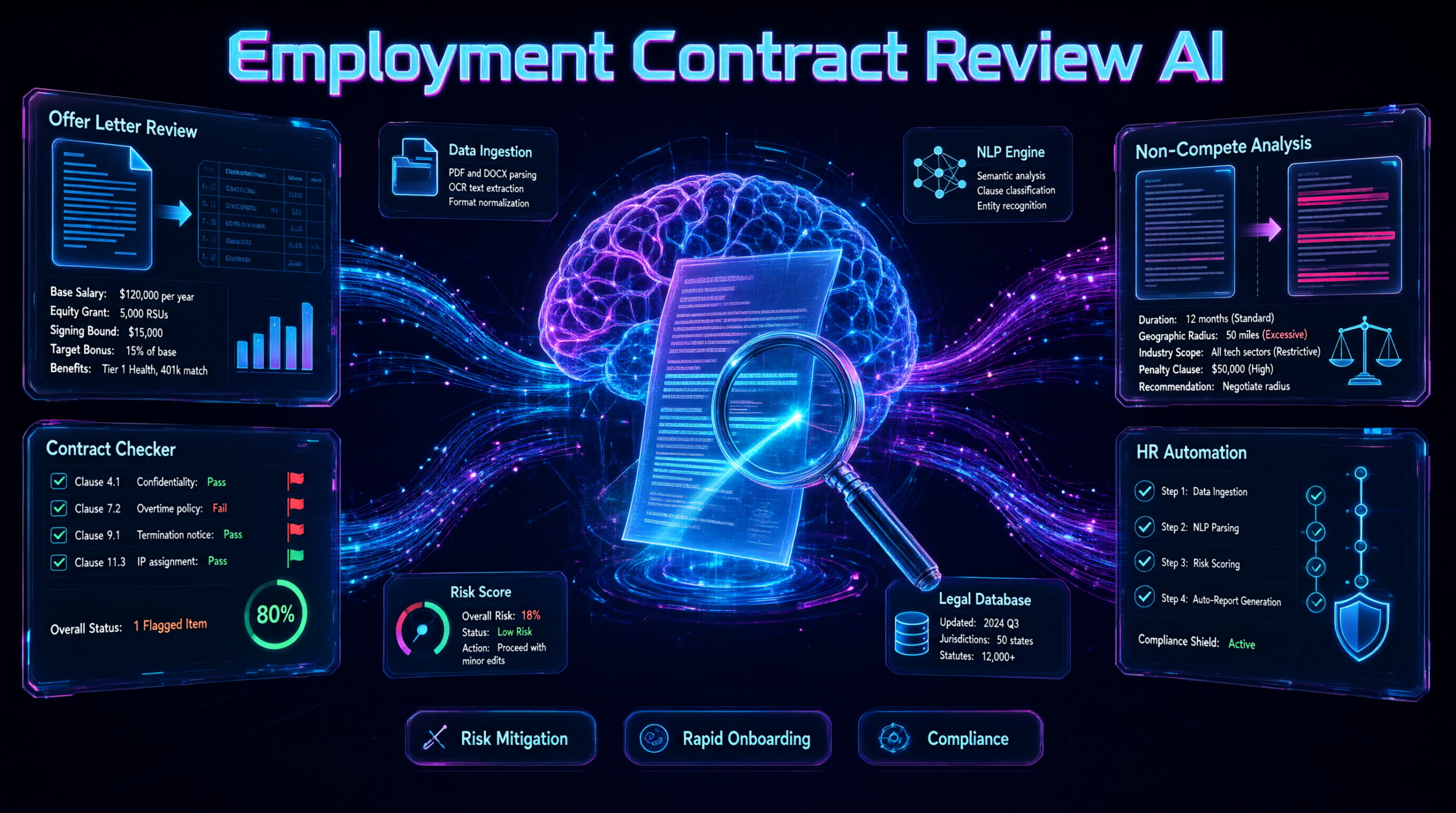
To fully grasp the impact of modern AI contract review software, we must first understand the fundamental shifts in legal technology. According to Gartner’s Legal Technology Research, intelligent contract lifecycle management (CLM) powered by generative AI is the primary driver of legal operational efficiency in the current economic cycle. The core capabilities of an AI contract review software lie in its ability to combine optical character recognition (OCR), natural language processing (NLP), and large language models (LLMs) to read, understand, and extract structured data from unstructured legal text.
When organizations ignore the power of a modern AI contract review software, they risk severe bottlenecks, missed renewal deadlines, and exposure to unfavorable liability clauses. Conversely, those who embrace these technologies find that automated contract analysis AI acts as a force multiplier for their legal teams. It is not about replacing attorneys; it is about augmenting legal expertise with machine-speed analysis. For a deeper understanding of how to instruct AI systems to work with complex legal texts, explore our comprehensive guide on How to Write AI Prompts.
2. Automated Contract Analysis AI: Speed and Accuracy
One of the most immediate benefits of implementing AI contract review software is the sheer speed and accuracy of automated contract analysis AI. Traditional contract review requires lawyers to read every single page of a 100-page master services agreement (MSA) to extract key dates, payment terms, and governing law. Automated contract analysis AI accomplishes this in seconds.
Key Capabilities of Automated Analysis:
- Instant extraction of key metadata (parties, effective dates, termination clauses)
- Identification of non-standard clauses and deviations from company playbooks
- Automatic summarization of lengthy agreements for executive review
- Cross-referencing obligations across multiple related documents
- Translation and analysis of contracts in multiple languages
According to industry benchmarks, legal teams deploying automated contract analysis AI report an 80% reduction in time spent on initial contract triage. By implementing a robust AI contract review software, companies can process thousands of incoming vendor agreements daily without adding headcount. To see how to integrate these extracted insights into your broader business strategy, review our detailed breakdown of AI Solutions for Business.
3. AI Legal Risk Detection: Protecting Your Business
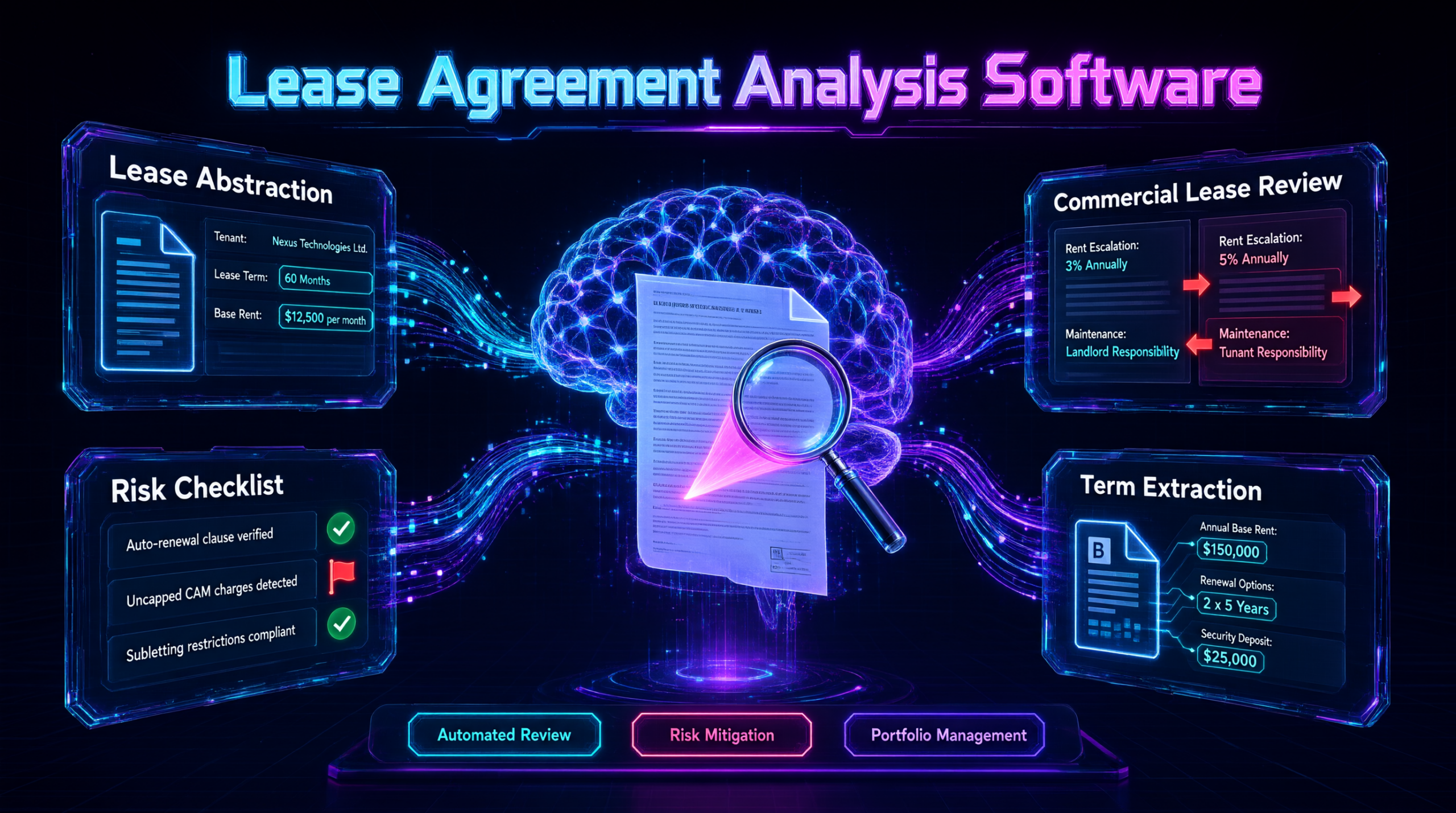
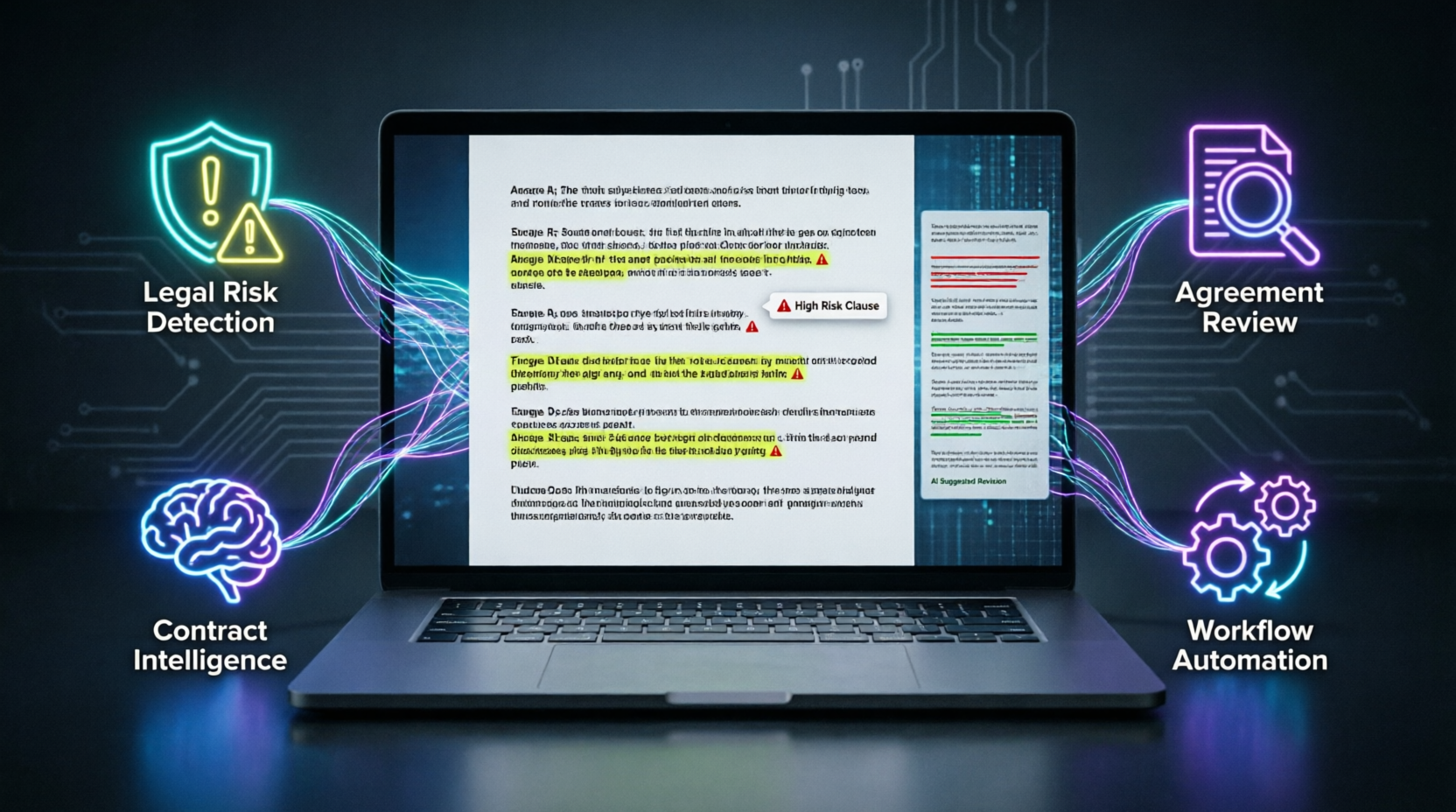
Beyond simple data extraction, the most advanced AI contract review software excels at AI legal risk detection. This capability transforms the software from a passive reading tool into an active risk management engine. AI legal risk detection algorithms are trained on millions of legal documents to identify clauses that deviate from acceptable risk thresholds.
Critical Risk Detection Features:
- Unlimited liability flagging
- Uncapped indemnification warnings
- Aggressive auto-renewal and notice period anomalies
- Non-compliant data privacy and GDPR clauses
- Unfavorable intellectual property assignment terms
When evaluating AI contract review software for risk mitigation, look for platforms that allow you to customize your “risk playbook.” You can set the AI legal risk detection engine to automatically redline or flag any clause that falls outside your organization’s predefined acceptable parameters. For technical teams building these custom risk-detection workflows, our guide on AI Coding Prompts is an essential resource.
4. Contract Intelligence Platform vs. Basic CLM
A common question for IT leaders is the difference between a basic Contract Lifecycle Management (CLM) system and a modern contract intelligence platform. Traditional CLM systems are essentially sophisticated digital filing cabinets; they store contracts and track basic metadata, but they cannot “read” or “understand” the documents inside them.
In contrast, a contract intelligence platform powered by AI contract review software actively analyzes the content of the contracts. It understands the semantic meaning of the clauses, tracks obligations, and provides strategic insights.
Key Differences:
- Basic CLM: Stores documents, tracks signatures, sends renewal reminders.
- Contract Intelligence Platform: Reads the document, extracts obligations, detects risks, summarizes terms, and answers natural language questions about the contract’s contents.
When upgrading from a legacy CLM to a true contract intelligence platform, organizations typically see a 40% increase in contract compliance and a massive reduction in missed obligations. This shift from simple storage to true intelligence enables downstream automation that was previously impossible. To optimize the search and retrieval of these intelligent contracts across your enterprise, many companies leverage platforms like Elastic AI-powered search.
5. AI for Agreement Review: Streamlining Negotiation
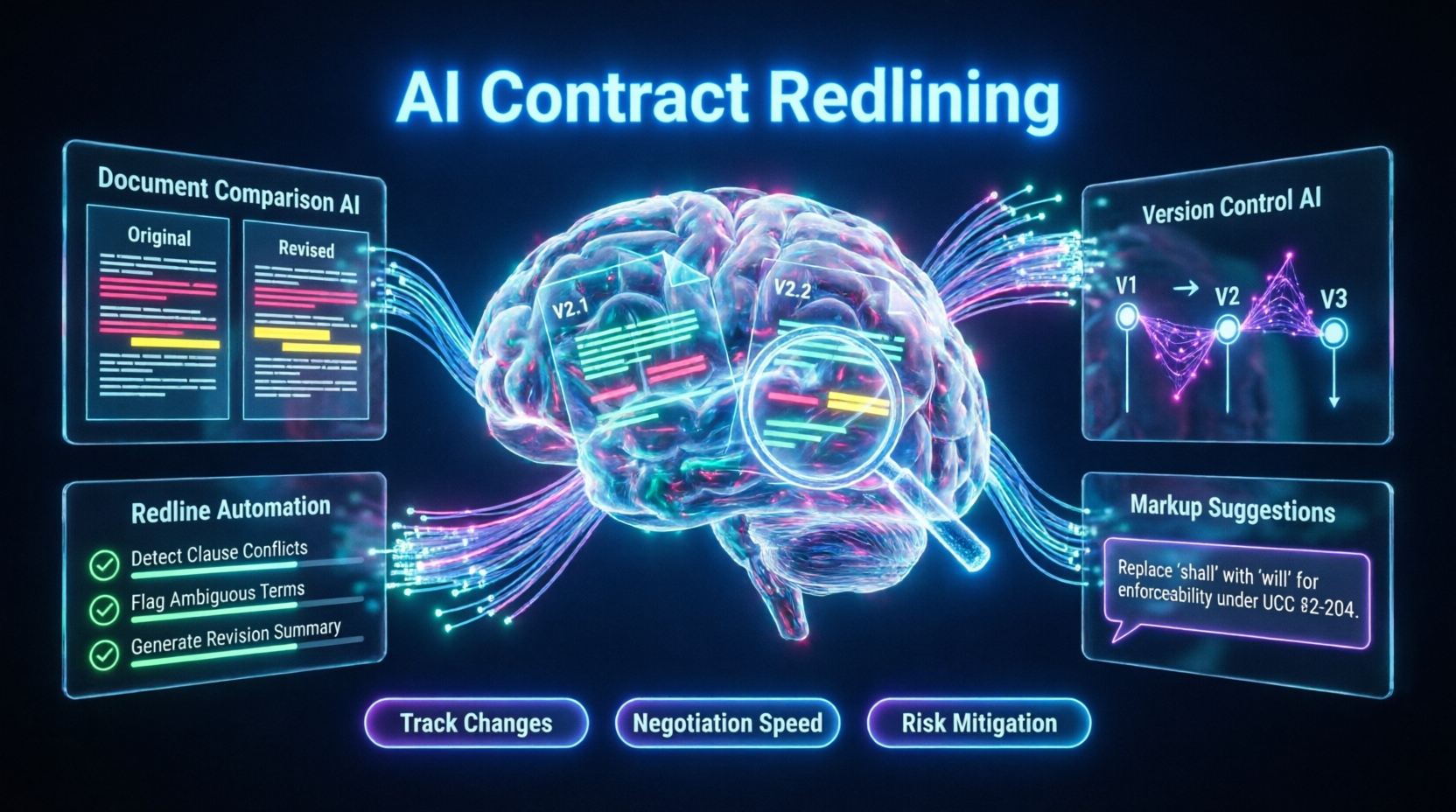
The negotiation phase of the contract lifecycle is often the most time-consuming. AI for agreement review specifically targets this bottleneck by automating the redlining and markup process. When a counterparty sends back a redlined version of your standard template, AI for agreement review can instantly compare it against your original draft and your company’s negotiation playbook.
Negotiation Acceleration Features:
- Automated first-pass redlining based on company playbooks
- Alternative clause suggestions for rejected terms
- Tone and sentiment analysis of counterparty communications
- Historical fallback position recommendations
- Automated generation of negotiation summaries for attorneys
By leveraging advanced AI for agreement review, legal teams can resolve routine vendor negotiations without human intervention, reserving attorney time only for complex, high-stakes strategic agreements. This capability is a hallmark of the best AI contract review software solutions in 2026, ensuring that legal departments act as business enablers rather than bottlenecks.
6. Legal AI Tools for Law Firms: Enterprise Adoption
While in-house legal departments use these tools for volume and risk management, legal AI tools for law firms are driving a fundamental shift in the business of law. Law firms are increasingly adopting AI contract review software to offer fixed-fee or value-based pricing models, rather than relying solely on the billable hour.
Impact on Law Firm Operations:
- Dramatic reduction in time spent on M&A due diligence
- Faster turnaround times for routine contract drafting and review
- Enhanced ability to handle high-volume matters for enterprise clients
- Improved profitability by reducing junior associate hours on manual review
- Better client reporting through automated contract analytics
According to legal technology adoption reports, law firms that integrate legal AI tools for law firms into their practice groups see a 30% increase in matter profitability and significantly higher client satisfaction scores. To ensure your legal team is maximizing the value of these tools, explore our comprehensive guide on AI Tools Importance.
7. Implementing AI Contract Review Software Successfully
Selecting the right AI contract review software is only the first step. Successful implementation requires strategic planning, data cleansing, and change management. The best AI contract review software requires a comprehensive approach to integrate seamlessly into your existing legal operations.
Implementation Best Practices:
1. Cleanse Your Legacy Data: Before feeding your historical contracts into a contract intelligence platform, ensure your repository is organized. Garbage in equals garbage out; the AI needs clean, readable documents to perform accurate automated contract analysis AI.
2. Define Your Playbook: Work with your senior attorneys to explicitly define your company’s negotiation playbook, acceptable risk thresholds, and mandatory fallback positions. This data is the foundation of effective AI legal risk detection.
3. Integrate with Your Tech Stack: Ensure your AI contract review software integrates seamlessly with your CRM (Salesforce), e-signature platforms (DocuSign), and communication tools (Slack, Teams).
4. Establish a Human-in-the-Loop Protocol: While AI for agreement review is highly accurate, legal judgment is still required. Establish clear protocols for when the AI’s suggestions must be escalated to a human attorney for final approval.
To ensure your broader document workflows are optimized alongside your contract management, explore our guides on AI Document Analysis Platform and AI eDiscovery.
Comprehensive Query Coverage
What is the best AI contract review software for small businesses? For small businesses and startups, the best AI contract review software options include cloud-based platforms with pay-as-you-go pricing and intuitive interfaces. These solutions offer enterprise-grade automated contract analysis AI and basic AI legal risk detection without the need for dedicated IT support or massive upfront enterprise investments.
How accurate is AI legal risk detection compared to manual review? Multiple studies show that top-tier AI legal risk detection achieves 90-95% accuracy in identifying non-standard clauses and risk deviations, often exceeding human reviewer consistency which can suffer from fatigue. Automated contract analysis AI is particularly effective at catching subtle liability shifts, though human attorney oversight remains essential for final strategic decisions.
Can a contract intelligence platform replace a traditional CLM? Yes, a modern contract intelligence platform is rapidly replacing traditional CLMs. While legacy CLMs only store and track documents, a contract intelligence platform powered by AI contract review software actively reads, analyzes, and manages the obligations within the contracts, providing a much higher ROI.
How do legal AI tools for law firms handle data privacy and confidentiality? Top-tier legal AI tools for law firms employ enterprise-grade security, including end-to-end encryption, zero-data-retention policies (meaning the AI does not learn from your specific client data), and SOC 2 Type II compliance. When selecting AI contract review software, always verify their data privacy architecture to protect attorney-client privilege.
What is the difference between AI contract review software and AI eDiscovery? While both utilize similar underlying NLP and machine learning technologies, AI contract review software is designed for forward-looking document creation, negotiation, and obligation management. In contrast, AI eDiscovery is designed for backward-looking litigation support, identifying relevant evidence and privilege across millions of historical documents.
Conclusion
The AI contract review software revolution in 2026 is defined by unprecedented accuracy, proactive risk mitigation, and seamless integration into the legal workflow. By understanding the core capabilities of AI contract review software, leveraging automated contract analysis AI for speed, deploying AI legal risk detection to protect the business, upgrading to a contract intelligence platform, utilizing AI for agreement review to accelerate negotiations, and adopting legal AI tools for law firms to transform the business of law, organizations can unlock unprecedented levels of legal operational efficiency.
As you integrate these powerful AI contract review software solutions into your organizational strategy, remember that the technology is only as effective as the playbooks, data governance, and attorney training supporting it. Continuously refine your risk parameters, stay updated on the latest AI capabilities, and never stop optimizing your contract lifecycle.