
Navigating AI document analysis pricing is the absolute best way to ensure your organization invests in intelligent document processing (IDP) without overspending on unnecessary features or hidden fees. In an era where businesses are inundated with unstructured data, relying on manual data entry and legacy OCR systems is no longer a viable strategy for operational efficiency. Today, forward-thinking enterprises are leveraging artificial intelligence to automate extraction, classification, and analysis. However, the transition to AI requires careful financial planning. If you are looking to understand exactly how to budget for these technologies and select a cost-effective solution that scales with your needs, you are in the right place.
This comprehensive guide demystifies the financial landscape of intelligent document processing. We will explore the various structures of document analysis software costs, detail how to evaluate AI platform pricing plans, and provide a strategic blueprint for finding an affordable contract review tool. By the end of this article, you will have a clear, actionable framework for managing a document AI subscription, understanding the total cost of ownership, and mastering the art of choosing a document analysis tool that delivers maximum ROI.
1. The Financial Landscape: Why AI Document Analysis Pricing Matters in 2026
Historically, enterprise software procurement was a straightforward process of buying perpetual licenses or basic SaaS subscriptions. However, the emergence of AI-driven tools has introduced complex, usage-based billing models that can catch unprepared businesses off guard. Understanding AI document analysis pricing is critical because the wrong financial commitment can stall your digital transformation or lead to massive budget overruns as your data volume grows.
The shift from legacy Optical Character Recognition (OCR) to AI-powered Intelligent Document Processing (IDP) represents a significant upgrade in capability, but it also changes the cost structure. Legacy OCR charged primarily for server space and basic user seats. AI, however, consumes significant computational power to run machine learning models, natural language processing (NLP), and computer vision algorithms. According to a 2026 Gartner report on IDP market trends, organizations that fail to accurately forecast their document volumes before signing an AI contract experience an average budget overrun of 35% in their first year. Therefore, aligning your technological needs with a transparent pricing model is essential for sustainable growth.
2. Breaking Down the Costs: Understanding Document Analysis Software Cost
To make informed decisions, you must first understand the primary drivers of document analysis software cost. Vendors typically utilize one of three primary pricing models, each with its own advantages and potential pitfalls.
Per-Page or Per-Document Pricing: This is the most common model for high-volume data extraction. You pay a fraction of a cent for every page processed. While this is highly scalable and ensures you only pay for what you use, it can become prohibitively expensive if your document volume spikes unexpectedly. When evaluating AI document analysis pricing, always ask if blank pages, scanned images, or failed extractions count toward your monthly page quota.
Per-User or Per-Seat Pricing: Common in workflow-heavy platforms, this model charges a flat monthly fee for each human user interacting with the system (e.g., reviewers, approvers, and admins). This is ideal for teams with a fixed number of employees but can be cost-inefficient if you have a large, rotating cast of occasional reviewers.
Flat-Rate or Tiered Enterprise Pricing: For organizations with predictable, high-volume needs, vendors often offer tiered packages (e.g., Starter, Professional, Enterprise) that include a set number of processed pages and user seats. When comparing AI document analysis pricing models, a flat-rate tier often provides the most budget predictability, though it may require you to over-provision slightly to avoid overage fees.
3. Evaluating AI Platform Pricing Plans for Your Business Size
Not all businesses require the same level of computational power. Evaluating AI platform pricing plans requires matching the vendor’s feature set to your specific operational scale.
Small to Medium Businesses (SMBs): SMBs should look for lightweight, cloud-native platforms that offer a generous free tier or a low-cost entry point. These plans usually cap processing at a few thousand pages per month and limit advanced features like custom model training. For an SMB, the goal is to automate core workflows (like invoice processing) without committing to a massive enterprise contract.
Mid-Market and Enterprise: Larger organizations require robust AI platform pricing plans that include advanced security (SOC 2, HIPAA compliance), dedicated customer success managers, and the ability to train custom machine learning models on proprietary document types. Enterprise pricing is rarely published on the website; it requires a custom quote based on your specific API call volume, storage needs, and integration requirements.
4. Finding Value: How to Source an Affordable Contract Review Tool
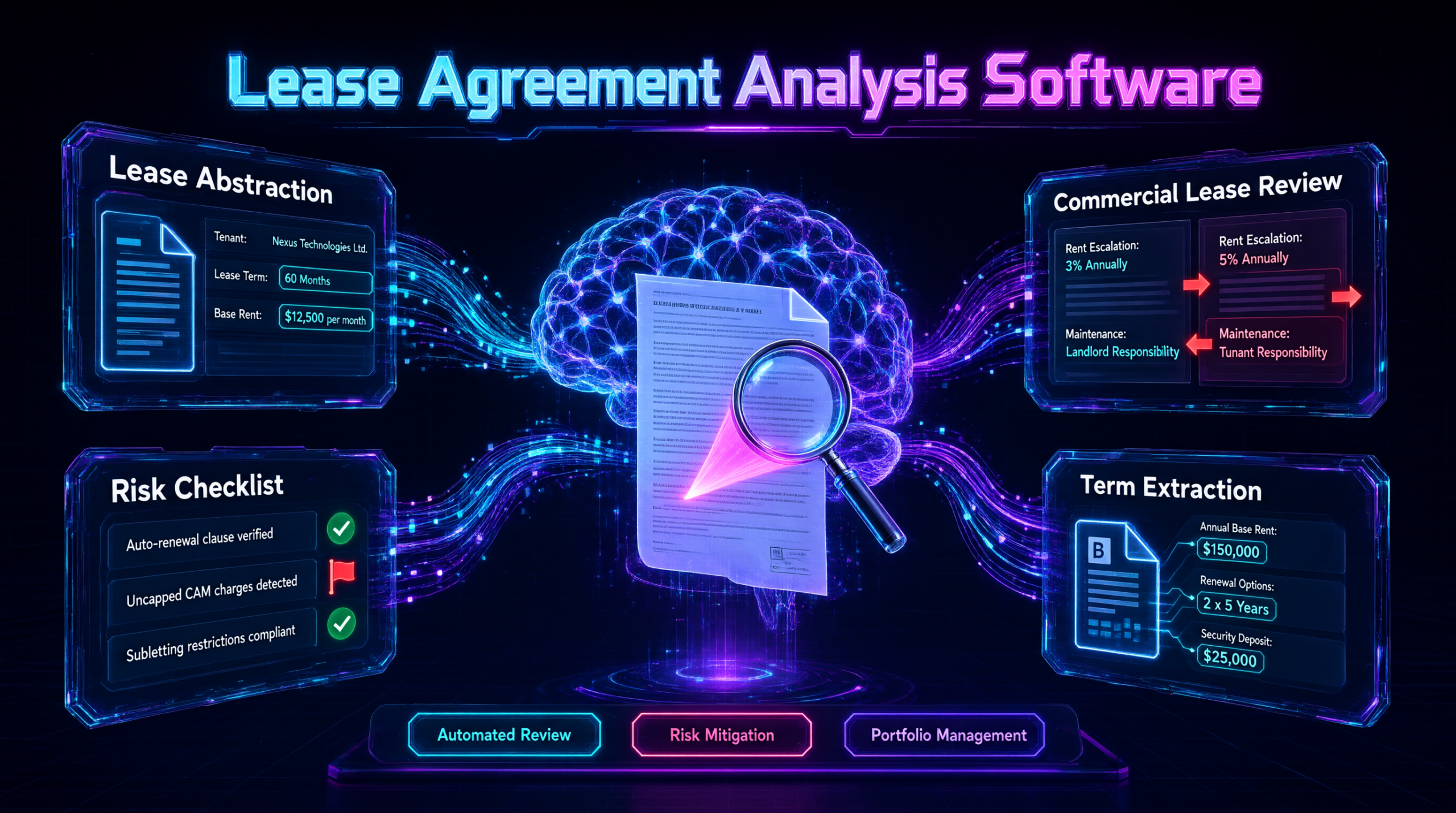
The legal and procurement sectors have seen a massive surge in AI adoption, specifically for contract lifecycle management. However, legacy legal tech is notoriously expensive. Finding an affordable contract review tool requires looking beyond the biggest brand names and focusing on specialized, agile AI vendors.
Focusing on Core Features: Many enterprise legal AI platforms bundle unnecessary features like eDiscovery, litigation support, and complex matter management. If your primary goal is simply to extract key clauses, flag risks, and summarize agreements, you can find an affordable contract review tool that focuses strictly on document analysis. By stripping away the bloat, you can reduce your software spend by up to 50%.
Open-Source and API-First Solutions: For tech-savvy legal teams, utilizing API-first AI platforms allows you to build a custom contract review workflow. You pay only for the raw AI extraction via API calls and build the user interface internally. This approach drastically lowers the AI document analysis pricing overhead, as you are not paying for a polished, out-of-the-box SaaS frontend.
5. The Recurring Commitment: Navigating the Document AI Subscription
Once you have selected a vendor, you will enter into a document AI subscription. Managing this recurring commitment effectively is crucial for long-term financial health.
Annual vs. Monthly Billing: Almost all AI vendors offer a significant discount (typically 15% to 20%) if you commit to an annual document AI subscription rather than paying month-to-month. If your document volume is stable, locking in an annual rate is the smartest financial move. However, if you are in a pilot phase, insist on a monthly plan to avoid being locked into a year-long contract for a tool that doesn’t meet your needs.
Understanding Overage Fees and Auto-Scaling: The most dangerous aspect of any document AI subscription is the overage fee. If your contract includes 50,000 pages per month and you process 55,000, some vendors will automatically charge you a premium rate for the extra 5,000 pages. Always negotiate a “soft cap” or a pre-approved auto-scaling clause that alerts you when you reach 80% of your quota, allowing you to upgrade your tier gracefully rather than facing a surprise invoice.
6. Strategic Selection: Best Practices for Choosing a Document Analysis Tool
Ultimately, choosing a document analysis tool is not just about the sticker price; it is about calculating the Total Cost of Ownership (TCO). When you factor AI document analysis pricing into your TCO, you must consider several hidden costs.
Implementation and Integration Costs: A cheap software license is useless if it costs $50,000 in professional services to integrate it with your existing ERP or CRM. When choosing a document analysis tool, prioritize platforms that offer pre-built connectors for systems like Salesforce, SAP, Microsoft 365, and Slack. Native integrations drastically reduce implementation time and ongoing maintenance costs.
Training and Change Management: AI tools require human oversight, especially in the early stages. Factor in the cost of training your staff to use the new system and the time spent by your “human-in-the-loop” reviewers correcting AI mistakes. A tool with a slightly higher AI document analysis pricing but a 99% accuracy rate out-of-the-box will ultimately be cheaper than a low-cost tool that requires hours of manual correction every day.
7. Comprehensive Query Coverage
What is the average AI document analysis pricing for small businesses? For small businesses, AI document analysis pricing typically ranges from $50 to $300 per month. These entry-level tiers usually include processing for 1,000 to 5,000 pages per month and support for 1 to 5 user seats, making it accessible for startups and small teams.
How does document analysis software cost scale with volume? Document analysis software cost scales based on the vendor’s pricing model. In per-page models, costs increase linearly with volume. In tiered models, costs jump at specific thresholds (e.g., moving from 10,000 to 50,000 pages). To manage this, negotiate volume discounts or auto-scaling clauses in your contract.
What should I look for in AI platform pricing plans? When evaluating AI platform pricing plans, look beyond the base fee. Check for hidden costs like API call limits, storage fees, charges for custom model training, and overage penalties. The best plans offer transparent, predictable pricing with clear boundaries on what is included.
Is there a truly affordable contract review tool for small law firms? Yes. By focusing on specialized, API-driven platforms or lightweight SaaS tools that avoid enterprise bloat, small firms can find an affordable contract review tool for under $100 per user/month. These tools focus strictly on clause extraction and risk flagging, providing high value without the massive price tag of full-suite legal tech.
How do I avoid hidden fees in a document AI subscription? To avoid hidden fees in a document AI subscription, always request a detailed rate card before signing. Specifically ask about the cost of blank pages, failed extractions, data storage retention, and API overages. Ensure your contract includes a notification system when you approach your monthly limits.
Conclusion
Mastering AI document analysis pricing is no longer just a task for the IT department; it is a strategic imperative for CFOs, legal leaders, and operations managers alike. By moving beyond the initial sticker price and understanding the nuances of document analysis software cost, AI platform pricing plans, and document AI subscription models, you can ensure your investment yields a massive return on efficiency and accuracy.
Whether you are searching for an affordable contract review tool to streamline your legal department or choosing a document analysis tool to automate your accounts payable, the key to success lies in aligning the vendor’s pricing structure with your actual document volume and operational workflows.
As artificial intelligence continues to evolve, the cost of processing data will continue to drop, making these powerful tools accessible to businesses of all sizes. Embrace the power of intelligent document processing today, and position your organization at the absolute forefront of the automated data revolution.