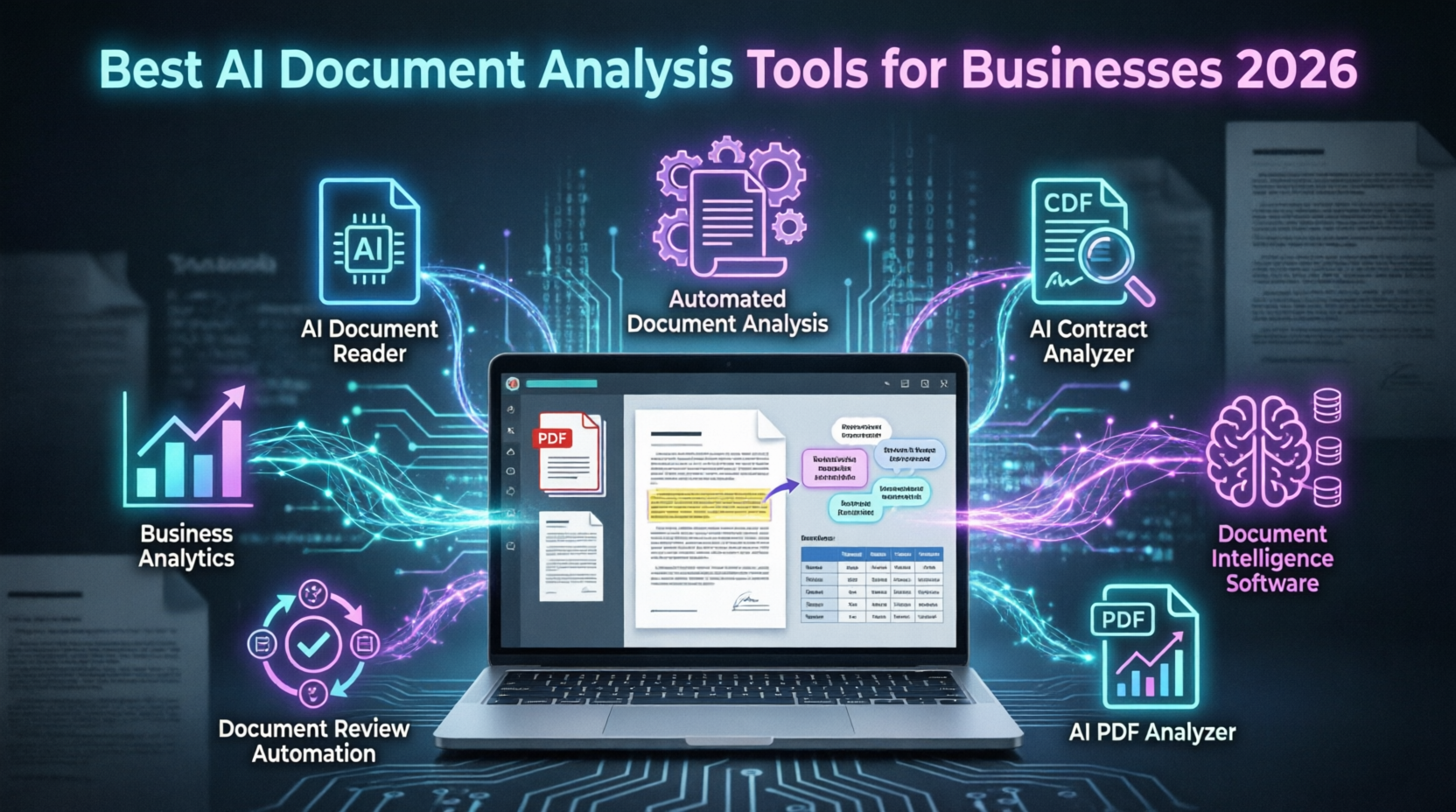
The landscape of enterprise technology is evolving rapidly, and finding the Best AI document analysis tools for businesses 2026 has become a top priority for organizations drowning in unstructured data. As companies seek to streamline operations, reduce manual errors, and accelerate decision-making, implementing a robust AI document reader or automated document analysis system is no longer optional. However, with hundreds of platforms claiming to offer the ultimate document intelligence software, choosing the right solution can be overwhelming. Whether you need an AI contract analyzer for legal teams, an AI PDF analyzer for financial records, or comprehensive document review automation for compliance, understanding the top contenders is essential.
This comprehensive guide reveals the 7 critical categories and top solutions when evaluating the Best AI document analysis tools for businesses 2026. By the end of this article, you will have a clear roadmap to selecting the perfect document intelligence software that will transform your workflows and deliver measurable ROI.
1. The Rise of the AI Document Reader in Enterprise Workflows
To understand the Best AI document analysis tools for businesses 2026, we must first look at the evolution of the AI document reader. Traditional OCR simply converted images to text, but a modern AI document reader uses deep learning to understand context, layout, and semantics. According to Gartner’s Guide to Document AI, intelligent document processing is the primary driver of operational efficiency in the current economic cycle.
When organizations deploy a high-quality AI document reader, they unlock the ability to process millions of pages across multiple languages and formats. This capability is the foundation of automated document analysis, allowing businesses to extract key-value pairs, tables, and even handwritten notes with unprecedented accuracy. For a deeper understanding of how to instruct these AI systems to handle complex data extraction, explore our comprehensive guide on How to Write AI Prompts.
2. Key Features of Automated Document Analysis Platforms
When evaluating the Best AI document analysis tools for businesses 2026, the core engine of automated document analysis must be robust. Automated document analysis goes beyond simple data extraction; it involves classifying documents, routing them to the correct departments, and validating the extracted data against business rules.
Essential Features of Automated Document Analysis:
- Multi-Format Ingestion: The ability to process PDFs, Word documents, images, and emails seamlessly.
- Contextual Data Extraction: Identifying not just text, but the relationship between data points (e.g., matching an invoice line item to its total).
- Human-in-the-Loop (HITL) Interfaces: Intuitive dashboards for human reviewers to quickly correct low-confidence extractions.
- API-First Architecture: Ensuring the automated document analysis engine can push data directly into ERPs like SAP or Oracle.
By prioritizing these features, businesses can achieve straight-through processing rates of over 90%, drastically reducing operational costs. To see how these automated workflows integrate into broader enterprise strategies, review our detailed breakdown of AI Solutions for Business.
3. Why You Need an AI Contract Analyzer for Legal Teams
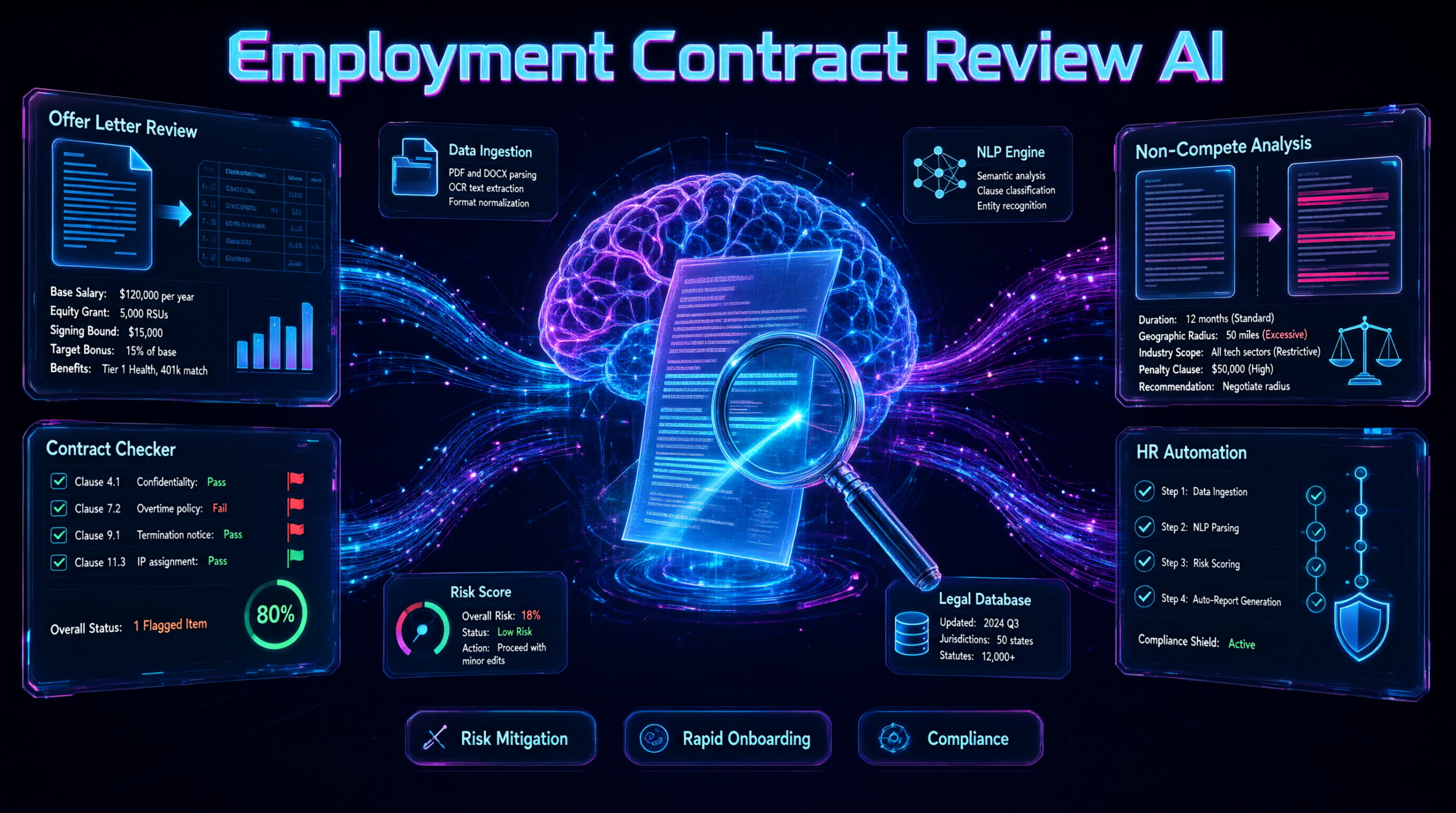
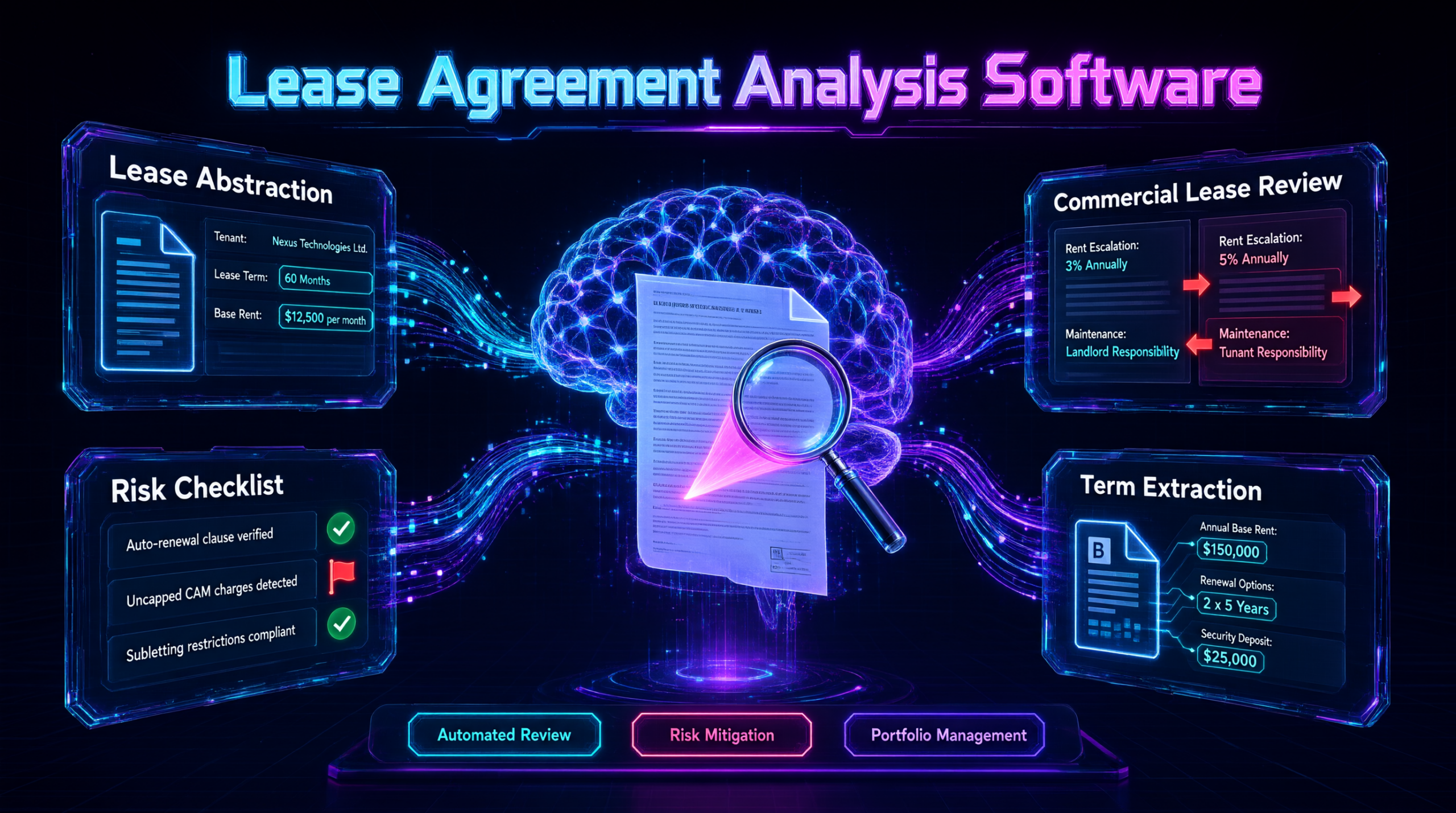
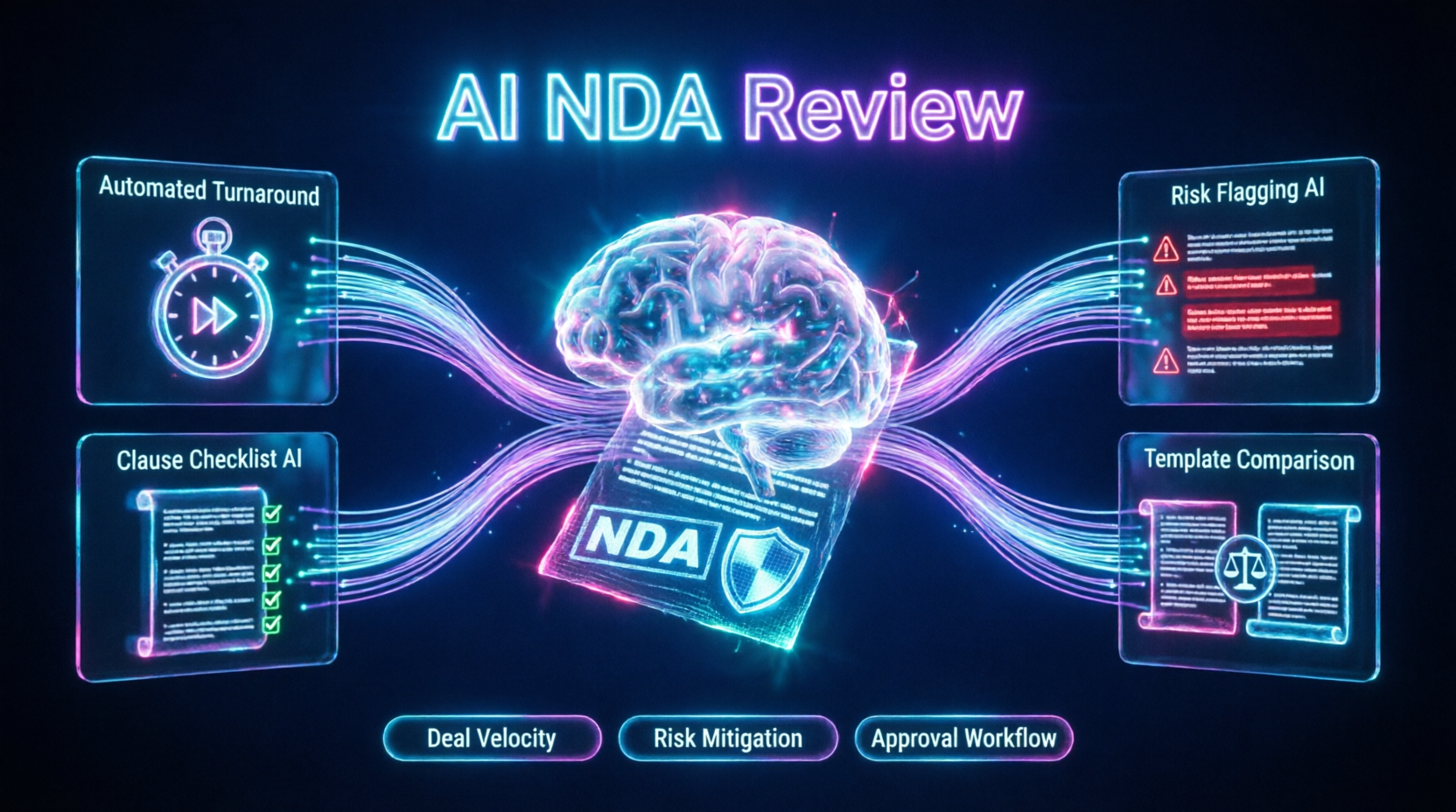
For legal and procurement departments, the Best AI document analysis tools for businesses 2026 must include a specialized AI contract analyzer. An AI contract analyzer is designed specifically to read, understand, and extract critical clauses, obligations, and risks from complex legal agreements.
Benefits of an AI Contract Analyzer:
- Risk Mitigation: Automatically flagging non-standard clauses, unlimited liability, or aggressive auto-renewal terms.
- Obligation Tracking: Extracting key dates, renewal deadlines, and payment terms to ensure compliance.
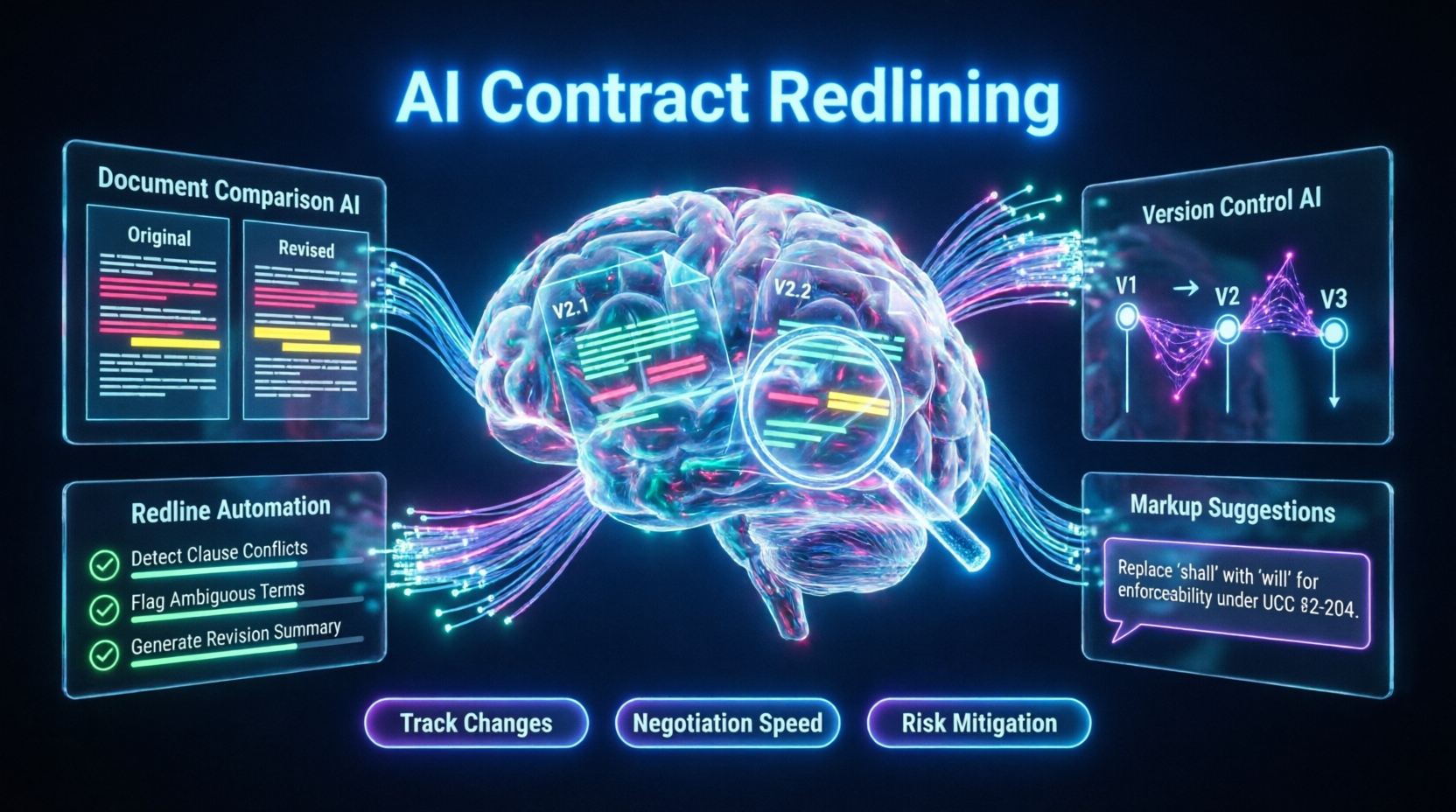
- Playbook Enforcement: Comparing redlined contracts against your company’s predefined negotiation playbook.
- Rapid Due Diligence: Accelerating M&A processes by analyzing thousands of contracts in hours rather than months.
When selecting an AI contract analyzer, look for platforms that allow you to train the model on your specific legal playbooks. This ensures the document intelligence software aligns perfectly with your risk tolerance. For technical teams building custom legal AI pipelines, our guide on AI Coding Prompts is an essential resource.
4. Document Intelligence Software vs. Traditional OCR
A common question when searching for the Best AI document analysis tools for businesses 2026 is the difference between document intelligence software and legacy OCR. Traditional OCR is a dumb technology; it reads characters but understands nothing. Document intelligence software, on the other hand, combines OCR with Natural Language Processing (NLP) and machine learning.
Key Differences:
- Layout Awareness: Document intelligence software understands tables, columns, and headers, preserving the relational structure of the data.
- Semantic Understanding: It knows that “Acme Corp” is a vendor name and “$5,000” is an invoice total.
- Handwriting Recognition: Advanced document intelligence software can read cursive and printed handwriting using deep learning models.
- Continuous Learning: The system improves its accuracy over time as human reviewers correct its mistakes.
Upgrading from basic OCR to true document intelligence software typically yields a 40% increase in data accuracy and a massive reduction in processing time. To optimize the search and retrieval of these intelligent insights across your enterprise, many companies leverage platforms like Elastic AI-powered search.
5. How an AI PDF Analyzer Transforms Financial Operations
In the finance and accounting sectors, the Best AI document analysis tools for businesses 2026 heavily feature a powerful AI PDF analyzer. An AI PDF analyzer is specifically optimized to handle the complex, multi-page, and highly structured nature of financial documents like invoices, receipts, bank statements, and tax forms.
Capabilities of an AI PDF Analyzer:
- Multi-Page Table Reconstruction: Accurately extracting data from tables that span across multiple pages.
- Stamp and Signature Detection: Identifying approval stamps and signatures to verify document authenticity.
- Mathematical Validation: Automatically checking if the line items add up to the total amount due.
- Duplicate Detection: Flagging identical invoices to prevent double payments.
By deploying an AI PDF analyzer, finance teams can automate accounts payable and receivable processes, ensuring faster payments, better cash flow management, and improved vendor relationships. To discover the best platforms for these specialized financial tasks, check out our guide on the Best AI Prompt Libraries 2026.
6. Achieving ROI with Document Review Automation
The ultimate goal of implementing the Best AI document analysis tools for businesses 2026 is to achieve document review automation. Document review automation refers to the end-to-end process of ingesting, analyzing, validating, and routing documents without human intervention.
Drivers of ROI in Document Review Automation:
- Labor Cost Reduction: Freeing up highly paid employees from manual data entry to focus on strategic analysis.
- Error Reduction: Eliminating the costly typos and missed details that plague manual review.
- Speed to Decision: Accelerating processes like loan approvals, insurance claims, and customer onboarding.
- Compliance and Auditability: Creating a perfect, time-stamped digital trail of every document processed.
According to industry benchmarks, organizations that successfully implement document review automation see an average ROI of 300% within the first 12 months. To ensure your team is maximizing the value of your automation initiatives, explore our comprehensive guide on AI Tools Importance.
7. How to Choose the Best AI Document Analysis Tools for Businesses 2026
Selecting the right platform from the Best AI document analysis tools for businesses 2026 requires a strategic evaluation of your specific use cases, document volumes, and IT infrastructure.
Evaluation Criteria:
- Pre-trained vs. Custom Models: Does the document intelligence software offer out-of-the-box models for common documents (invoices, IDs) while allowing custom training for unique forms?
- Security and Compliance: Does the platform offer on-premise deployment, private cloud options, and comply with SOC 2, HIPAA, and GDPR?
- Integration Ecosystem: How easily does the AI document reader connect with your existing tech stack via REST APIs or pre-built connectors?
- Scalability: Can the automated document analysis engine handle sudden spikes in volume during peak business seasons?
- User Experience: Is the HITL interface intuitive enough for non-technical staff to use efficiently?
By carefully weighing these factors, you can select a solution that not only meets your current needs but also scales with your future growth. To ensure your broader document workflows are optimized, explore our guides on AI Document Analysis Platform and AI compliance document analysis.
Comprehensive Query Coverage
What are the Best AI document analysis tools for businesses 2026? The Best AI document analysis tools for businesses 2026 include platforms that offer a combination of advanced OCR, NLP, and machine learning. Look for solutions that provide specialized modules like an AI contract analyzer for legal teams, an AI PDF analyzer for finance, and robust document review automation capabilities. Top contenders are evaluated based on accuracy, security, and integration capabilities.
How does an AI document reader improve data accuracy? An AI document reader improves accuracy by using deep learning models trained on millions of documents. Unlike traditional OCR, an AI document reader understands context, layout, and semantics, allowing it to accurately extract data from complex tables, handwritten notes, and degraded scans. Combined with human-in-the-loop validation, accuracy rates can exceed 99%.
Can an AI contract analyzer replace legal teams? An AI contract analyzer does not replace legal teams; it augments them. By automating the initial review, risk flagging, and data extraction, an AI contract analyzer frees up attorneys to focus on high-value strategic negotiations and complex legal reasoning. It acts as a powerful assistant that accelerates the legal workflow.
What is the difference between an AI PDF analyzer and OCR? Traditional OCR only converts images of text into machine-encoded characters. An AI PDF analyzer goes much further by understanding the document’s structure, extracting relational data from tables, validating mathematical calculations, and classifying the document type. Document intelligence software turns a flat PDF into structured, actionable data.
How secure is document review automation for sensitive data? Enterprise-grade document review automation platforms are built with security-first architectures. They offer end-to-end encryption, data residency controls, zero-data-retention policies (ensuring the AI does not learn from your sensitive data), and comply with strict regulatory frameworks like HIPAA, GDPR, and SOC 2.
Conclusion
Finding the Best AI document analysis tools for businesses 2026 is a strategic imperative for any organization looking to thrive in a data-driven economy. By leveraging a powerful AI document reader, implementing automated document analysis pipelines, deploying an AI contract analyzer for legal workflows, upgrading to advanced document intelligence software, utilizing an AI PDF analyzer for financial operations, and achieving document review automation, businesses can unlock unprecedented levels of efficiency and accuracy.
As you integrate these powerful technologies into your organizational strategy, remember that the AI is only as effective as the workflows and data governance supporting it. Continuously refine your models, stay updated on the latest AI capabilities, and never stop optimizing your document processes.