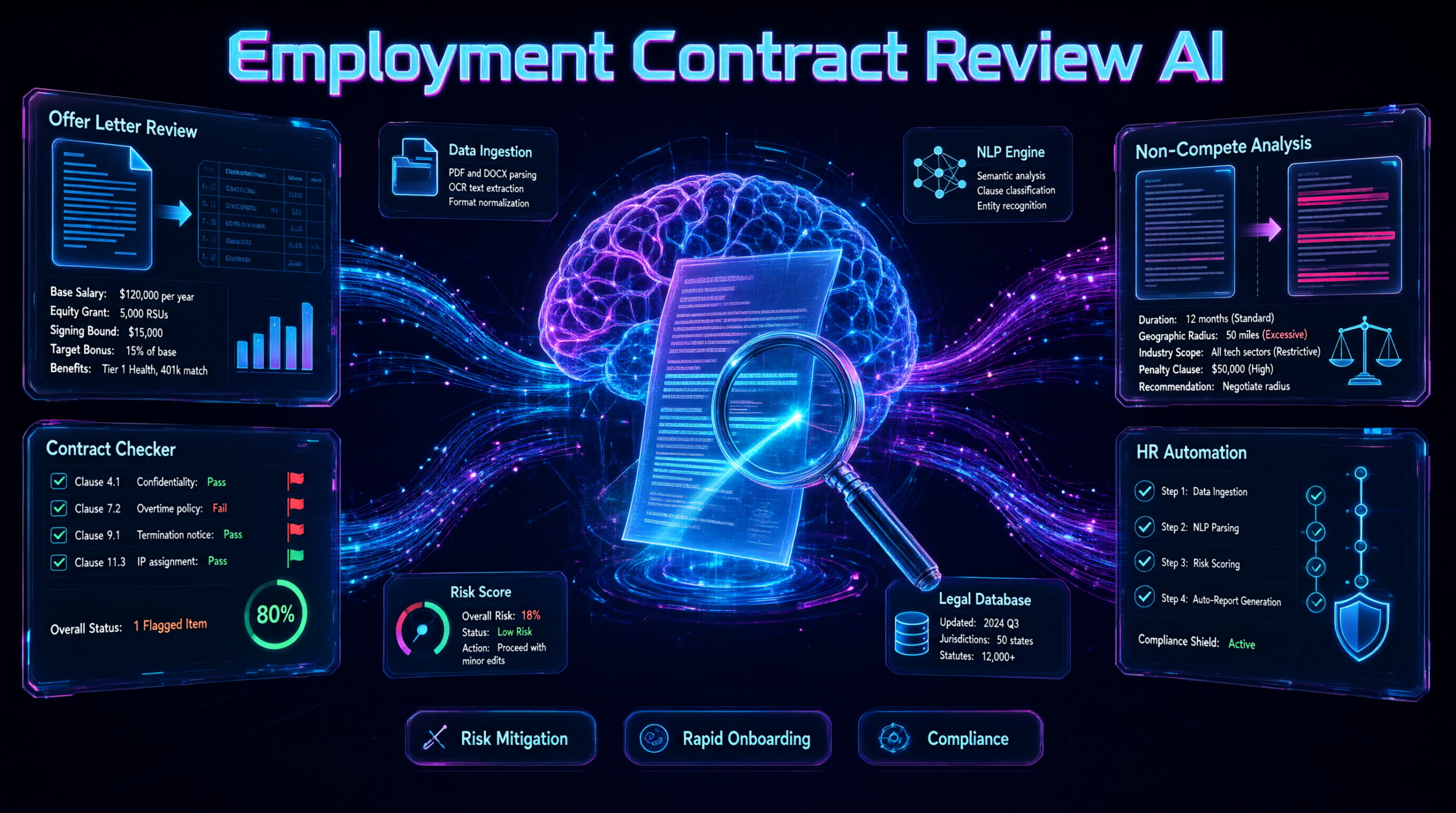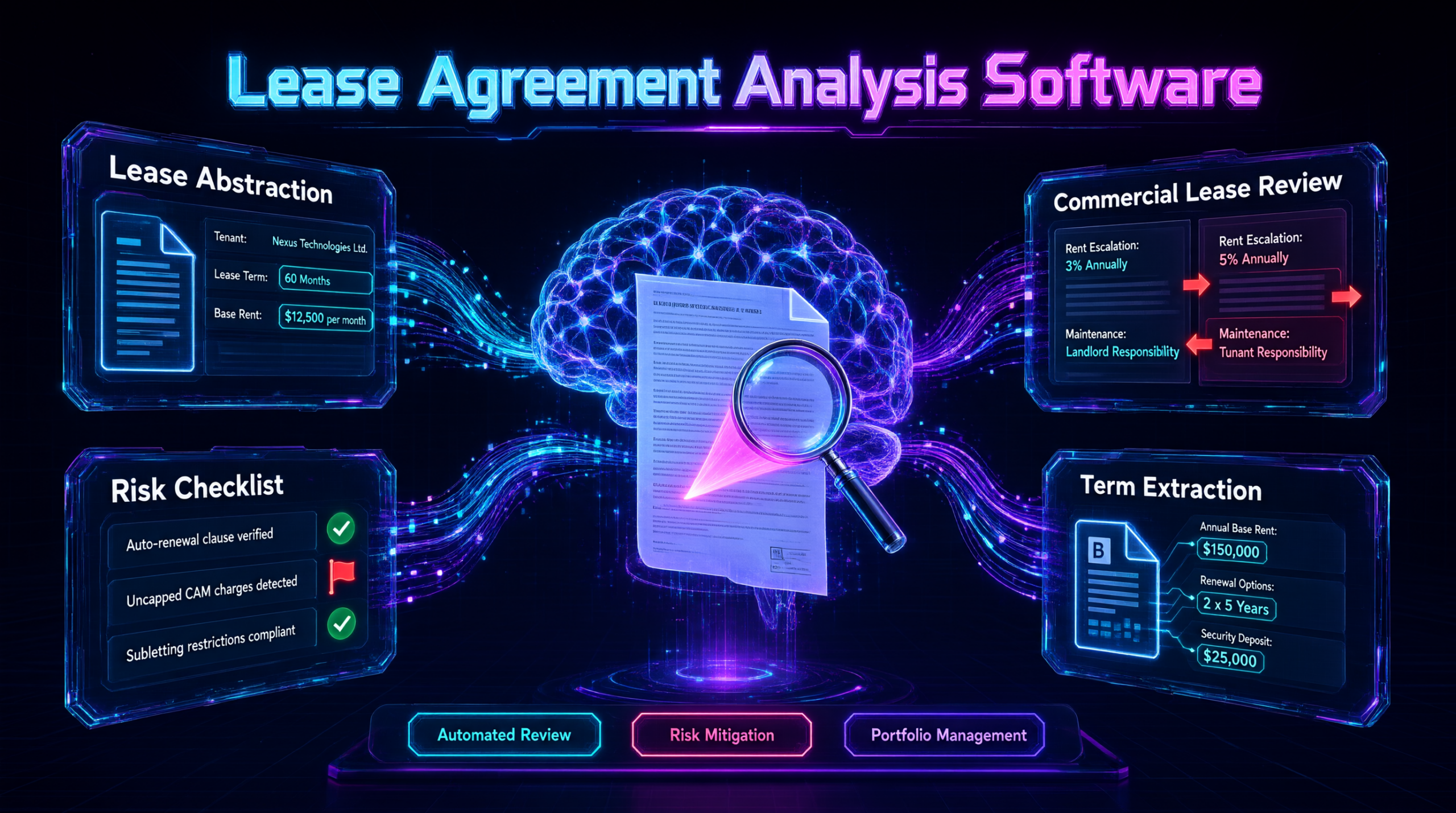

The landscape of legal technology has undergone a massive transformation, and identifying the Best AI tools for legal document analysis 2026 has become the ultimate competitive advantage for law firms and corporate legal departments. In an industry where billable hours are the currency and precision is non-negotiable, relying on manual data extraction and line-by-line reading is no longer a viable strategy. However, with hundreds of platforms claiming to revolutionize legal workflows, separating the gimmicks from the genuine revenue-generators can be overwhelming. Whether you are a solo practitioner, a managing partner at an Am Law 100 firm, or an in-house counsel managing thousands of vendor agreements, understanding which platforms constitute the Best AI tools for legal document analysis 2026 is essential for protecting your margins, mitigating risk, and scaling your practice.
This comprehensive guide reveals the 7 critical categories and top solutions when evaluating the Best AI tools for legal document analysis 2026. By breaking down the most effective AI legal research tools, contract analysis software, and legal tech AI platforms, this article will provide you with a clear, actionable roadmap to building a highly profitable, automated legal practice. By the end, you will know exactly how to leverage AI law firm tools and AI document review for lawyers to compete with massive corporate agencies.
1. Defining the Best AI Tools for Legal Document Analysis 2026
To understand why the Best AI tools for legal document analysis 2026 are no longer optional, we must look at the shifting economics of the legal industry. According to Law.com’s Legal Tech Hub, the most successful law firms in 2026 are those that transition from being purely “billable hour” practices to “value-driven, tech-enabled” advisory firms. The traditional legal model caps your revenue at the maximum number of hours your attorneys can physically work. The AI-augmented legal model shatters this ceiling.
When you deploy the Best AI tools for legal document analysis 2026, you effectively hire a tireless, 24/7 team of junior associates, paralegals, and researchers. This allows your firm to take on three times the client load or handle massive M&A due diligence projects without sacrificing quality or burning out your legal team. Furthermore, mastering the difference between AI agents vs AI tools is crucial here; while standard tools require your constant prompting, emerging autonomous legal agents can handle entire multi-step workflows—like ingesting a data room, flagging risky indemnification clauses, and drafting a redlined markup—while you sleep. For a deeper understanding of how to instruct these AI systems to handle complex legal workflows, explore our comprehensive guide on How to Write AI Prompts.
2. Top AI Legal Research Tools for Modern Law Firms
When evaluating the Best AI tools for legal document analysis 2026, the core engine of AI legal research tools must be robust, intuitive, and highly accurate. Traditional legal research involved manually sifting through thousands of case law summaries, headnotes, and statutes. Today, top-tier AI legal research tools utilize advanced Natural Language Processing (NLP) and semantic search to understand the legal context of your query, rather than just matching keywords.
Essential AI Legal Research Workflows:
- Semantic Case Law Search: Instead of searching for exact phrases, the AI understands the legal concept you are researching and surfaces cases with similar fact patterns and holdings, even if they use different terminology.
- Automated Brief Summarization: AI can ingest a 100-page appellate decision and instantly generate a concise summary highlighting the core legal issues, the court’s reasoning, and the final disposition.
- Statutory Cross-Referencing: The AI automatically maps local, state, and federal regulations, alerting you if a recent legislative change impacts your current case strategy.
- Litigation Analytics: Predictive AI that analyzes a specific judge’s historical ruling patterns, granting you a strategic advantage before you even step into the courtroom.
By integrating these AI legal research tools, you can reclaim hundreds of hours a month previously lost to manual Westlaw or LexisNexis searching. To see how these automated research workflows integrate into broader enterprise and law firm strategies, review our detailed breakdown of AI Solutions for Business.
3. Contract Analysis Software: Accelerating Due Diligence
For corporate legal teams and M&A practices, the Best AI tools for legal document analysis 2026 must include specialized contract analysis software. This technology is designed specifically to read, understand, and extract critical clauses, obligations, and risks from complex legal agreements at machine speed.
Benefits of Contract Analysis Software:
- Rapid Due Diligence: In M&A transactions, AI can ingest thousands of target company contracts in a virtual data room and instantly extract change-of-control clauses, assignment restrictions, and hidden liabilities.
- Playbook Enforcement: The software compares redlined contracts against your firm’s predefined negotiation playbook, automatically flagging non-standard clauses or aggressive auto-renewal terms.
- Lease Abstraction: For real estate law firms, AI can extract critical dates, rent escalation clauses, and CAM reconciliation formulas from hundreds of commercial leases in minutes.
- Obligation Tracking: Extracting key dates, renewal deadlines, and payment terms to ensure compliance and prevent accidental breaches.
When selecting contract analysis software, look for platforms that allow you to train the model on your specific legal playbooks. This ensures the legal tech AI aligns perfectly with your firm’s risk tolerance and negotiation strategies. For technical teams and legal engineers building custom legal AI pipelines, our guide on AI Coding Prompts is an essential resource.
4. AI Law Firm Tools: Streamlining Daily Operations
The Best AI tools for legal document analysis 2026 extend far beyond just reading documents; they encompass a suite of AI law firm tools designed to streamline the daily administrative and operational burdens of running a practice.
Capabilities of Modern AI Law Firm Tools:
- Intelligent Timekeeping: AI that monitors your digital activity (emails drafted, documents edited, research conducted) and automatically generates narrative billing entries, ensuring no billable minute is ever lost.
- Automated Drafting: Generating first drafts of standard contracts, NDAs, or demand letters based on a simple questionnaire or a set of client intake notes.
- Smart Intake and Triage: Automatically routing incoming client inquiries to the correct practice area, prioritizing high-value leads, and filtering out frivolous claims.
- Billing and Collections: AI that predicts payment behaviors, automatically sends polite but firm dunning notices for overdue invoices, and reconciles trust accounts.
By leveraging these AI law firm tools, solo practitioners and small firms can operate with the efficiency and overhead structure of a much larger organization. To optimize the search and retrieval of these intelligent insights across your firm’s knowledge base, many companies leverage platforms like Elastic AI-powered search.
5. Leading Legal AI Platforms for Enterprise Teams
When evaluating the Best AI tools for legal document analysis 2026 for large corporate legal departments or Am Law firms, you need enterprise-grade legal AI platforms. These platforms are built to handle massive scale, integrate seamlessly with existing Document Management Systems (DMS) like iManage or NetDocuments, and maintain the highest levels of data security.
Key Features of Enterprise Legal AI Platforms:
- Zero-Data-Retention Policies: Ensuring that your clients’ highly sensitive, privileged data is never used to train the underlying public AI models.
- Role-Based Access Control (RBAC): Strict permission settings that ensure attorneys only see AI-generated insights for the specific clients and matters they are assigned to.
- Matter-Centric AI: The AI understands the context of a specific legal matter, pulling relevant emails, documents, and billing data into a unified, intelligent dashboard.
- Cross-Border Compliance: Built-in compliance with global data privacy regulations like GDPR, CCPA, and international legal privilege standards.
By adopting legal AI platforms, corporate legal teams transform from a reactive cost center into a proactive, strategic partner that actively protects and generates value for the organization. To discover the best platforms for these specialized enterprise tasks, check out our guide on the Best AI Prompt Libraries 2026.
6. AI Document Review for Lawyers: Accuracy and Speed
The most critical application of the Best AI tools for legal document analysis 2026 is undoubtedly AI document review for lawyers. In the realm of eDiscovery and litigation, manual document review is notoriously slow, expensive, and prone to human fatigue. AI changes this paradigm entirely.
How AI Document Review for Lawyers Works:
- Predictive Coding and TAR: Technology-Assisted Review (TAR) uses machine learning to rank documents by relevance. A senior attorney reviews a “seed set” of documents, and the AI learns their logic, rapidly identifying millions of relevant documents across a massive data set.
- Privilege Detection: AI can automatically identify and segregate attorney-client privileged communications and work-product doctrine materials, preventing accidental disclosure during discovery.
- Concept Clustering: The AI groups conceptually similar documents together, allowing reviewers to tackle entire themes or issues at once, rather than reading chronologically.
- Emotion and Tone Analysis: Advanced tools can analyze the sentiment and tone of internal corporate emails, helping litigators identify “smoking gun” documents or key custodians.
When you utilize AI document review for lawyers, you drastically reduce the cost of litigation for your clients while improving the accuracy and speed of your discovery process. To ensure your firm is maximizing the value of these digital health and business tools, explore our comprehensive guide on AI Tools Importance.
7. How to Select the Best AI Tools for Legal Document Analysis 2026
Selecting the right platform from the Best AI tools for legal document analysis 2026 requires a strategic evaluation of your specific practice areas, document volumes, and IT infrastructure. The best implementation requires a comprehensive approach to change management and security.
Evaluation Criteria for Legal AI:
- Pre-trained vs. Custom Models: Does the software offer out-of-the-box models for common documents (NDAs, MSAs, leases) while allowing custom training for your firm’s unique, complex contracts?
- Security and Compliance: Does the platform offer on-premise deployment, private cloud options, and comply with SOC 2, ISO 27001, and ABA Model Rules of Professional Conduct regarding confidentiality?
- Integration Ecosystem: How easily does the legal tech AI connect with your existing tech stack via REST APIs or pre-built connectors to your DMS, CRM, and billing software?
- Explainability: Can the AI explain why it flagged a specific clause or categorized a document a certain way? “Black box” AI is unacceptable in legal practice; you need transparency for malpractice and ethical reasons.
By carefully weighing these factors, you can select a solution that not only answers the question of what are the Best AI tools for legal document analysis 2026 but also delivers tangible ROI and risk mitigation to your bottom line. To ensure your broader document workflows are optimized alongside your legal tech stack, explore our guides on AI Document Analysis Platform and AI compliance document analysis.
Comprehensive Query Coverage
What are the Best AI tools for legal document analysis 2026 for small law firms? For small law firms, the Best AI tools for legal document analysis 2026 include cloud-based platforms with pay-as-you-go pricing, intuitive interfaces, and pre-trained models for common documents like NDAs, leases, and basic contracts. These solutions offer enterprise-grade AI document review for lawyers without the need for dedicated IT support or massive upfront enterprise investments.
How do AI legal research tools improve accuracy? AI legal research tools improve accuracy by utilizing semantic search and natural language processing. Instead of relying on exact keyword matches, the AI understands the legal context and fact patterns, surfacing highly relevant case law that a traditional Boolean search might miss. This reduces the risk of missing controlling authority.
Can contract analysis software replace human lawyers? No, contract analysis software does not replace human lawyers; it augments them. AI handles the high-volume, repetitive reading and data extraction, but it cannot replace the nuanced judgment, ethical reasoning, and strategic negotiation skills of a licensed attorney. It shifts the attorney’s role from “data extractor” to “strategic advisor.”
What makes legal AI platforms secure for client data? Enterprise-grade legal AI platforms are built with security-first architectures. They utilize end-to-end encryption, private cloud or on-premise deployment options, and strict zero-data-retention policies to ensure that your sensitive client data is never used to train public AI models. They also comply with strict frameworks like SOC 2 and GDPR.
How does AI document review for lawyers handle privilege? AI document review for lawyers uses advanced NLP to identify patterns associated with attorney-client privilege, such as communications between a client and a licensed attorney seeking legal advice. The AI automatically tags and segregates these documents into a privilege log, preventing accidental disclosure during eDiscovery.
Conclusion
The Best AI tools for legal document analysis 2026 represent a monumental leap forward in legal operations, risk management, and client service. By understanding the evolution of legal tech AI, leveraging AI legal research tools for semantic case law discovery, deploying contract analysis software for rapid due diligence, utilizing AI law firm tools for operational efficiency, adopting enterprise legal AI platforms for security and scale, and implementing AI document review for lawyers to slash eDiscovery costs, organizations can unlock unprecedented levels of legal operational excellence.
The shift from manual reading and billable-hour grinding to intelligent automation represents a fundamental evolution in the practice of law. By selecting the right tools, you empower your legal team to stop acting as human data-entry machines and start focusing on high-value, strategic counsel and client relationship building.