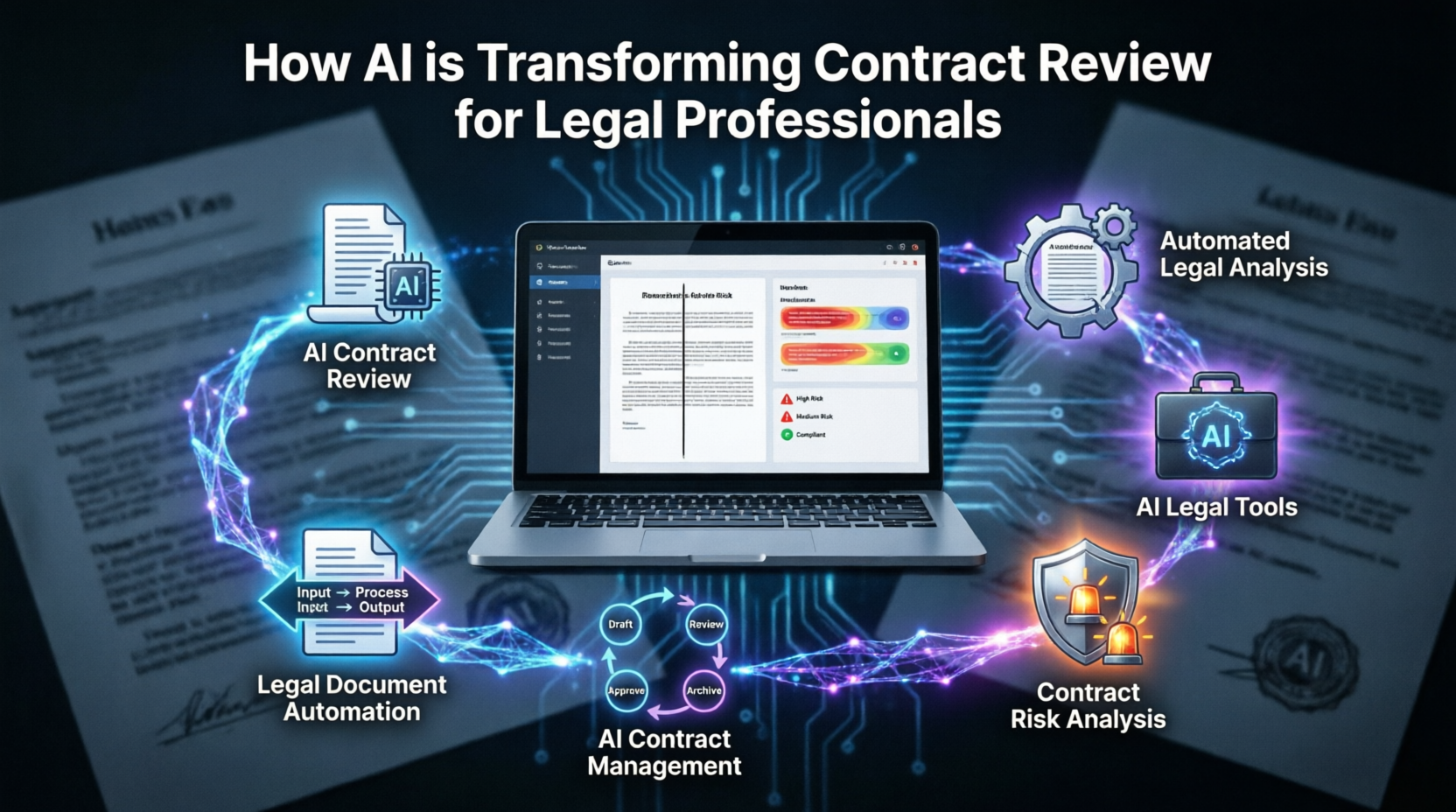
The question of how AI is transforming contract review for legal professionals has become the central focus of legal tech innovation and law firm operations in 2026. As corporate data volumes explode and regulatory complexities multiply, relying on manual line-by-line reading of agreements is no longer a viable business strategy for modern legal teams. However, for many managing partners and general counsels, the underlying mechanics and strategic advantages of this technology remain a mystery. If you are wondering exactly how AI is transforming contract review for legal professionals, you are not alone; understanding the convergence of large language models (LLMs), natural language processing (NLP), and machine learning is the first step toward implementing a successful legal automation strategy.
This comprehensive guide demystifies the technology, answering exactly how AI is transforming contract review for legal professionals by breaking down the core components of AI contract review, automated legal document analysis, and legal document automation. By the end of this article, you will have a clear, technical, and strategic understanding of how these tools transform unstructured legal chaos into actionable, structured business intelligence and risk mitigation.
1. The Evolution of AI Contract Review in the Legal Industry
To truly answer the question of how AI is transforming contract review for legal professionals, we must look beyond simple digitization and optical character recognition (OCR). At its core, modern AI contract review is the process of using artificial intelligence to ingest, read, understand, and extract meaningful legal concepts from unstructured or semi-structured agreements.
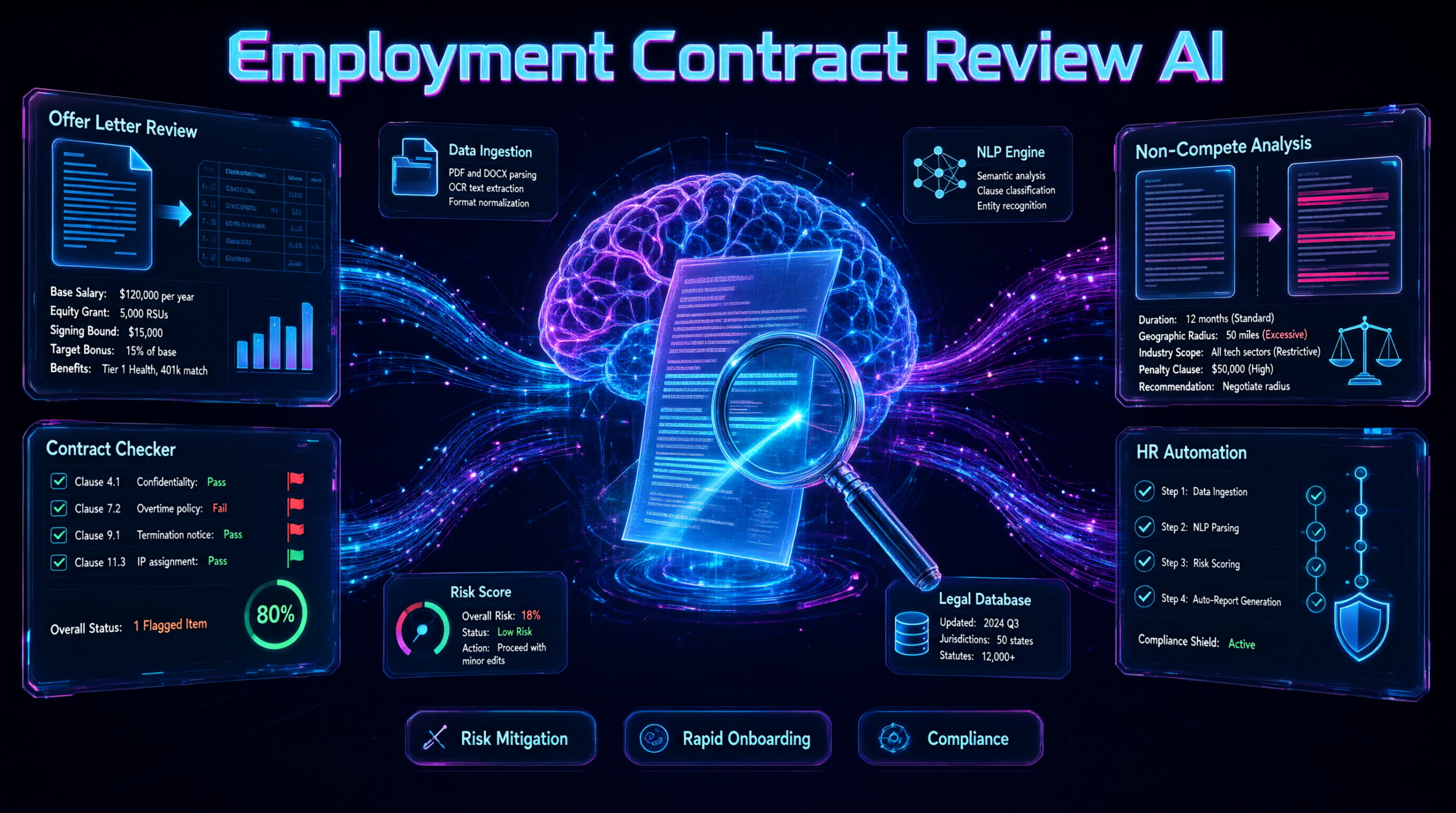
So, how AI is transforming contract review for legal professionals on a technical level? The process typically follows a multi-stage cognitive pipeline:
- Ingestion and Pre-processing: The system captures the document (via PDF, Word, or scan) and enhances the layout structure.
- Semantic Understanding (NLP): The AI reads the extracted text to understand the legal context, identifying specific entities like parties, effective dates, governing law, and indemnification clauses.
- Playbook Comparison: The system compares the extracted clauses against the firm’s or corporation’s predefined legal playbook.
- Risk Flagging and Redlining: The AI automatically generates redlines or flags high-risk deviations for attorney review.
When managing partners ask how AI is transforming contract review for legal professionals, they are really asking how machines can replicate the cognitive reading of a junior associate at a fraction of the cost and time. According to the American Bar Association’s insights on AI in legal practice, the integration of generative AI and machine learning is the primary driver of operational efficiency in modern law firms, allowing attorneys to scale their expertise without scaling headcount. For a deeper understanding of how to instruct these AI systems to handle complex legal data extraction, explore our comprehensive guide on How to Write AI Prompts.
2. How Automated Legal Document Analysis Accelerates Due Diligence
Once you understand how AI is transforming contract review for legal professionals, you can begin to see its massive impact on broader due diligence workflows. Automated legal document analysis is the engine that powers high-volume document review, particularly in Mergers and Acquisitions (M&A), real estate transactions, and bankruptcy proceedings.
Key Components of Automated Legal Document Analysis:
- Cross-Document Comparison: Instantly comparing thousands of vendor agreements to identify change-of-control clauses or assignment restrictions.
- Clause Extraction: Pulling specific legal provisions (e.g., limitation of liability, force majeure, termination for convenience) across an entire data room.
- Timeline Reconstruction: Automatically building a chronological timeline of events, notices, and renewals from disparate contracts.
- Privilege Detection: Identifying and segregating attorney-client privileged communications during the discovery or review phase.
By implementing a robust automated legal document analysis pipeline, legal teams can compress due diligence timelines from months to days. This allows firms to provide faster, more accurate advice to clients during time-sensitive transactions. To see how these automated workflows integrate into broader enterprise growth and legal strategies, review our detailed breakdown of AI Solutions for Business.
3. Top AI Legal Tools Revolutionizing Law Firm Workflows
When evaluating the best platforms on the market, it is essential to understand the specific capabilities that top-tier AI legal tools bring to the table. These tools are no longer just simple search engines; they are active participants in the drafting and review process.
Capabilities of Modern AI Legal Tools:
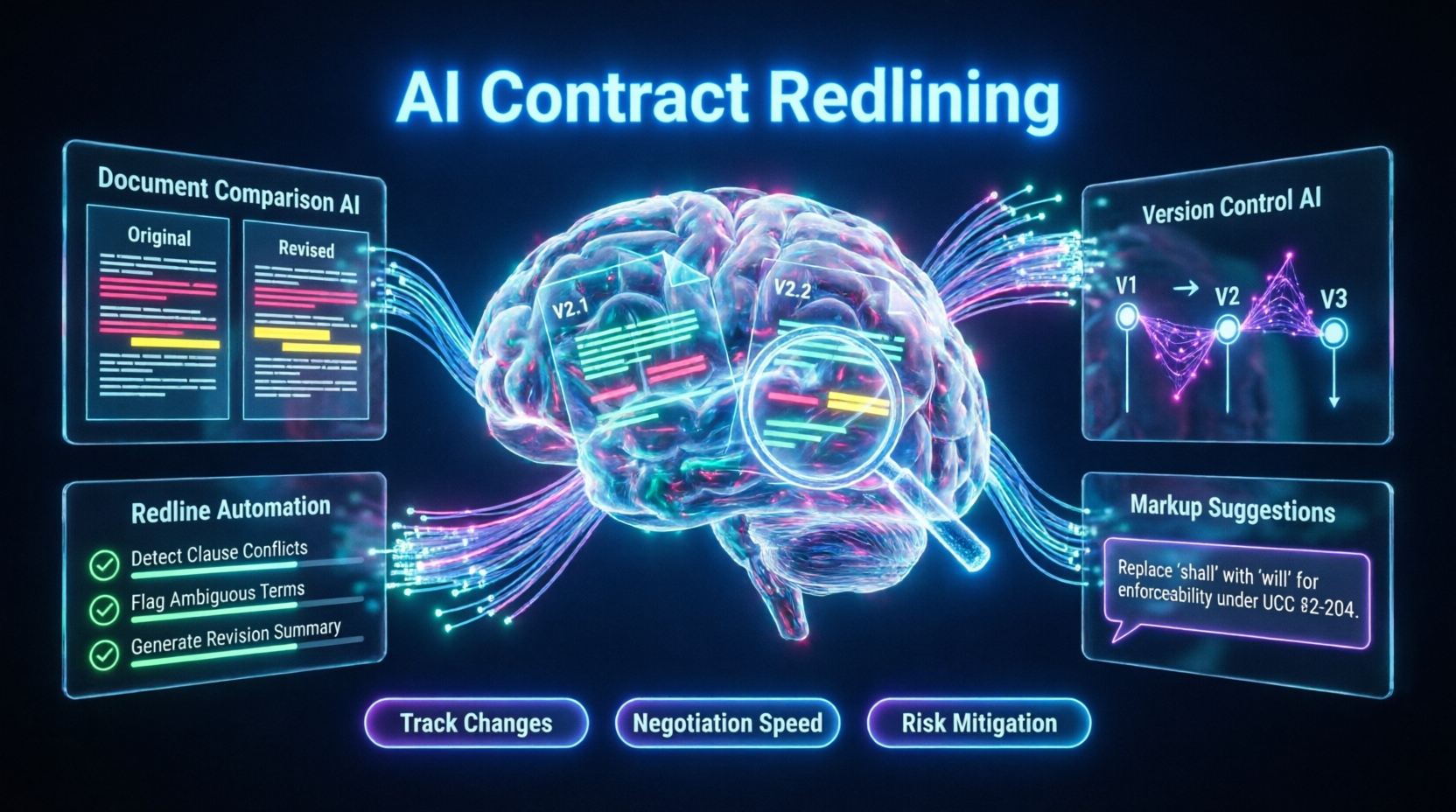
- Automated First-Pass Redlining: The AI reviews a counterparty’s mark-up and automatically applies your client’s preferred fallback positions.
- Summarization and Briefing: Generating executive summaries of 100-page master service agreements (MSAs) in seconds, highlighting key commercial terms.
- Precedent Matching: Suggesting the most appropriate internal precedent or template based on the specific nuances of a new transaction.
- Billing and Timekeeping Automation: Automatically tracking the time spent on specific contract review tasks and generating narrative billing entries for clients.
These AI legal tools transform the traditional law firm model from a pure billable-hour focus to a value-based, efficiency-driven practice. For technical teams and legal engineers building these custom legal AI pipelines, our guide on AI Coding Prompts is an essential resource.
4. Mastering Contract Risk Analysis with Artificial Intelligence
A critical part of understanding how AI is transforming contract review for legal professionals involves examining the role of contract risk analysis. Traditional risk analysis relies on the subjective judgment and fatigue-prone attention of human reviewers. AI changes this paradigm by providing objective, consistent, and comprehensive risk scoring.
Advanced Contract Risk Analysis Features:
- Deviation Scoring: Assigning a risk score (e.g., Low, Medium, High) to every clause based on its deviation from the company’s standard playbook.
- Missing Clause Detection: Identifying critical protective clauses that are entirely absent from a draft agreement, such as data privacy addendums or IP assignment clauses.
- Conflicting Obligation Identification: Cross-referencing a new contract against a company’s existing portfolio to identify conflicting exclusivity or non-compete obligations.
- Regulatory Compliance Mapping: Automatically checking contract terms against evolving regulatory frameworks like GDPR, CCPA, or industry-specific compliance mandates.
When you deploy AI for contract risk analysis, you ensure that no high-risk clause slips through the cracks due to human error or reviewer fatigue. The AI acts as an infallible safety net, allowing senior partners to focus their attention only on the highest-risk strategic negotiations. To optimize the search and retrieval of these risk insights across your firm’s knowledge base, many companies leverage platforms like Elastic AI-powered search.
5. The Shift from AI Contract Review to AI Contract Management
When you fully grasp how AI is transforming contract review for legal professionals, you can see its impact on the entire post-execution lifecycle through AI contract management. Review is only the beginning; managing the obligations created by those contracts is where the long-term value lies.
The Lifecycle Approach of AI Contract Management:
- Obligation Extraction: Automatically pulling all post-signing obligations (e.g., “Vendor must provide SOC 2 report annually,” “Buyer must pay within 30 days”) and assigning them to the relevant business owners.
- Automated Alerts: Triggering notifications for critical dates, such as auto-renewal deadlines, notice periods for termination, or insurance certificate expirations.
- Performance Tracking: Integrating with CRM and ERP systems to verify if the contractual terms (like SLA penalties or volume discounts) are being honored in practice.
- Renewal and Negotiation Prep: Generating a pre-negotiation briefing document that summarizes the counterparty’s past performance, historical concessions, and upcoming renewal terms.
By transitioning from isolated AI contract review to holistic AI contract management, legal departments transform from a reactive cost center into a proactive strategic partner that actively protects and generates value for the organization. To discover the best platforms for these specialized lifecycle tasks, check out our guide on the Best AI Prompt Libraries 2026.
6. The Power of Legal Document Automation in Daily Practice
At the heart of how AI is transforming contract review for legal professionals is legal document automation. This is the specific mechanism by which the AI integrates with your existing tech stack to create a seamless, end-to-end workflow without manual intervention.
Advanced Legal Document Automation Capabilities:
- Intake and Triage: Automatically routing incoming contract requests from the sales team to the correct legal template based on deal size, geography, and product type.
- Self-Service Portals: Allowing business users to generate standard NDAs or sales agreements through a guided questionnaire, with AI ensuring the output complies with legal standards.
- E-Signature Integration: Seamlessly pushing the AI-reviewed and approved document to platforms like DocuSign or Adobe Sign, and automatically routing the executed copy to the central repository.
- Metadata Tagging: Automatically applying metadata (party name, contract type, effective date, value) to the executed file for instant retrieval.
When evaluating legal document automation tools, integration capabilities are paramount. Top-tier solutions boast native connectors to Salesforce, SAP, Microsoft 365, and major CLM (Contract Lifecycle Management) platforms. To ensure your team is maximizing the value of your chosen automation platform, explore our comprehensive guide on AI Tools Importance.
7. Implementing AI in Legal Workflows: Best Practices for Law Firms
Selecting the right tools to leverage how AI is transforming contract review for legal professionals requires a strategic evaluation of your specific practice areas, document volumes, and IT infrastructure. The best implementation requires a comprehensive approach to change management.
Implementation Best Practices:
- Start with High-Volume, Low-Complexity Documents: Prove the ROI quickly by automating standard NDAs, vendor MSAs, and employment agreements before tackling complex, bespoke M&A documents.
- Digitize and Centralize Your Playbook: AI can only enforce your rules if they are explicitly defined. Work with senior partners to codify the firm’s or client’s fallback positions and risk tolerances into a digital format.
- Establish a Human-in-the-Loop Protocol: While AI is powerful, the unauthorized practice of law and malpractice risks require human oversight. Establish clear protocols for when the AI’s suggestions must be escalated to a licensed attorney.
- Prioritize Data Privacy and Privilege: Ensure the AI platform offers enterprise-grade security, zero-data-retention policies (ensuring client data isn’t used to train public models), and complies with ABA Model Rules of Professional Conduct regarding confidentiality.
To ensure your broader document workflows are optimized alongside your contract management, explore our guides on AI Document Analysis Platform and AI compliance document analysis.
Comprehensive Query Coverage
How is AI transforming contract review for legal professionals in simple terms? In simple terms, how AI is transforming contract review for legal professionals can be explained as giving attorneys a highly intelligent, tireless assistant that can read thousands of pages in seconds. It uses AI to understand legal context, flag risky clauses, and draft redlines, allowing lawyers to focus on strategy and negotiation rather than manual reading.
What are the best AI legal tools for small law firms? For small law firms, the best AI legal tools include cloud-based platforms with pay-as-you-go pricing, intuitive interfaces, and pre-trained models for common documents like NDAs, leases, and basic contracts. These solutions offer enterprise-grade automated legal document analysis without the need for dedicated IT support or massive upfront enterprise investments.
How accurate is contract risk analysis powered by AI? Top-tier contract risk analysis platforms achieve 90% to 95% accuracy in identifying non-standard clauses and deviations from a legal playbook. AI is particularly effective at catching subtle liability shifts or missing protective clauses that human reviewers might miss due to fatigue, though human attorney oversight remains essential for final strategic decisions.
Can automated legal document analysis replace human attorneys? No, automated legal document analysis does not replace human attorneys; it augments them. AI handles the high-volume, repetitive reading and data extraction, but it cannot replace the nuanced judgment, ethical reasoning, and strategic negotiation skills of a licensed attorney. It shifts the attorney’s role from “data extractor” to “strategic advisor.”
What is the difference between AI contract review and AI contract management? AI contract review focuses on the pre-execution phase: reading, analyzing, redlining, and negotiating the terms of a contract before it is signed. AI contract management focuses on the post-execution phase: tracking obligations, managing renewals, ensuring compliance, and extracting value from the signed agreement over its entire lifecycle.
Conclusion
Understanding how AI is transforming contract review for legal professionals is the foundational step toward modernizing your legal operations and law firm practice. By leveraging AI contract review for speed, implementing automated legal document analysis for due diligence, deploying top-tier AI legal tools for workflow efficiency, mastering contract risk analysis for proactive mitigation, expanding into AI contract management for lifecycle tracking, and utilizing legal document automation for seamless integration, organizations can unlock unprecedented levels of legal operational excellence.
The shift from manual reading to intelligent automation represents a fundamental evolution in the practice of law. By selecting the right tools, you empower your legal team to stop acting as human data-entry machines and start focusing on high-value, strategic counsel and client relationship building.
As you integrate these powerful technologies into your organizational strategy, remember that the AI is only as effective as the legal playbooks, data governance, and attorney training supporting it. Continuously refine your models, stay updated on the latest AI capabilities, and never stop optimizing your document processes to ensure you are fully capitalizing on how AI is transforming contract review for legal professionals.