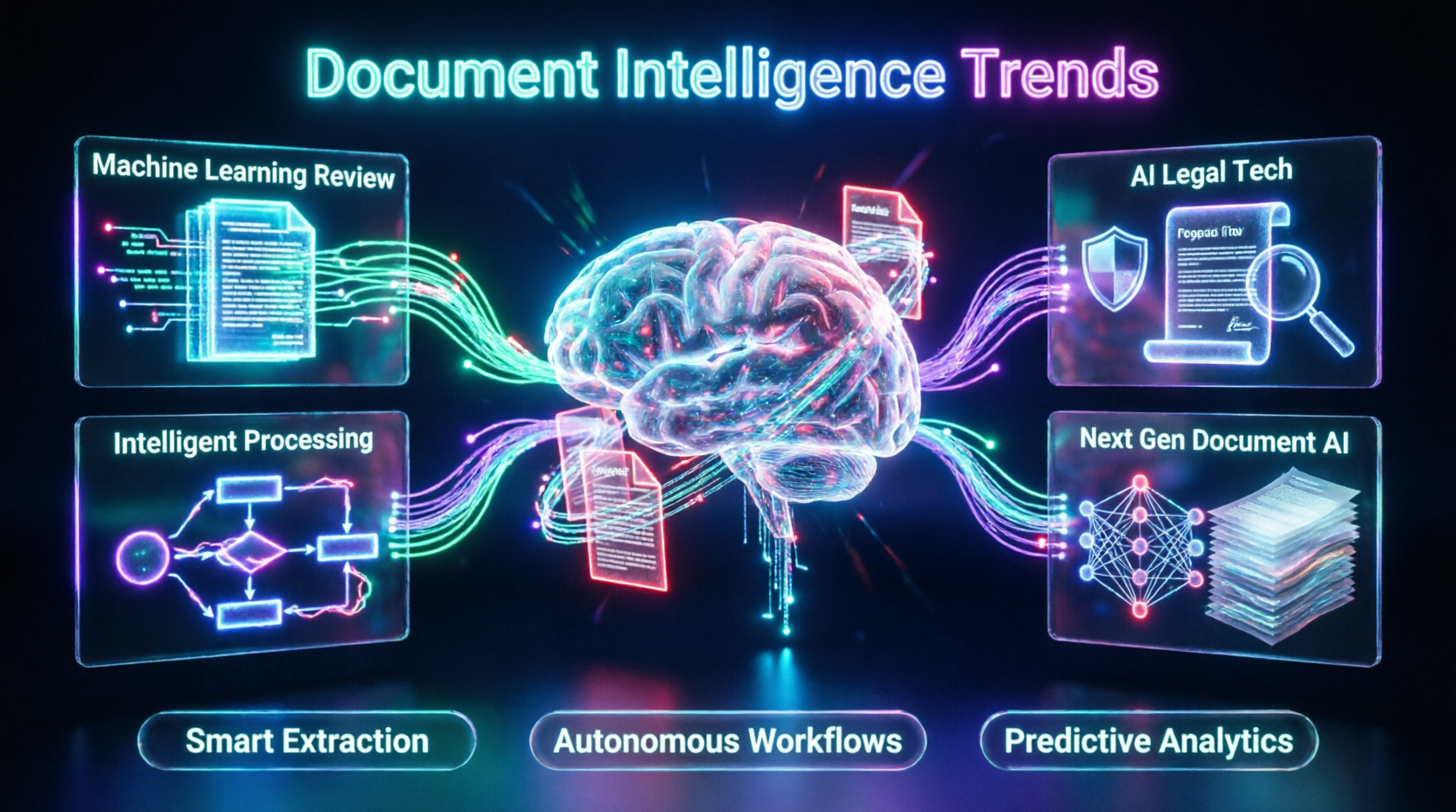
Mastering the latest document intelligence trends is the absolute best way to ensure your organization stays ahead of the curve in data extraction, compliance, and operational efficiency. In an era where global enterprises generate zettabytes of unstructured data daily, relying on manual data entry, legacy Optical Character Recognition (OCR), and siloed review processes is no longer a viable strategy for competitive advantage. Today, forward-thinking organizations are leveraging advanced artificial intelligence and machine learning to automate complex workflows, extract deep contextual insights, and transform static documents into dynamic, actionable data. However, navigating this rapidly evolving landscape requires strategic foresight. If you are looking to understand exactly how to prepare your infrastructure and select the right technologies to future-proof your operations, you are in the right place.
This comprehensive guide demystifies the technological horizon of intelligent data processing. We will explore the most impactful document intelligence trends, detail how machine learning in document review is revolutionizing accuracy, and provide a strategic blueprint for adopting next-generation document AI. By the end of this article, you will have a clear, actionable framework for evaluating intelligent document processing trends, understanding the total cost of ownership, and mastering the art of implementing AI legal tech trends that deliver maximum ROI.
1. The Evolutionary Leap: Why Document Intelligence Trends Matter in 2026
Historically, document processing was a rigid, rule-based discipline. Legacy OCR systems could read text, but they lacked the cognitive ability to understand context, layout, or semantics. However, the emergence of Large Language Models (LLMs) and advanced computer vision has introduced a paradigm shift. Understanding current document intelligence trends is critical because the gap between early adopters and laggards is widening rapidly. Organizations that fail to modernize their document workflows risk severe bottlenecks, compliance vulnerabilities, and inflated operational costs.
The shift from traditional Intelligent Document Processing (IDP) to cognitive, context-aware AI represents a monumental upgrade in capability. Modern systems do not just extract data; they comprehend it, validate it against external databases, and route it autonomously. According to a 2026 Gartner report on cognitive automation, enterprises that successfully integrate advanced document intelligence trends into their core operations report a 40% reduction in processing time and a 60% decrease in manual error rates. Therefore, aligning your data strategy with these emerging technologies is essential for sustainable, scalable growth.
2. Breaking Down the Tech: Machine Learning in Document Review
To make informed technology investments, you must first understand the primary drivers behind machine learning in document review. Unlike static rule-based systems, machine learning models continuously improve their accuracy by learning from human feedback and historical data patterns.
Contextual Understanding and Semantic Search: Modern ML models utilize transformer architectures to understand the semantic meaning behind text. Instead of merely matching keywords, machine learning in document review can identify relationships between clauses, detect subtle anomalies, and summarize complex documents with human-like comprehension. This is particularly vital for industries dealing with dense, unstructured text.
Continuous Learning and Adaptive Models: A defining feature of next-generation systems is their ability to adapt. When a human reviewer corrects an extraction error, the machine learning model updates its weights in real-time. This “human-in-the-loop” feedback mechanism ensures that the system becomes exponentially more accurate and tailored to your organization’s specific document formats and terminology over time.
3. Sector Spotlight: AI Legal Tech Trends Reshaping the Industry
The legal and compliance sectors are experiencing a massive transformation driven by the urgent need to process vast volumes of contracts, discovery materials, and regulatory filings. AI legal tech trends are at the forefront of this revolution, offering unprecedented efficiency and risk mitigation.
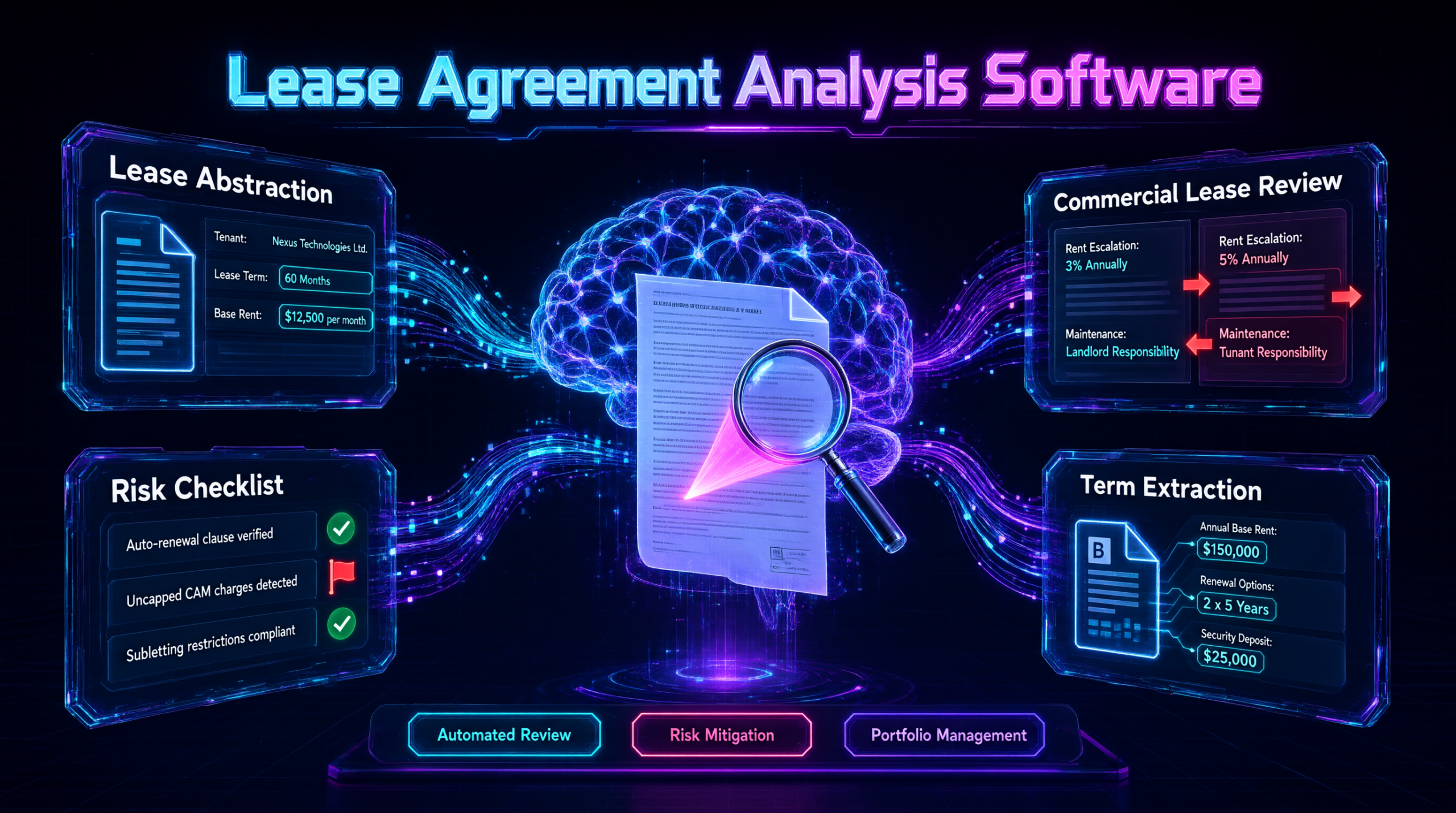
Automated Contract Lifecycle Management (CLM): Modern AI can ingest hundreds of pages of legal contracts in seconds, automatically extracting key clauses, identifying non-standard terms, and flagging potential risks against a predefined playbook. This accelerates the review process from days to minutes, allowing legal teams to focus on high-value negotiation and strategy rather than tedious proofreading.
Intelligent eDiscovery and Compliance: In litigation and regulatory audits, finding the “smoking gun” document among millions of files is a monumental task. Advanced AI legal tech trends now include predictive coding and semantic clustering, which automatically group related documents and surface the most relevant evidence, drastically reducing the time and cost of eDiscovery while ensuring defensible, accurate results.
4. The Core Drivers: Intelligent Document Processing Trends to Watch
As the technology matures, several key intelligent document processing trends are defining the next wave of innovation. Staying ahead of these curves will give your organization a distinct competitive edge.
Multimodal AI and Layout-Aware Extraction: The latest models are multimodal, meaning they process text, images, tables, and handwriting simultaneously. Layout-aware extraction understands the spatial relationship of elements on a page (e.g., recognizing that a number in the bottom right corner is a total invoice amount, not a random figure), leading to near-perfect accuracy on complex, semi-structured forms.
Autonomous Workflow Orchestration: The future of IDP is not just extraction, but action. Intelligent document processing trends now heavily feature autonomous orchestration, where the AI not only extracts data from a vendor invoice but also validates it against the ERP system, routes it for approval based on dynamic rules, and triggers the payment process without human intervention.
Generative AI for Document Synthesis: Beyond extraction, generative AI is being used to synthesize information across multiple documents. Users can now ask natural language questions like, “Summarize the liability clauses across these five vendor agreements,” and the AI will generate a concise, accurate comparative report instantly.
5. The Strategic Upgrade: Implementing Next-Generation Document AI
Adopting next-generation document AI is not a simple plug-and-play operation; it requires a strategic, phased approach to ensure high adoption rates and measurable ROI.
Data Preparation and Governance: AI models are only as good as the data they are trained on. Before implementation, organizations must audit their existing document repositories, standardize formats where possible, and establish strict data governance protocols. Clean, well-organized historical data is the fuel that powers accurate machine learning models.
Change Management and Upskilling: The introduction of advanced AI often triggers anxiety among employees who fear job displacement. Successful implementation requires robust change management. Frame the technology as an “AI co-pilot” designed to eliminate tedious, low-value tasks. Invest in upskilling your team to become “AI supervisors” who manage exceptions, validate complex outputs, and refine the models.
6. Strategic Selection: Best Practices for Choosing Document AI Solutions
Ultimately, choosing the right document AI solution is about calculating the Total Cost of Ownership (TCO) and ensuring the platform aligns with your long-term strategic goals.
Security, Privacy, and Compliance: When handling sensitive corporate, legal, or personal data, security is non-negotiable. Prioritize vendors that offer enterprise-grade security certifications (SOC 2 Type II, ISO 27001, HIPAA, GDPR compliance) and provide options for private cloud or on-premises deployment to ensure your data never leaves your controlled environment.
Integration and Scalability: A powerful document intelligence platform is useless if it operates in a silo. Ensure the solution offers robust, pre-built APIs and connectors for your existing tech stack (e.g., Salesforce, SAP, Microsoft 365, Slack). Furthermore, verify that the architecture can seamlessly scale to handle spikes in document volume without degrading performance or incurring punitive overage fees.
7. Comprehensive Query Coverage
What are the top document intelligence trends for 2026? The top document intelligence trends include the rise of multimodal AI (processing text, images, and layouts simultaneously), autonomous workflow orchestration, generative AI for document synthesis and Q&A, and the shift toward continuous, adaptive machine learning models that improve via human-in-the-loop feedback.
How is machine learning in document review improving accuracy? Machine learning in document review improves accuracy by moving beyond rigid, rule-based keyword matching. ML models understand semantic context, learn from historical corrections, and adapt to new document formats over time, resulting in exponentially higher accuracy rates and fewer false positives.
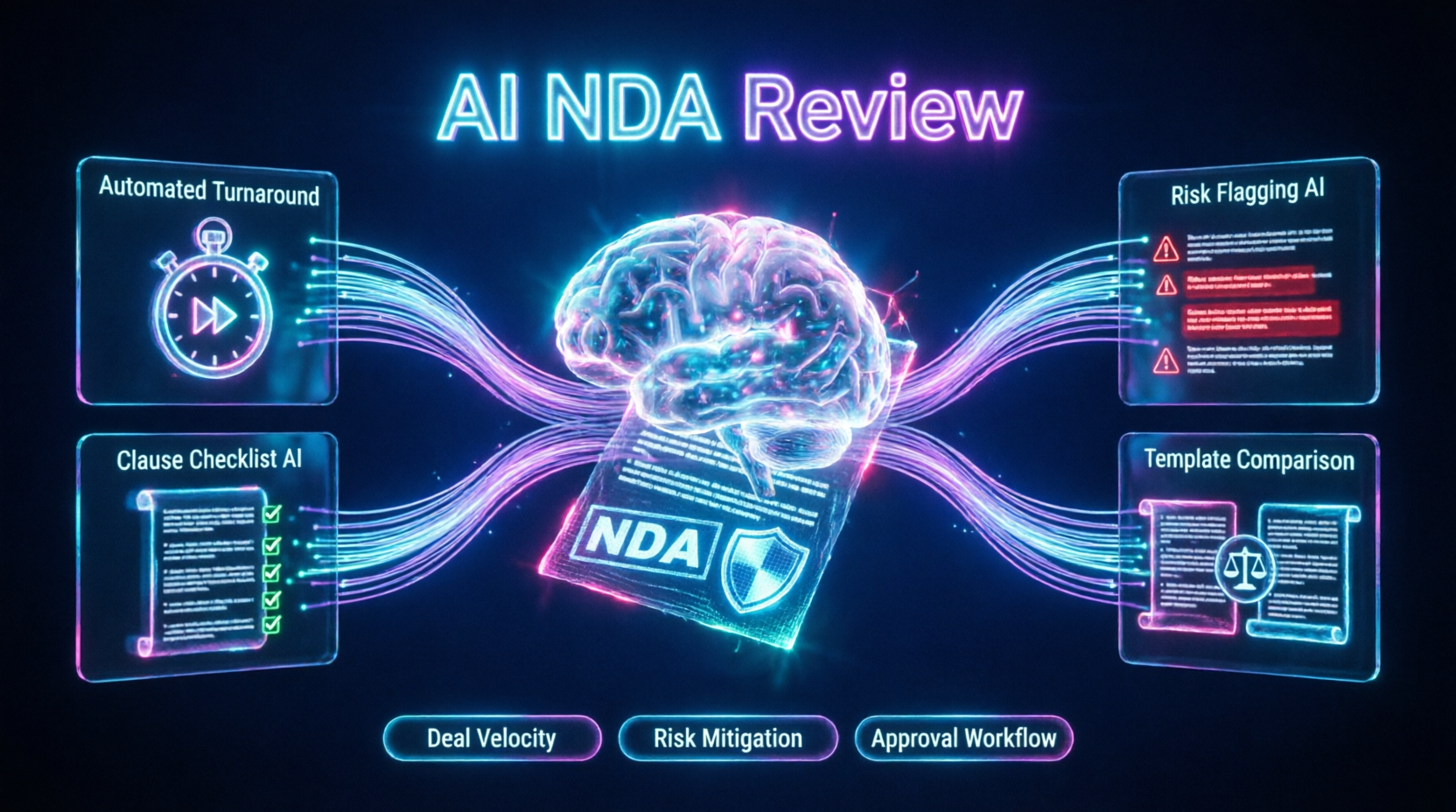
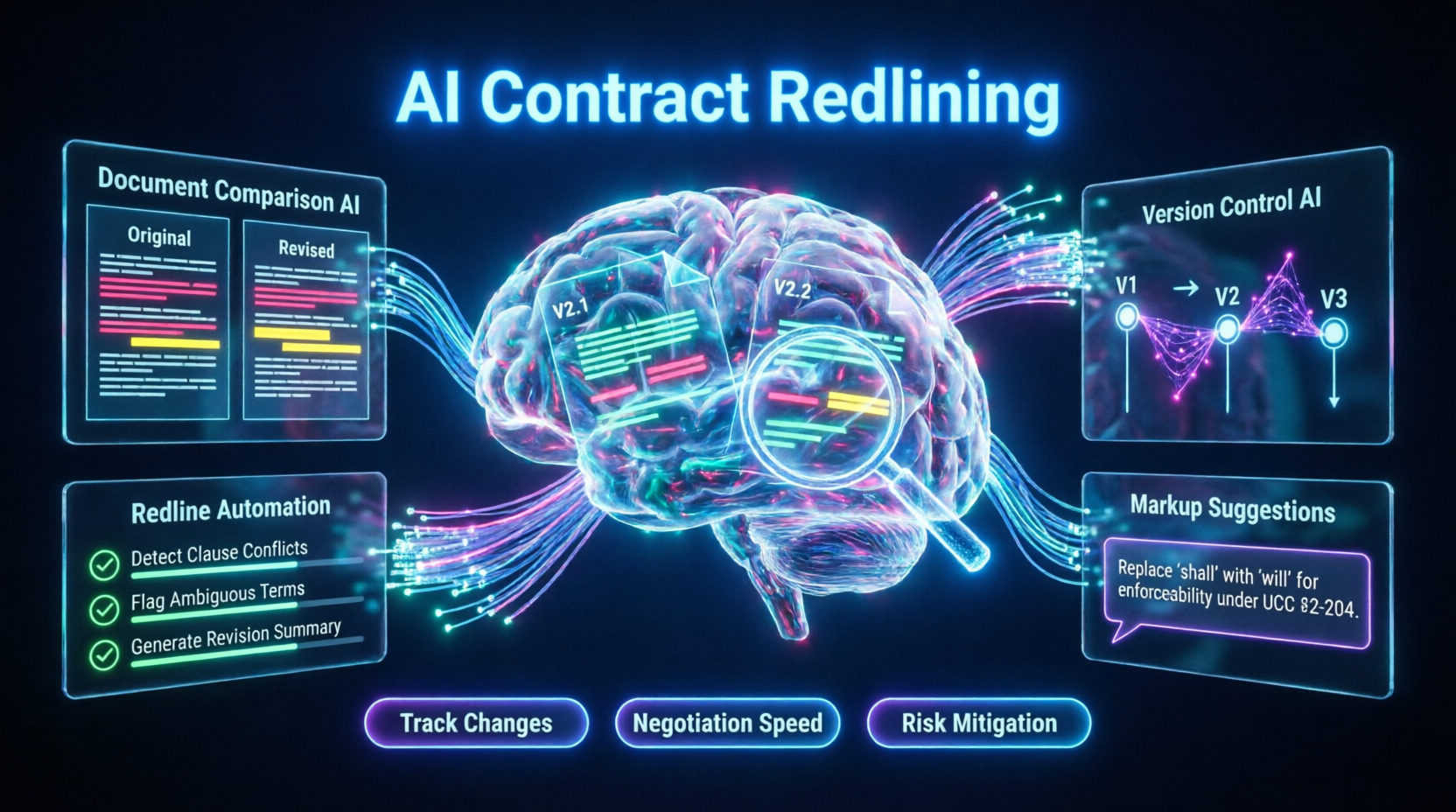
What are the most impactful AI legal tech trends right now? The most impactful AI legal tech trends include automated contract lifecycle management (CLM) for rapid clause extraction and risk flagging, predictive coding for intelligent eDiscovery, and generative AI tools that can draft, summarize, and compare complex legal agreements in seconds.
How do intelligent document processing trends differ from legacy OCR? Legacy OCR simply converts images of text into machine-readable text. In contrast, modern intelligent document processing trends focus on cognitive understanding. IDP extracts data, understands its context and relationships, validates it against external systems, and can trigger downstream business actions autonomously.
What should I consider when implementing next-generation document AI? When implementing next-generation document AI, prioritize data governance and cleanup, establish a clear change management strategy to upskill your workforce, and ensure the chosen platform offers robust security certifications and seamless integration with your existing enterprise software stack.
Where can I find more resources on enterprise AI adoption? Beyond this guide, explore the Allesora AI Directory for curated lists of vetted enterprise AI platforms, and check out our guides on AI Document Analysis Platform and AI Solutions for Business to maximize your organization’s intelligent automation technology stack.
Conclusion
Mastering the latest document intelligence trends is no longer just a task for the IT department; it is a strategic imperative for COOs, legal counsel, and compliance officers alike. By moving beyond legacy systems and understanding the nuances of machine learning in document review, intelligent document processing trends, and next-generation document AI, you can ensure your organization operates with unprecedented speed, accuracy, and insight.
Whether you are searching for advanced AI legal tech trends to mitigate contractual risk or aiming to automate your entire accounts payable pipeline, the key to success lies in aligning the vendor’s technological capabilities with your specific data governance and operational workflows.
As artificial intelligence continues to evolve, the cognitive capabilities of these systems will only deepen, making sophisticated document intelligence accessible and indispensable for businesses of all sizes. Embrace the power of intelligent document processing today, and position your organization at the absolute forefront of the automated data revolution.