
Mastering AI contract analysis is no longer a futuristic luxury for elite law firms; it is a present-day operational imperative for modern legal departments striving for efficiency, accuracy, and scalability. In an era where businesses generate and process thousands of contracts annually, relying on manual, line-by-line review is no longer a viable strategy. This traditional approach consumes up to 90% of a legal team’s time, creating massive bottlenecks, increasing the risk of human error, and delaying critical business deals. Today, forward-thinking general counsels and legal operations professionals are leveraging advanced natural language processing (NLP) and machine learning to transform this tedious process. If you are a legal leader looking to understand how to deploy this technology to reclaim hundreds of hours annually, you are in the right place.
This comprehensive guide demystifies the landscape of intelligent legal technology. We will explore the core mechanics of automated contract review, detail the capabilities of modern contract review software, and provide a strategic blueprint for implementing legal document automation. By the end of this article, you will have a clear, actionable understanding of how AI for legal contracts performs rigorous contract risk analysis, empowering your team to shift from reactive document reviewers to proactive strategic advisors.
1. The Evolution of Legal Operations: Why AI Contract Analysis Matters
Historically, contract review was a purely manual, highly subjective process. Junior associates or paralegals would spend hours reading dense legal jargon, highlighting key clauses, and cross-referencing terms against a company’s playbook. This process was not only excruciatingly slow but also prone to fatigue-induced errors. A missed indemnification clause or an overlooked auto-renewal date could cost a company millions.
The integration of AI contract analysis represents a quantum leap in legal operations. Unlike basic keyword search tools (like Ctrl+F), modern AI understands the semantic meaning, context, and relationships within legal text. It can instantly identify deviations from standard templates, flag missing clauses, and extract critical metadata (like effective dates, termination rights, and liability caps) with superhuman speed and consistency. According to recent industry research by Gartner, legal departments utilizing advanced AI-driven contract tools report a 50-70% reduction in review time and a significant decrease in contractual risk exposure. This shift allows legal professionals to focus on high-value strategic negotiations rather than mundane administrative tasks.
2. Core Mechanics: How Automated Contract Review Actually Works
To leverage this technology effectively, it is essential to understand the underlying mechanics of automated contract review. The process is a sophisticated, multi-stage pipeline that transforms unstructured legal text into structured, actionable business intelligence.
1. Document Ingestion and Preprocessing: The AI first ingests the contract, regardless of its format (PDF, Word, scanned image, or email). Preprocessing algorithms clean the document, correct skewed pages, and enhance text clarity to ensure optimal readability for the subsequent stages.
2. Optical Character Recognition (OCR) and Layout Analysis: Advanced OCR converts visual text into machine-readable characters. Simultaneously, layout analysis algorithms map the document’s structure, identifying headings, tables, signatures, and distinct clauses. This spatial awareness is crucial for understanding the document’s hierarchy.
3. Natural Language Processing (NLP) and Named Entity Recognition (NER): This is where the “intelligence” kicks in. NLP models scan the extracted text to identify and classify specific legal entities (e.g., party names, governing law jurisdictions, monetary values, and dates). The AI classifies the overall document type (e.g., “NDA,” “Master Services Agreement,” “SaaS License”) based on its content and structure.
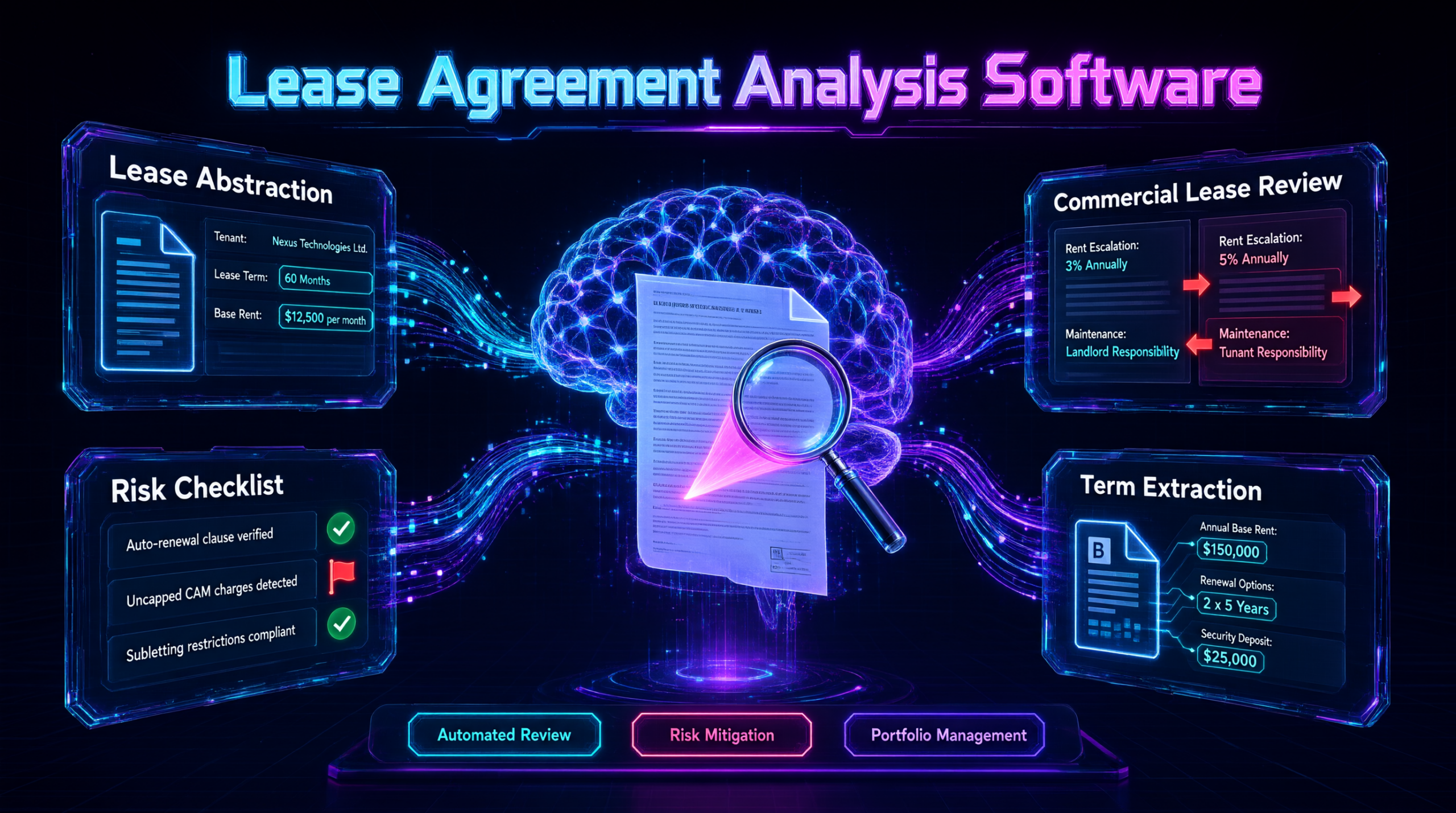
4. Semantic Understanding and Playbook Alignment: Modern AI for legal contracts goes a step further by understanding relationships between clauses. It doesn’t just find the word “liability”; it understands that “$1,000,000” is the “Liability Cap” in this specific agreement. It then compares these extracted terms against the company’s pre-defined legal playbook, instantly flagging any deviations or non-standard language for human review.
3. The Time-Saving Advantage: Accelerating Contract Risk Analysis
The primary value proposition of AI contract analysis is the dramatic reduction in time spent on routine tasks, coupled with a significant enhancement in risk mitigation.
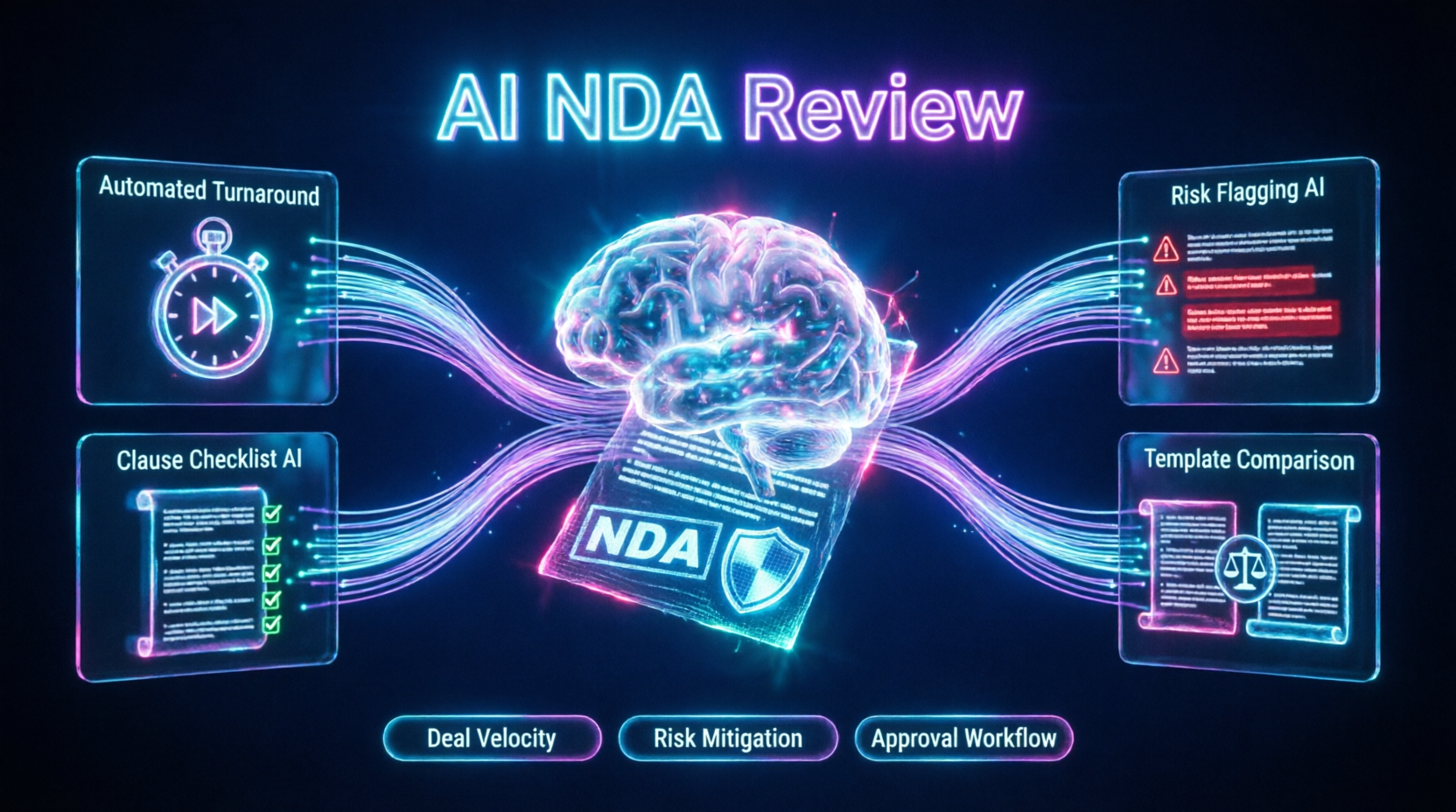
Instant Triage and Prioritization: Instead of reviewing contracts in the order they arrive, AI enables instant triage. The system can analyze a batch of 100 incoming NDAs in minutes, categorizing them by risk level. Low-risk, standard contracts can be auto-approved or routed for a quick signature, while high-risk contracts with significant deviations are immediately escalated to senior counsel. This ensures that human expertise is deployed exactly where it is needed most.
Comprehensive Contract Risk Analysis Manual review often suffers from “tunnel vision,” where a reviewer might focus heavily on one section and miss a critical detail in another. Contract risk analysis powered by AI is exhaustive and consistent. It checks every single clause against hundreds of predefined risk parameters simultaneously. Whether it’s identifying an unfavorable indemnification clause, a missing force majeure provision, or a non-compliant data privacy term, the AI flags it with a precise citation, saving legal teams hours of painstaking cross-referencing every single week.
Faster Turnaround Times: By automating the initial draft review and extraction phases, legal teams can reduce contract turnaround times from days or weeks to mere hours. This velocity directly impacts the business, accelerating sales cycles, speeding up vendor onboarding, and improving overall organizational agility.
4. Beyond Review: The Power of Legal Document Automation
While review is critical, the true transformative power of AI contract analysis lies in its ability to drive end-to-end legal document automation.
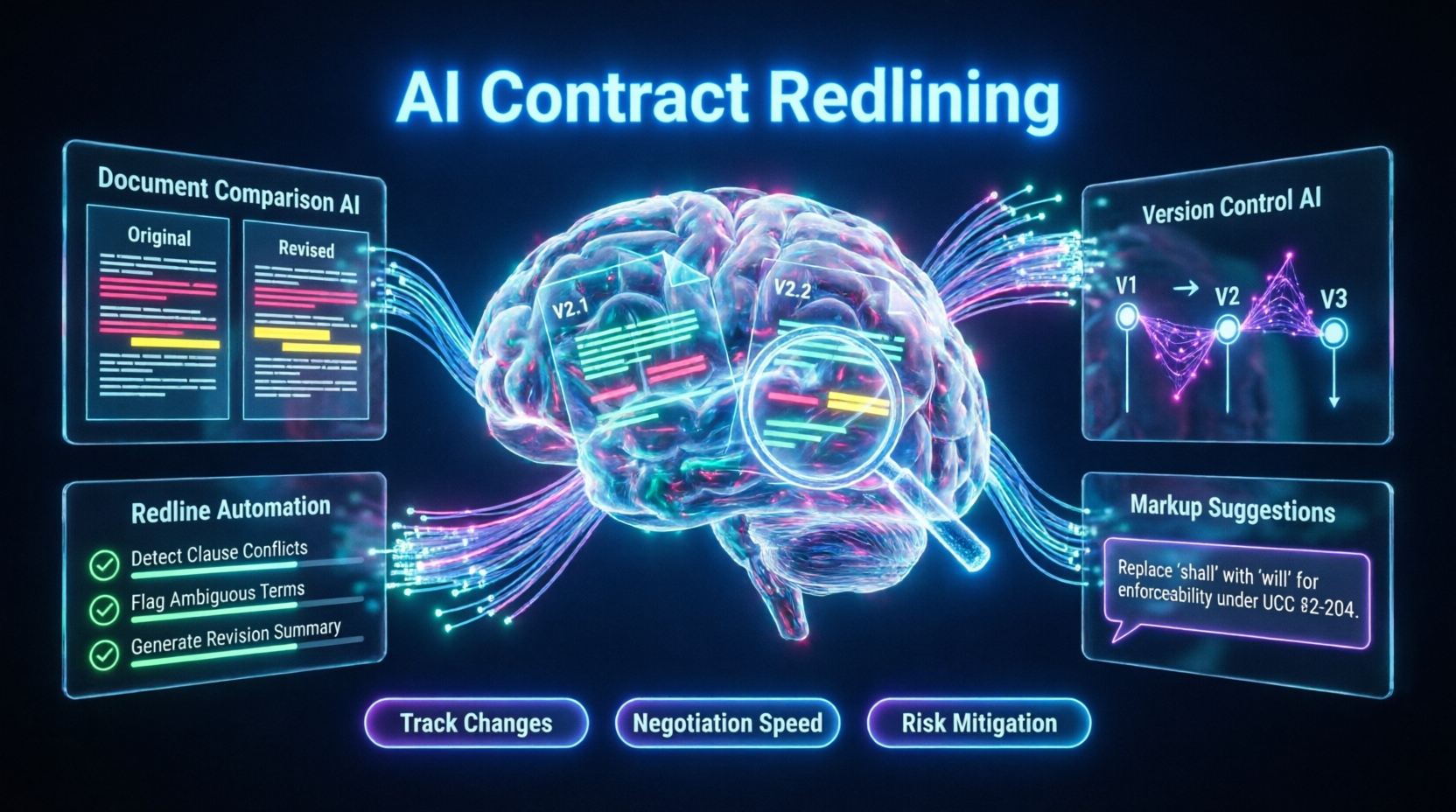
Intelligent Drafting and Clause Generation: Modern systems don’t just analyze; they create. Based on the extracted data and the user’s input, the AI can automatically generate first drafts of contracts using approved, pre-vetted templates. If a specific clause is missing or non-compliant, the AI can suggest or auto-insert the correct, playbook-approved language, drastically reducing drafting time.
Obligation Management and Lifecycle Tracking: A contract is not a static document; it is a living agreement with ongoing obligations. Legal document automation platforms extract key dates (renewals, termination windows, deliverables) and automatically integrate them into calendar systems or ERP software. The AI can proactively alert the legal or business team 60 days before an auto-renewal triggers, preventing unwanted financial commitments.
Seamless Workflow Integration: AI contract analysis rarely operates in a vacuum. It is frequently paired with Robotic Process Automation (RPA) and workflow engines. Once the AI extracts and validates the data, the system can automatically route the document to the appropriate stakeholder for approval, update the CRM (like Salesforce) with the contract value, and archive the fully executed document in the correct repository, creating a fully autonomous, touchless process.
5. Choosing the Right Contract Review Software for Your Team
With a crowded market of legal tech vendors, selecting the right contract review software requires careful evaluation of your specific organizational needs.
Accuracy and Playbook Customization: Do not rely solely on vendor claims of “99% accuracy.” Request a proof-of-concept (POC) using your own, real-world contracts, including the messy, heavily redlined, or non-standard ones. A robust platform should allow you to easily customize its AI models to align with your company’s unique legal playbook and risk tolerance.
Integration Capabilities: The best contract review software is useless if it creates a new data silo. Ensure the platform offers robust, pre-built connectors or flexible APIs to integrate seamlessly with your existing tech stack, such as Salesforce, Microsoft Teams, DocuSign, or your enterprise contract lifecycle management (CLM) system.
Security and Compliance: When handling sensitive legal agreements, security is paramount. Ensure the vendor complies with relevant regulations (GDPR, SOC 2, ISO 27001). The platform should offer end-to-end encryption, strict role-based access control (RBAC), and clear data retention policies that guarantee your proprietary contract data is not used to train public, shared AI models.
User Experience and Human-in-the-Loop (HITL): Look for a platform with an intuitive, user-friendly validation interface. When the AI is uncertain or flags a deviation, the HITL interface should make it incredibly easy for a lawyer to review the highlighted clause, accept or reject the AI’s suggestion, and feed that correction back into the model to improve future accuracy.
6. Strategic Implementation: Best Practices for Legal Teams
Successfully deploying AI contract analysis requires a strategic, phased approach that prioritizes user adoption and continuous improvement.
Start with a High-Volume, Low-Risk Use Case. Avoid the “big bang” approach. Start with a high-volume, highly standardized document type, such as NDAs or standard vendor procurement agreements. Measure the time savings and accuracy improvements. Once the team is comfortable and the model is fine-tuned, gradually expand to more complex, high-risk documents like Master Services Agreements (MSAs) or employment contracts.
Invest in Change Management and Training: Technology alone does not save time; people using technology do. Address the “AI anxiety” head-on by clearly communicating that the AI is a “co-pilot” designed to eliminate grunt work, not replace legal professionals. Provide comprehensive training on how to interpret the AI’s flags and how to use the HITL interface effectively.
Establish a Feedback Loop AI models are not static; they learn and improve over time. Establish a formal process for legal team members to provide feedback on the AI’s performance. Regularly review the “false positives” and “false negatives” with the vendor to continuously refine the playbook and improve the model’s precision.
7. Comprehensive Query Coverage
What is the main difference between traditional contract review and AI contract analysis? Traditional review relies on humans reading line-by-line, which is slow and prone to fatigue. AI contract analysis uses NLP and machine learning to instantly understand context, extract key data points, and compare clauses against a legal playbook, turning a days-long process into a matter of minutes.
How does automated contract review actually save legal teams hours every week? Automated contract review eliminates the manual tasks of reading, highlighting, and data entry. By instantly triaging documents, extracting metadata, and flagging only the clauses that deviate from the playbook, it allows lawyers to spend their time negotiating and advising, rather than searching for information.
What should I look for in contract review software? When evaluating contract review software, prioritize high accuracy on your specific document types, seamless API integration with your existing CLM or CRM systems, robust security certifications (like SOC 2), and an intuitive human-in-the-loop validation interface.
Is AI for legal contracts secure for sensitive, confidential agreements? Yes, when implemented correctly. Reputable AI for legal contracts providers offer enterprise-grade security, including end-to-end encryption, strict access controls, and the option for private cloud deployment to ensure sensitive data remains fully protected and compliant with legal ethics rules.
How does contract risk analysis improve with AI? AI-driven contract risk analysis is exhaustive and consistent. Unlike humans who might miss a detail due to fatigue, the AI checks every single clause against hundreds of predefined risk parameters simultaneously, ensuring no unfavorable terms slip through the cracks.
Conclusion
Mastering AI contract analysis is no longer a futuristic IT initiative; it is a present-day imperative for legal departments seeking to operate with the speed and agility that modern business demands. By moving beyond the limitations of manual review and embracing intelligent extraction, risk flagging, and workflow automation, legal teams can reclaim hundreds of hours every week.
Whether you are deploying automated contract review to accelerate sales cycles, leveraging advanced contract risk analysis to protect the organization from unfavorable terms, or evaluating comprehensive contract review software for enterprise-wide adoption, success requires a strategic, phased approach. Prioritize security, demand proof-of-concept results on your own data, and choose a solution that seamlessly integrates with your existing ecosystem.
As AI technology continues to evolve, the ability to instantly understand, negotiate, and manage any contract will become a core competitive differentiator. Embrace legal document automation today to build a more agile, efficient, and strategically focused legal organization for the future.