
Understanding AI document analysis is no longer optional for modern enterprises; it is a fundamental requirement for operational efficiency, compliance, and competitive advantage. In an era where organizations generate and ingest millions of pages of unstructured data daily, relying on manual data entry or legacy optical character recognition (OCR) is no longer a viable strategy. Today, forward-thinking businesses are leveraging advanced natural language processing (NLP), computer vision, and large language models (LLMs) to extract, understand, and act upon information hidden within complex documents. If you are a business leader, IT director, or operations manager looking to understand how to deploy this technology effectively, you are in the right place.
This comprehensive guide demystifies the landscape of automated information extraction. We will explore the core mechanics of how AI reads documents, detail the capabilities of modern intelligent document processing, and provide a strategic blueprint for selecting the right document analysis platform. By the end of this article, you will have a clear, actionable understanding of AI document analysis, empowering you to streamline workflows, reduce costs, and unlock the true value of your organizational data.
1. The Evolution of Data Extraction: What Is AI Document Analysis?
Historically, extracting data from documents was a labor-intensive, error-prone process. Traditional OCR technology could convert scanned images into machine-readable text, but it lacked comprehension. It could tell you that a document contained the string “123 Main St,” but it could not understand that this string represented a “Billing Address.” This limitation forced humans to manually review, validate, and route the extracted data, creating massive bottlenecks.
AI document analysis represents a quantum leap beyond basic OCR. It is the application of artificial intelligence, specifically machine learning, deep learning, and NLP, to not only extract text from documents but also understand their semantic meaning, context, and relationships. Modern document analysis software can classify document types, extract key-value pairs, summarize lengthy contracts, and even detect anomalies or compliance risks, all with minimal human intervention. According to recent industry research, organizations implementing advanced AI-driven extraction see up to an 80% reduction in processing time and a significant decrease in manual error rates.
2. Core Mechanics: How AI Reads Documents and Understands Context
To leverage this technology effectively, it is essential to understand how AI reads documents. The process is a sophisticated, multi-stage pipeline that transforms raw pixels into actionable business intelligence.
1. Document Ingestion and Preprocessing: The AI first ingests the document, regardless of its format (PDF, Word, scanned image, or email). Preprocessing algorithms clean the image by deskewing, removing noise, and enhancing contrast to ensure optimal readability for the subsequent stages.
2. Optical Character Recognition (OCR) and Layout Analysis: Advanced OCR converts the visual text into digital characters. Simultaneously, layout analysis algorithms map the document’s structure, identifying headings, tables, paragraphs, and checkboxes. This spatial awareness is crucial for understanding the document’s hierarchy.
3. Named Entity Recognition (NER) and Classification: This is where the “intelligence” kicks in. NLP models scan the extracted text to identify and classify specific entities (e.g., person names, dates, monetary values, and company names). The AI also classifies the overall document type (e.g., “Invoice,” “NDA,” “Medical Record”) based on its content and structure.
4. Semantic Understanding and Relationship Mapping: Modern systems go a step further by understanding relationships between entities. For example, it doesn’t just extract “John Doe” and “$5,000”; it understands that “John Doe” is the “Vendor” and “$5,000” is the “Total Amount Due” on this specific invoice. This contextual mapping is what separates true AI document analysis from simple keyword searching.
3. Key Technologies: Intelligent Document Processing and Beyond
The umbrella term for this suite of capabilities is intelligent document processing (IDP). IDP combines several cutting-edge AI technologies to handle complex, unstructured, and semi-structured documents.
Large Language Models (LLMs): The integration of LLMs has revolutionized document analysis software. Instead of relying solely on rigid, pre-trained extraction rules, LLMs can be prompted to read a document and answer specific questions, summarize key clauses, or translate content, adapting dynamically to novel document formats without extensive retraining.
Computer Vision and Deep Learning: Deep learning models, particularly Convolutional Neural Networks (CNNs) and Vision Transformers (ViTs), are used to analyze the visual aspects of a document. They can recognize handwritten text, interpret complex charts and graphs, and even detect forged signatures or altered text, adding a layer of security and fraud detection.
Robotic Process Automation (RPA) Integration: Intelligent document processing rarely operates in a vacuum. It is frequently paired with RPA. Once the AI extracts and validates the data, the RPA bot takes over to automatically input that data into an ERP system, trigger an approval workflow, or send a confirmation email, creating a fully autonomous end-to-end process.
4. Real-World Applications: AI Document Review Across Industries
The versatility of AI document analysis makes it invaluable across virtually every sector that handles paperwork.
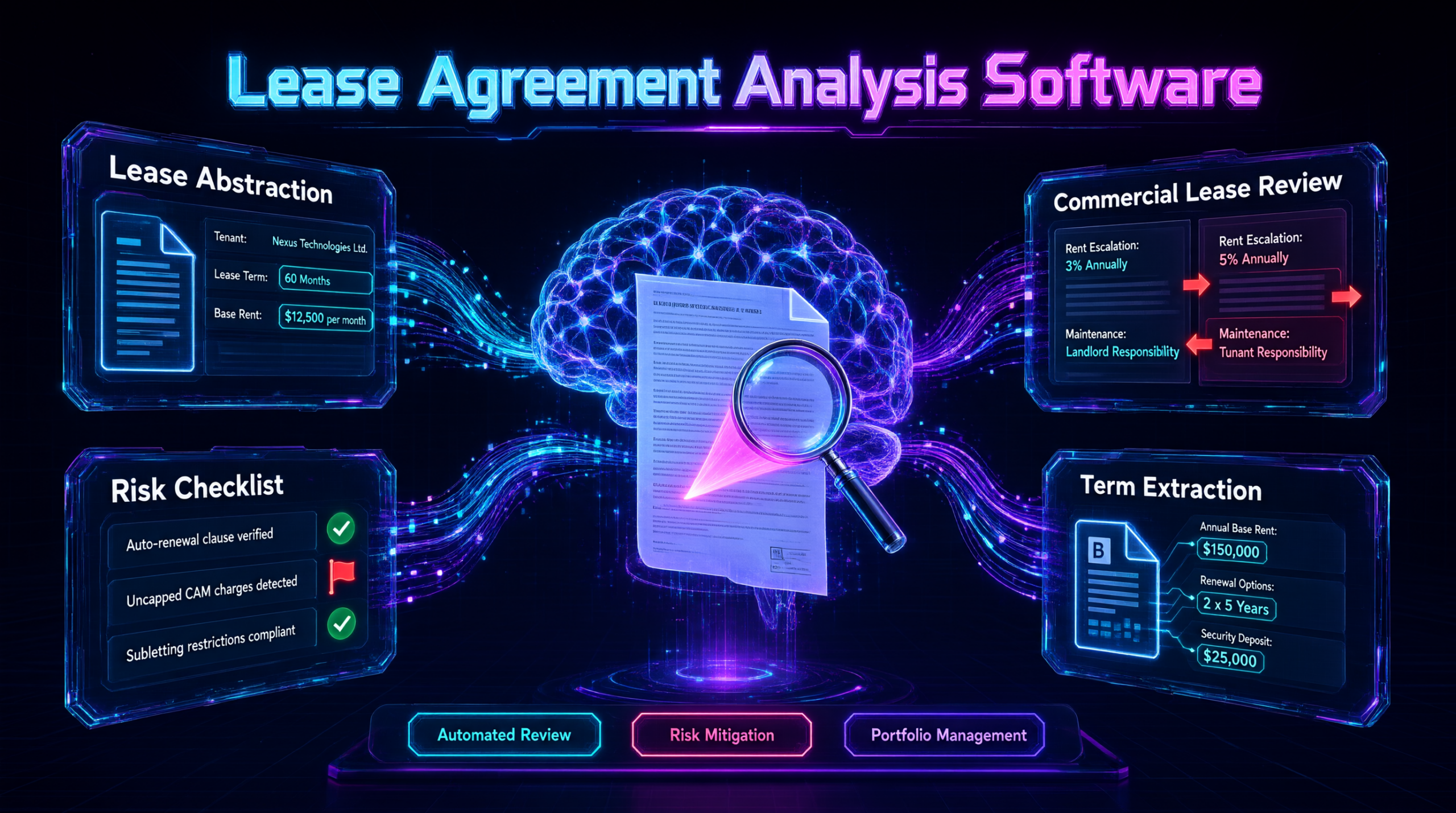
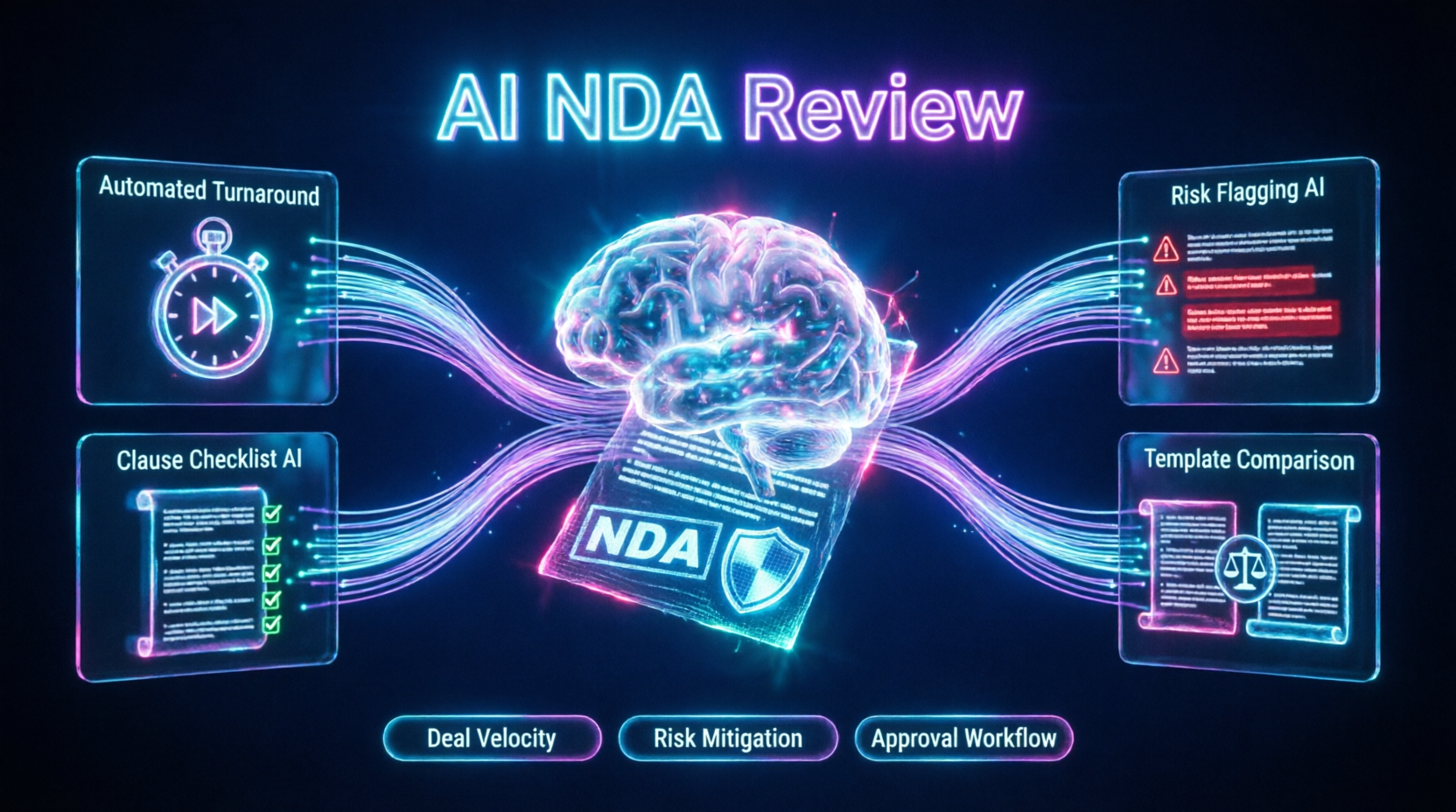
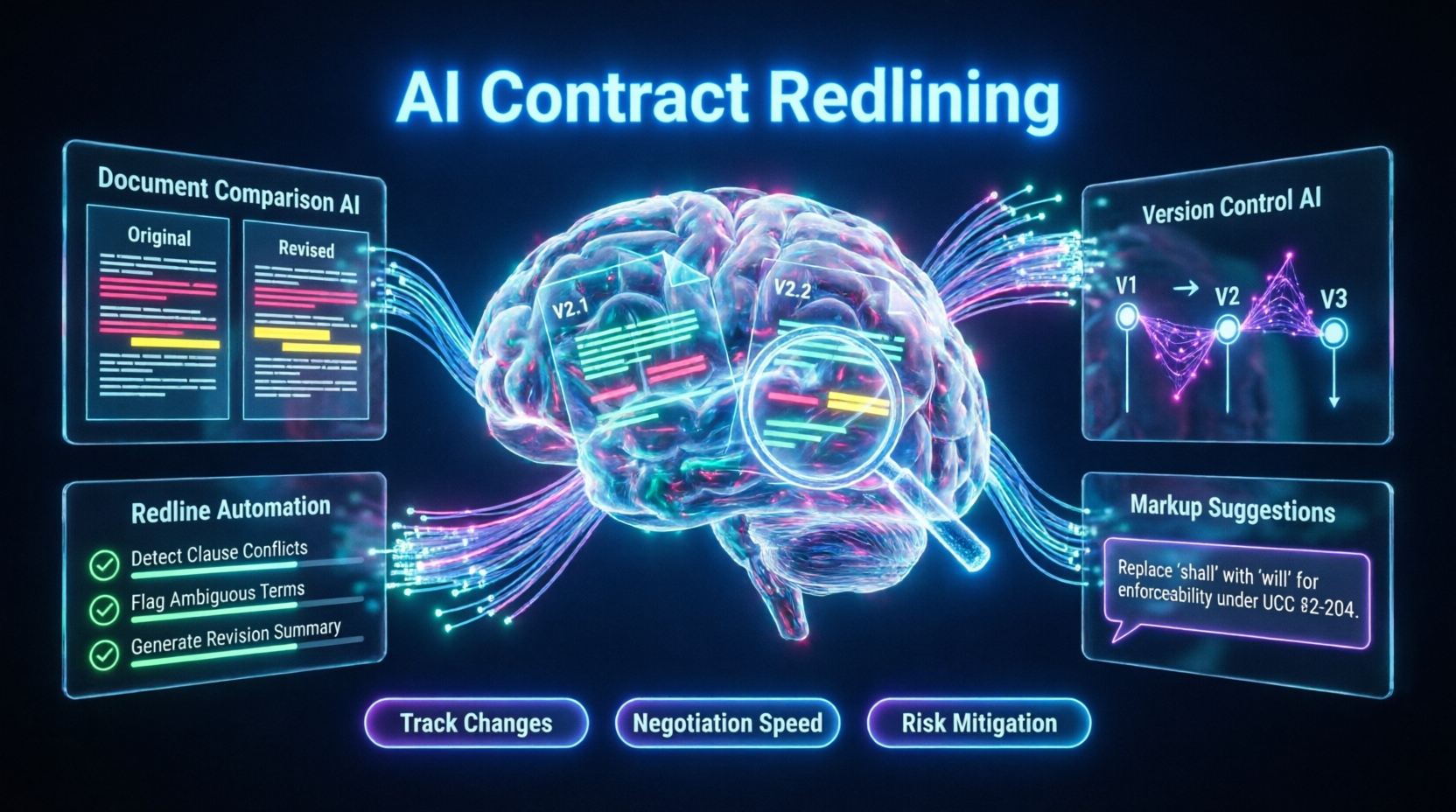
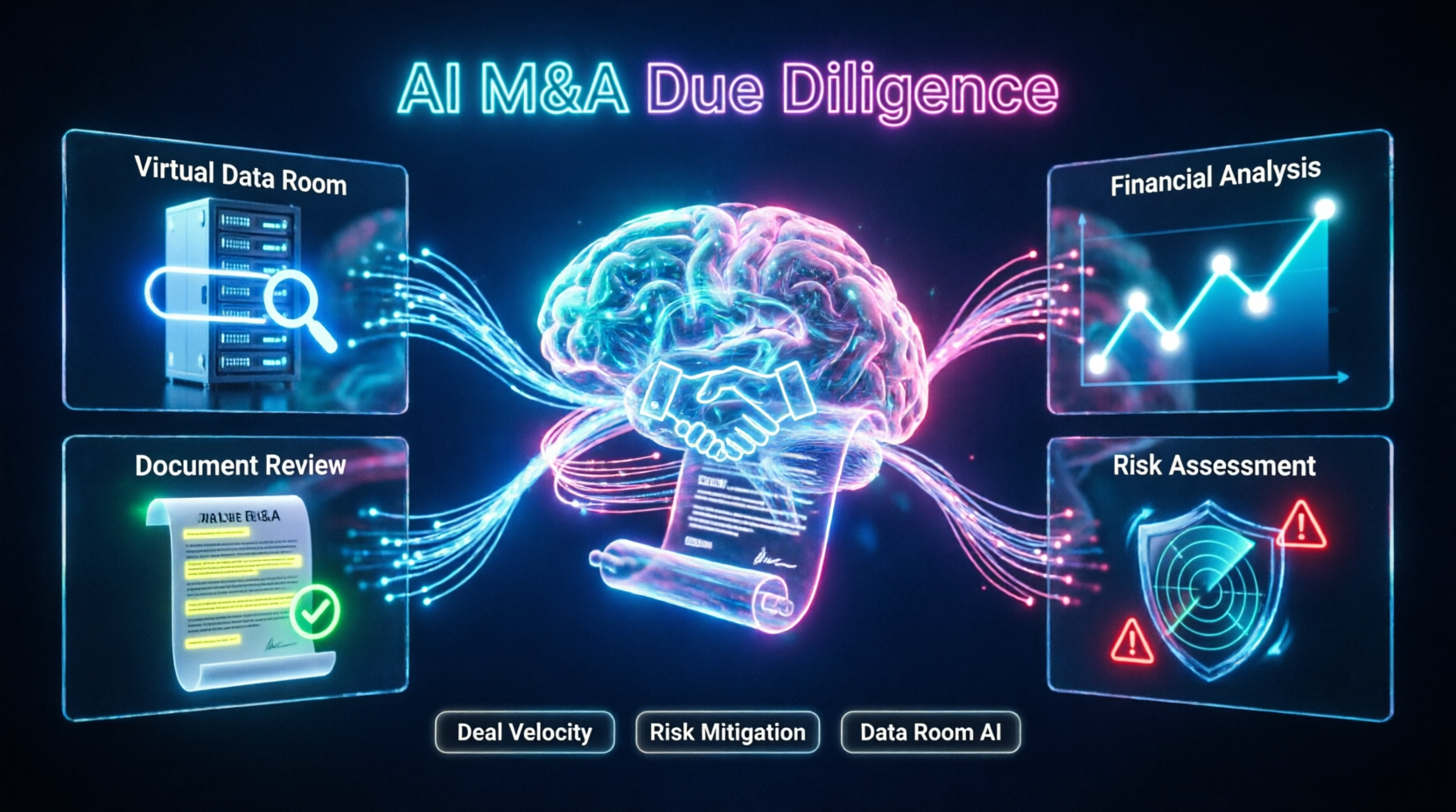
Legal and Compliance: AI Document Review. In the legal field, AI document review has transformed eDiscovery and contract management. Instead of junior associates spending thousands of hours manually reading through boxes of documents for a specific clause, AI can instantly scan millions of pages, flagging relevant contracts, identifying non-standard terms, and highlighting potential compliance risks with high accuracy.
Finance and Accounting: Financial institutions use document analysis software to automate accounts payable and receivable. The AI extracts line-item details from diverse vendor invoices, matches them against purchase orders, and routes them for approval. It also automates the processing of loan applications by extracting and verifying income statements, tax returns, and bank statements in minutes.
In healthcare, intelligent document processing is used to digitize and structure patient records. AI can extract diagnoses, medications, and lab results from unstructured clinical notes and faxes, mapping them directly into Electronic Health Records (EHR) systems. This reduces administrative burden on medical staff and improves patient care coordination.
Human Resources HR departments leverage AI to automate resume screening, extracting candidate skills, experience, and education to match against job descriptions. It also streamlines employee onboarding by automatically processing and filing I-9 forms, tax documents, and benefit enrollment paperwork.
5. Choosing the Right Document Analysis Platform and Software
With a crowded market of vendors, selecting the right document analysis platform requires careful evaluation of your specific business needs.
Accuracy and Handling of Edge Cases: Do not rely solely on vendor claims of “99% accuracy.” Request a proof-of-concept (POC) using your own, real-world documents, including the messy, skewed, or handwritten ones. A robust platform should gracefully handle low-quality scans and clearly flag low-confidence extractions for human review.
Integration Capabilities: The best document analysis software is useless if it creates a new data silo. Ensure the platform offers robust, pre-built connectors or flexible APIs to integrate seamlessly with your existing tech stack, such as Salesforce, SAP, Microsoft SharePoint, or your custom databases.
Scalability and Deployment Options: Consider your volume and security requirements. Does the platform offer cloud-native scalability to handle sudden spikes in document volume? For highly regulated industries, does the vendor offer on-premises or private cloud deployment options to ensure data never leaves your controlled environment?
User Experience and Human-in-the-Loop (HITL): Look for a platform with an intuitive, user-friendly validation interface. When the AI is uncertain, the HITL interface should make it incredibly easy for a human operator to review the highlighted discrepancy, make a quick correction, and feed that correction back into the model to improve future accuracy.
6. Implementation, Security, and Future Trends
Successfully deploying AI document analysis requires a strategic approach that prioritizes security and continuous improvement.
Data Security and Compliance: When evaluating a document analysis platform, security is paramount. Ensure the vendor complies with relevant regulations (GDPR, HIPAA, SOC 2). The platform should offer end-to-end encryption (both in transit and at rest), strict role-based access control (RBAC), and clear data retention policies that guarantee your proprietary data is not used to train public, shared AI models.
Phased Implementation Strategy: Avoid the “big bang” approach. Start with a high-volume, rule-based, low-risk use case (e.g., standard invoice processing). Measure the time savings and accuracy improvements. Once the team is comfortable and the model is fine-tuned, gradually expand to more complex, semi-structured documents like contracts or medical records.
The Future of AI Document Analysis: The future points toward hyper-automation and multimodal AI. Emerging systems will not just read text; they will simultaneously analyze the text, the visual layout, and even embedded metadata to build a comprehensive understanding of a document. Furthermore, generative AI will move beyond extraction to actively draft responses, summarize entire document repositories, and proactively suggest business actions based on the analyzed content.
7. Comprehensive Query Coverage
What is the main difference between traditional OCR and AI document analysis? Traditional OCR simply converts images of text into machine-readable characters without understanding the meaning. AI document analysis uses NLP and machine learning to understand the context, classify the document, and extract relationships between data points, turning raw text into structured, actionable intelligence.
How does AI document review benefit the legal industry? AI document review drastically reduces the time and cost of eDiscovery and contract analysis. It can scan millions of pages in minutes to identify relevant clauses, flag anomalies, and ensure compliance, allowing legal professionals to focus on high-value strategic work rather than manual reading.
What should I look for in a document analysis platform? When choosing a document analysis platform, prioritize high accuracy on your specific document types, seamless API integration with your existing systems, robust security and compliance certifications (like SOC 2 or HIPAA), and an intuitive human-in-the-loop validation interface.
Is intelligent document processing secure for sensitive data? Yes, when implemented correctly. Reputable intelligent document processing providers offer enterprise-grade security, including end-to-end encryption, strict access controls, and the option for on-premises or private cloud deployment to ensure sensitive data remains fully protected and compliant with regulations.
How does AI read documents with complex layouts or handwriting? Modern AI document-reading pipelines utilize advanced computer vision and deep learning models (like Vision Transformers) that analyze the spatial layout of a page. This allows the AI to understand tables, forms, and even decipher handwritten notes by recognizing patterns and context, rather than just reading left-to-right text.
Conclusion
Mastering AI document analysis is no longer a futuristic IT initiative; it is a present-day imperative for organizations seeking to unlock the value trapped in their unstructured data. By moving beyond the limitations of manual data entry and legacy OCR, businesses can leverage intelligent document processing to automate complex workflows, ensure compliance, and make faster, data-driven decisions.
Whether you are implementing AI document review to streamline legal operations, deploying document analysis software to accelerate financial closing, or evaluating a comprehensive document analysis platform for enterprise-wide adoption, success requires a strategic, phased approach. Prioritize security, demand proof-of-concept results on your own data, and choose a solution that seamlessly integrates with your existing ecosystem.
As AI technology continues to evolve, the ability to instantly understand and act upon any document will become a core competitive differentiator. Embrace AI document analysis today to build a more agile, efficient, and intelligent organization for the future.